Inconel 800 forms a thick yet stable oxide layer. This thick layer is known to protect the outer surface of the Inconel 800 component from further attack.
This phenomenon is the reason why manufacturers recommend using Inconel 800 for extreme temperature and high pressure applications.
Alloy 400 is virtually immune to chloride stress corrosion cracking in typical environments. Generally, its corrosion resistance is good in reducing environment, but poor in oxidizing environment.
This alloy is not suitable for highly oxidizing acids such as nitric acid and nitrous acid. It is resistant to sulfuric acid up to 80% and hydrochloric acid solutions up to 20%.
The alloy can be machined at satisfactory speeds with machine tools commonly used in the industry. Generally, cold drawn or cold drawn stress relief materials are recommended for the best machinability and smoothest finish.
The Curie temperature of this alloy lies within the ambient temperature range and is affected by changes in the alloy’s chemical composition. Caution is recommended in applications requiring strong non-magnetic properties.
This nickel alloy has good corrosion resistance, good wear resistance and high strength.
Nickel alloys are combinations of nickel and a variety of other metals that make strong, oxidation-resistant products with an average lifespan of 25 to 35 years. Monel 400 is a nickel-copper alloy containing approximately 67% nickel and 23% copper.
Alloy 400 exhibits corrosion resistance to many reducing media.
This alloy is most commonly used in a range of environments from mildly oxidizing to neutral and moderately reducing conditions. Other areas of application for this material are marine environments and other non-oxidizing chloride solutions.
It has excellent solderability and can withstand very high pressure and weight. The alloy has excellent mechanical properties at sub-zero temperatures, with a melting point of 2370¡ã – 2460¡ã F, and the product can be used at temperatures up to 1000¡ã C.
If hardened Monel 400 is the goal, cold working with a soft tooling material is the only option. By cold working, mechanical stress is used instead of heat to change the shape of the metal.
Alloy 400 is a nickel copper solid solution strengthened alloy. The alloy is characterized by moderate strength, good weldability, good general corrosion resistance and good toughness.
It is suitable for temperatures up to 1000¡ãF (538¡ãC). Alloy 400 has excellent resistance to cavitation and erosion in fast-flowing brackish or seawater.
Alloy 400 also has excellent corrosion resistance in a variety of media including seawater, hydrofluoric acid, sulfuric acid and alkalis. Used in marine engineering, chemical, hydrocarbon processing equipment and heat exchangers.
The alloy is also resistant to ammonia-containing atmospheres as well as nitrogen and carburizing gases.
Inconel 600 is non-magnetic, has excellent mechanical properties, combines high strength with good workability, and is easy to weld. Alloy 600 exhibits cold forming properties typically associated with chromium-nickel stainless steels.
Alloy 600 is not an age hardening alloy; cold working is the only hardening method available.
Annealing softening begins at approximately 1600¡ãF (871¡ãC) and is fairly complete after 10 to 15 minutes of heating at 1800¡ãF (982¡ãC). Above this temperature, grain growth can be objectionable, although very brief heating at 1900¡ãF will result in complete softening without excessive grain growth. Since the cooling rate has no effect on softening, the material can be water quenched or air cooled.
Alloy 600 is machinable in both hot and annealed conditions. Due to the large amount of heat generated when machining this alloy, high-speed steel, cast non-ferrous or carbide tools should be used.
Under alternating oxidizing and reducing conditions, alloys may suffer from selective oxidation.
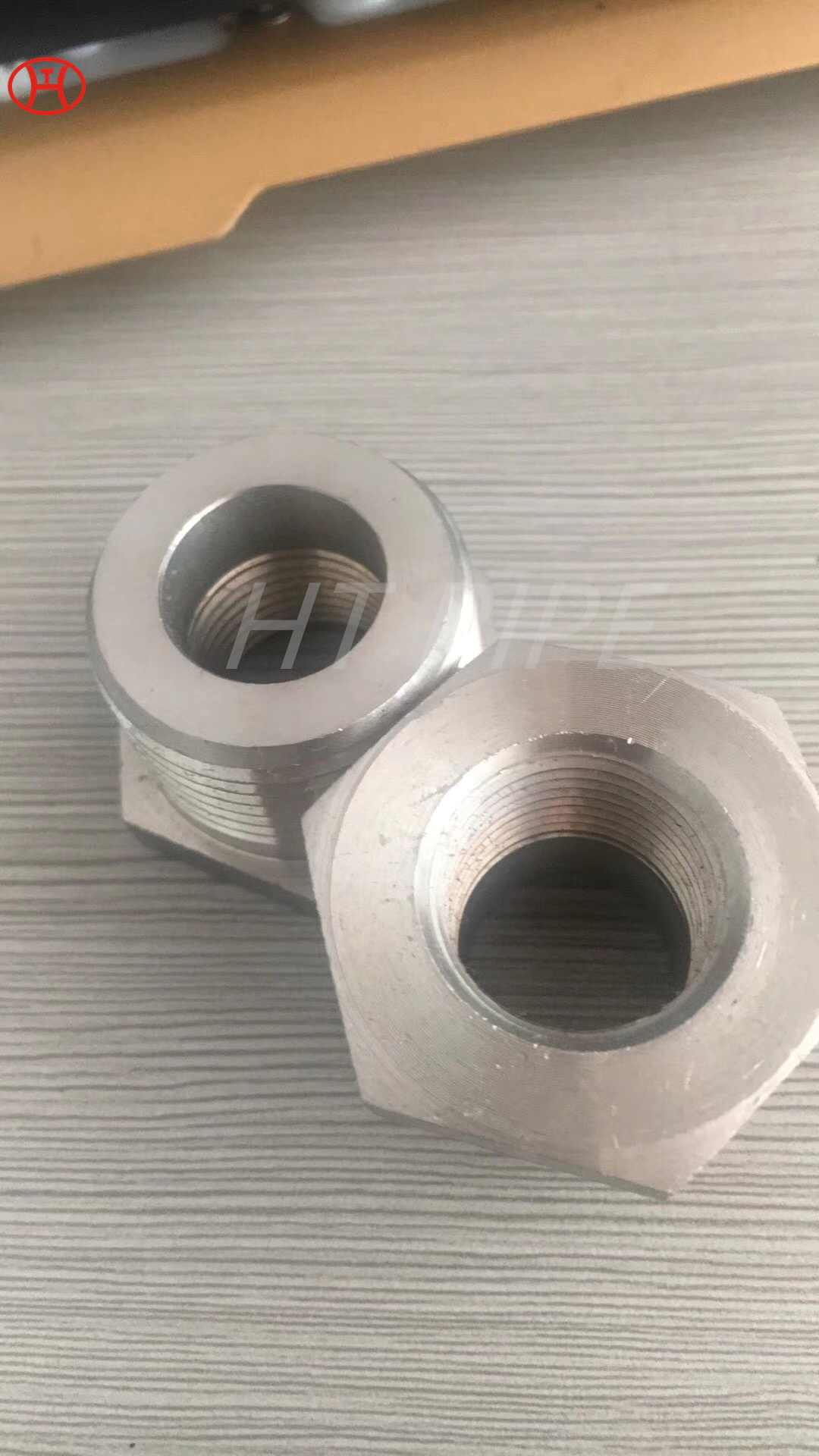
Hastelloy C276 bushings have excellent resistance to strong oxidizing salt solutions such as ferric chloride and cupric chloride. Alloy C-276 has excellent phosphoric acid resistance at all temperatures below boiling point and concentrations below 65%.
Hastelloy C276 bushings have high nickel and molybdenum contents to provide good corrosion resistance in reducing environments.
Hastelloy C276 has a low carbon content to minimize grain boundary carbide precipitation during welding to maintain corrosion resistance in the heat affected zone of the welded joint
Hastelloy C276 is resistant to localized corrosion such as pitting and stress corrosion cracking.
Hastelloy C276 is one of the few materials that can withstand the corrosive effects of wet chlorine, hypochlorite and chlorine dioxide.
Hastelloy can be used with all common welding methods, but oxyacetylene and submerged arc processes are not recommended when the manufactured product is intended for corrosion service.
Hastelloy C-276 bushings are also used in sour gas wells, pulp and paper production, waste disposal, pharmaceutical and food processing equipment. Other important properties of this alloy Nickel Alloy C-276 and Hastelloy C-276 include its resistance to oxidizing agents.
Nickel Alloy C-276 and Hastelloy C-276 can be welded by all common welding methods (oxyacetylene is not recommended).
Alloy 600 is relatively immune to most neutral and alkaline salt solutions and is used in some corrosive environments. The alloy is resistant to steam and mixtures of steam, air and carbon dioxide.