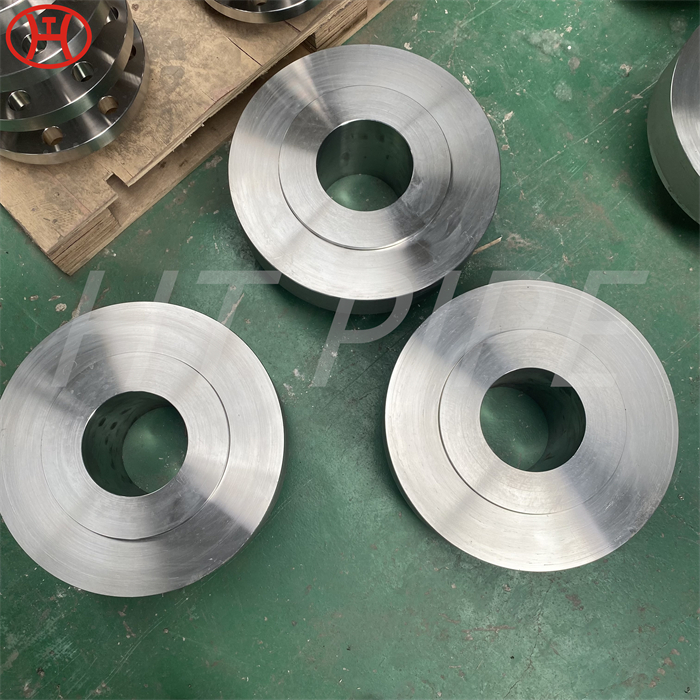
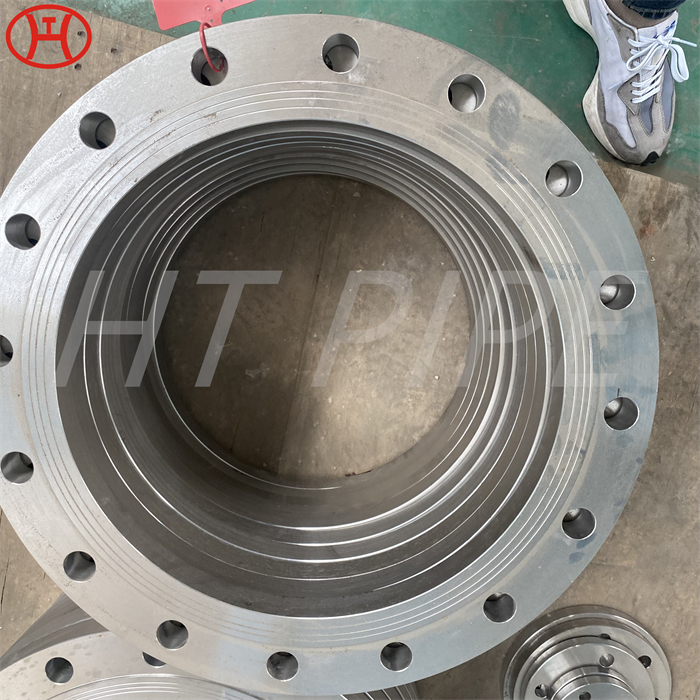
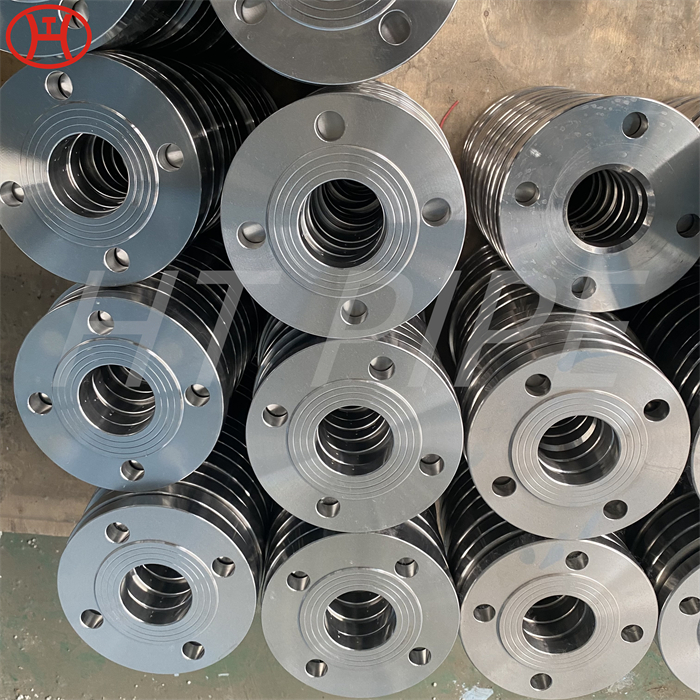
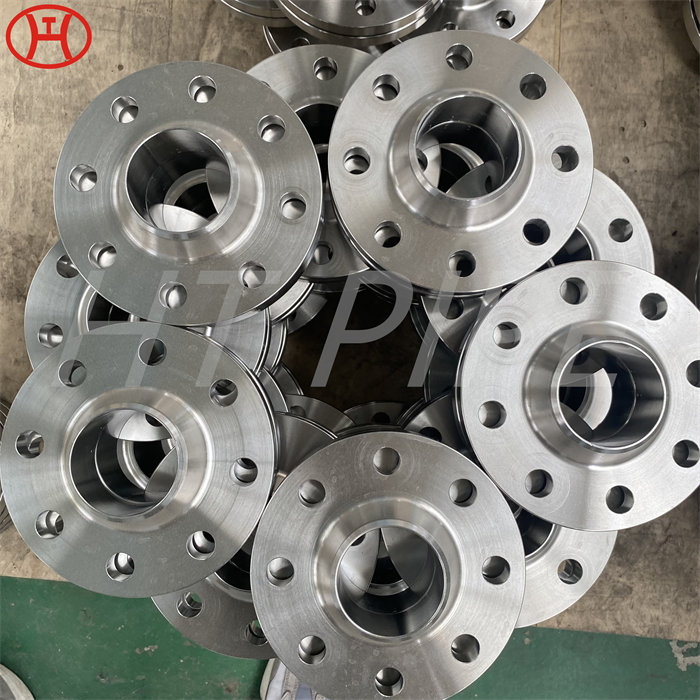
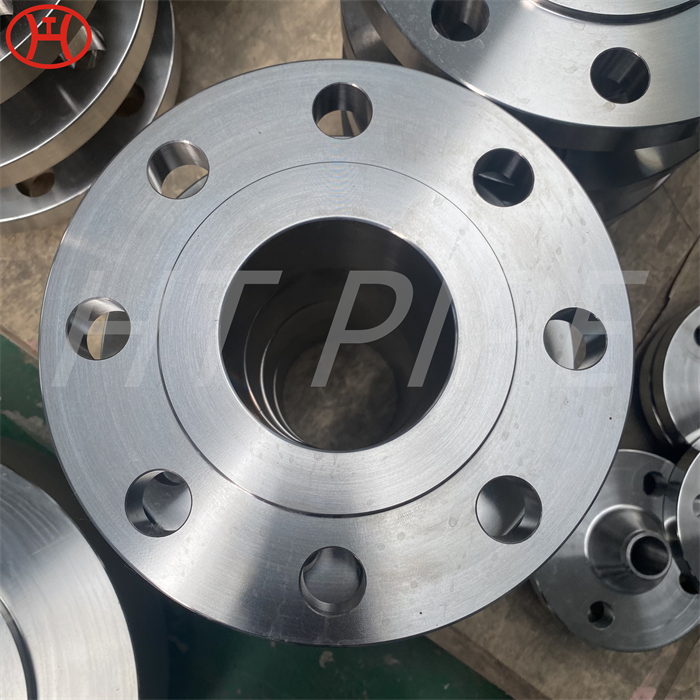
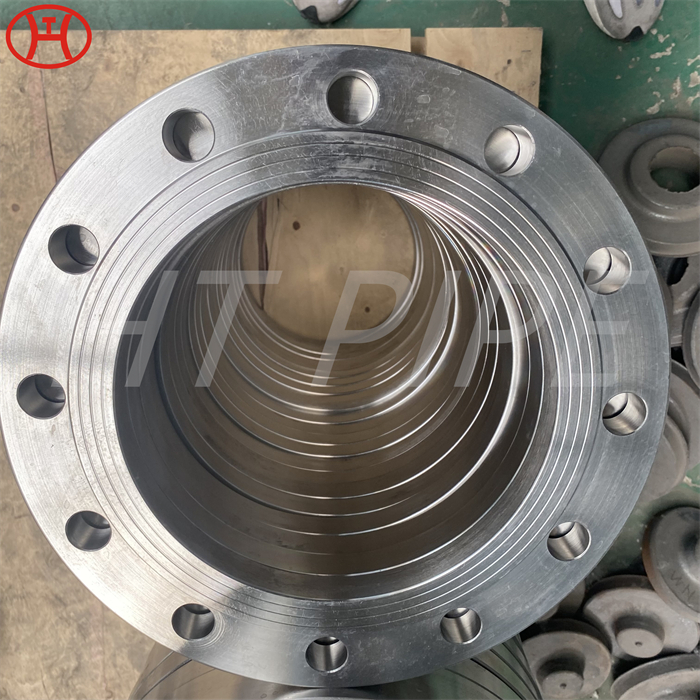
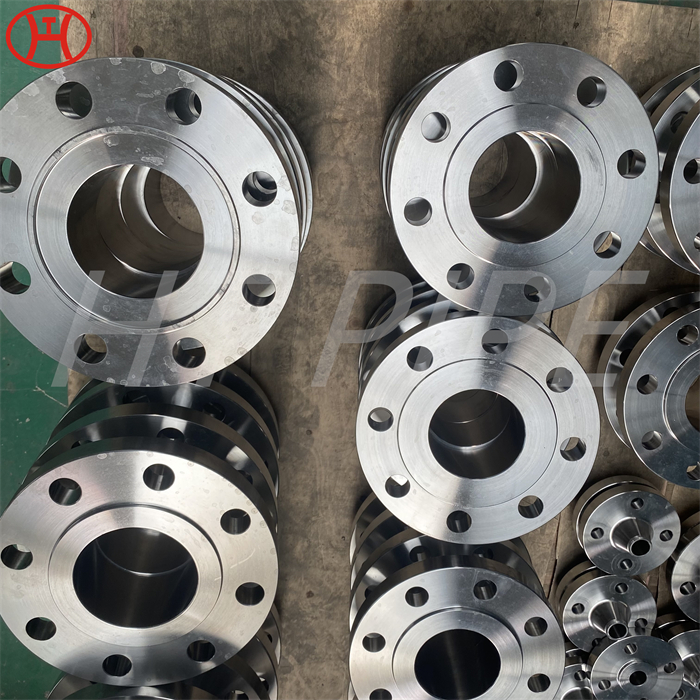
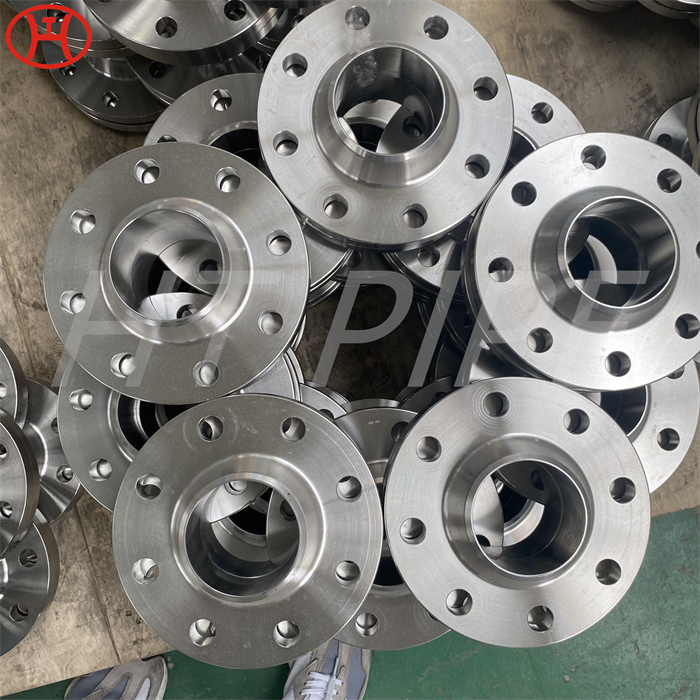
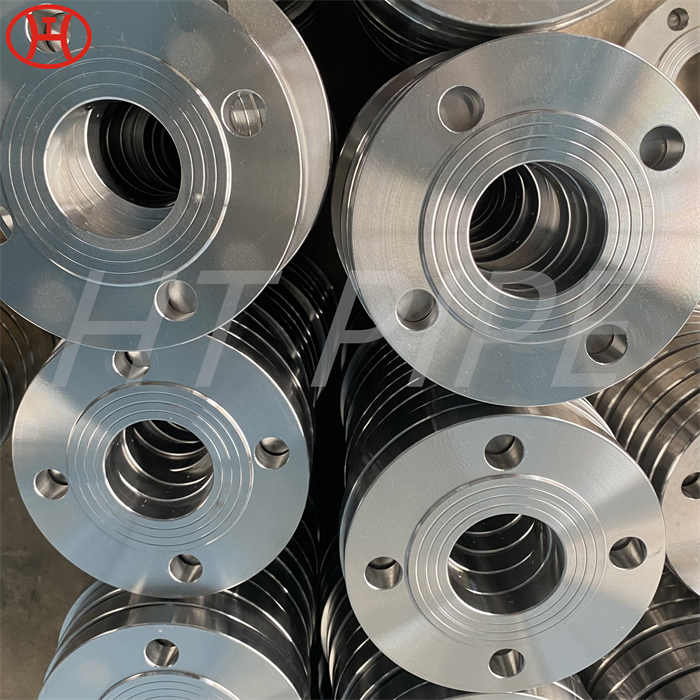
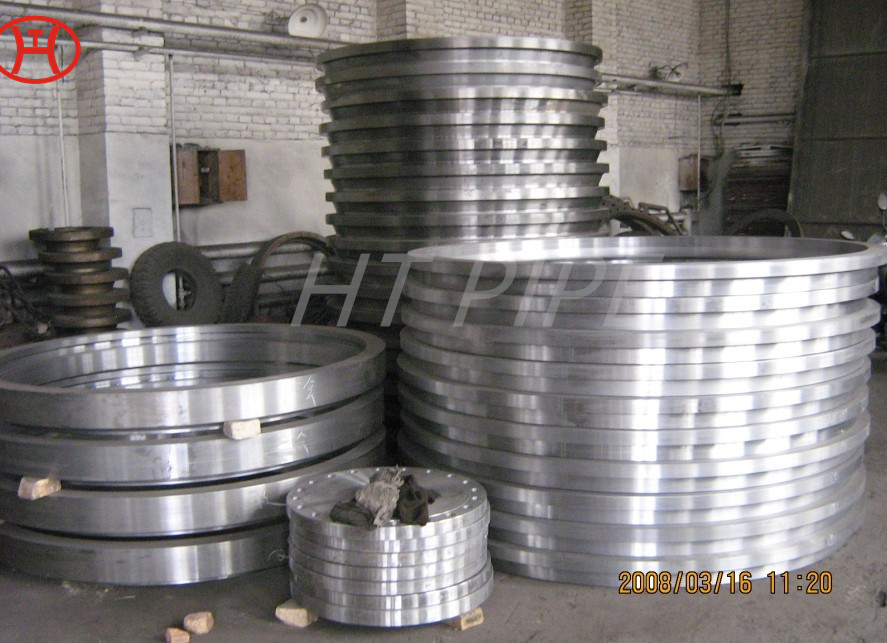
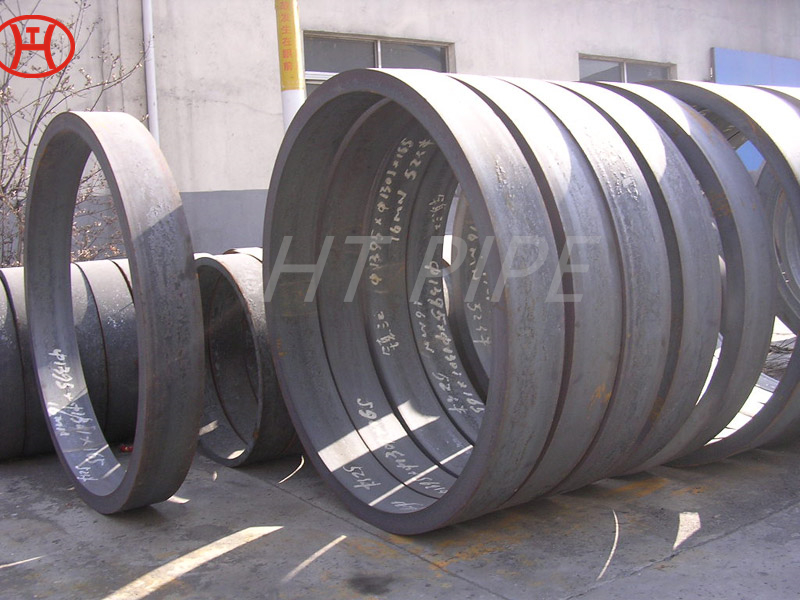
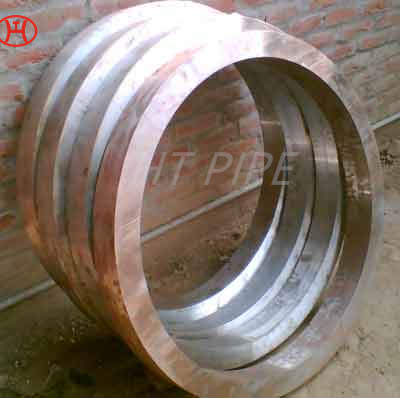
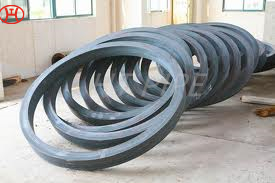
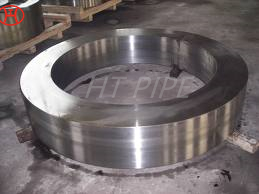
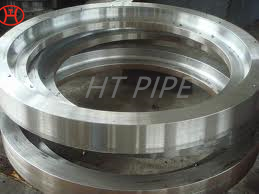
These grades are excellent for fixed service simple flange connections, but slightly less so when forming a complex metallic shape. Fortunately, the workability of duplex into complex and rounded structures is less of an issue in structural steel given the wide preference for simple mild steel in non corrosive applications.
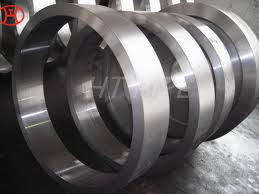
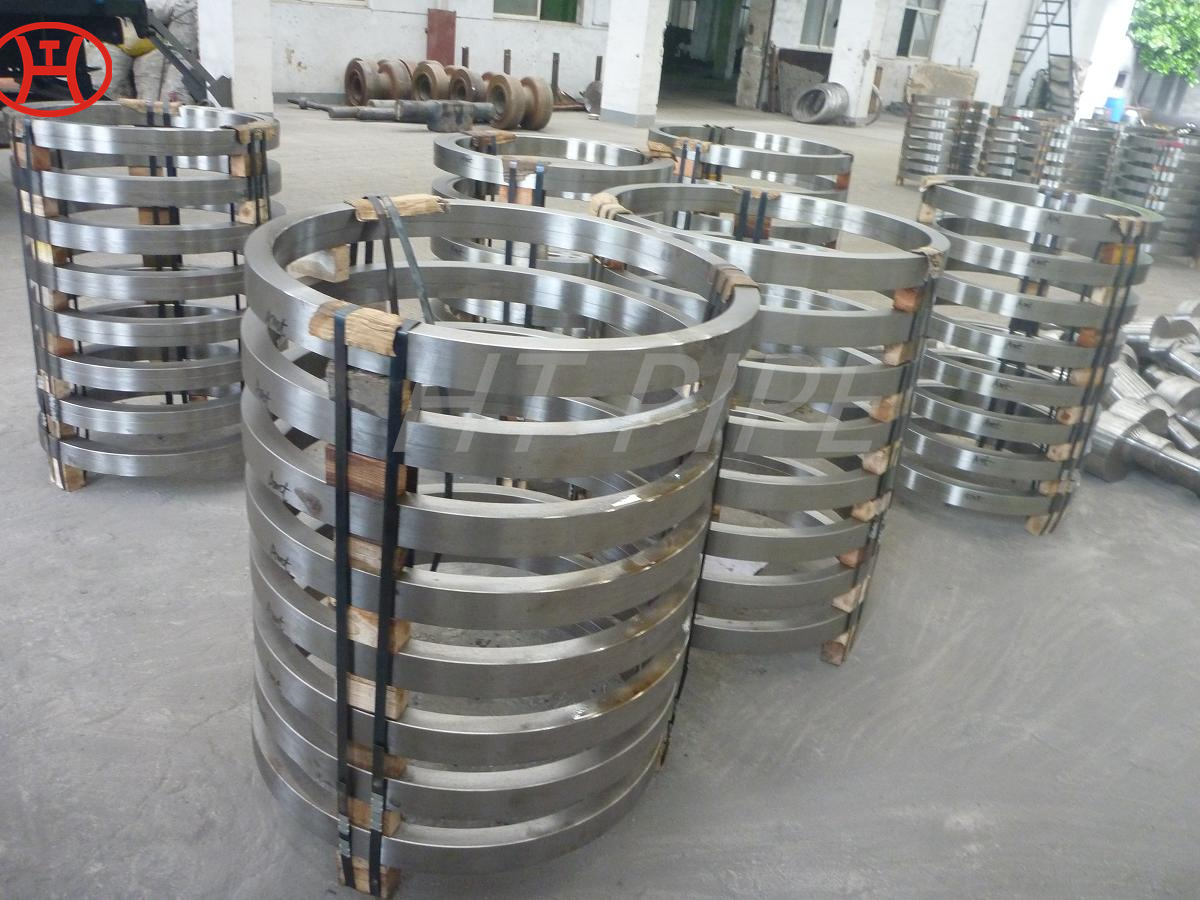
Duplex 2205 flanges are made from an austenitic-ferritic stainless steel, which was designed to deliver higher strength and corrosion resistance than 300 series stainless steels.
Both ASME B16.5 and ASME B16.47 have endorsed pipe flanges made from a series of duplex stainless steel grades.
2205 helps users to avoid stress corrosion cracking that is typically seen with 316 and 317.
Duplex 2205 flanges combine the qualities of stress corrosion cracking resistance and high strength derived from being a ferritic alloy along with its austenitic fabrication capabilities.
2205 flange has good general corrosion resistance, high resistance to chloride stress corrosion cracking, as well as pitting and crevice corrosion.
2205 flange has good sulfide stress corrosion resistance and high strength and good fatigue resistance.
Duplex steel flange also offers Good weldability and workability, High energy absorption and Low thermal expansion.
In comparison to SS316, Duplex 2205 has been tested under reverse bending stresses at room temperature. The results show that the fatigue limit/yield strength is about twice as high for Duplex 2205.
The 21% chromium content is the key to extreme corrosion resistance and strength of the SA 182 f51 flanges. HT PIPE is a leading supplier and manufacturer of the flanges in various scales, shapes and types.
The combination of the ferritic phase and austenitic phase provides both high strength and excellent corrosion resistance.
The material has high strength values. The minimum yield strength is 450MPa and the minimum tensile strength is 620MPa, with 25% minimum elongation and 290HB Brinell hardness.
The SA 182-F51 S31803 comes under ASME B16.47, B16.48 and B16.5 standards with sizes ranging from 1/8 NB to 48NB.
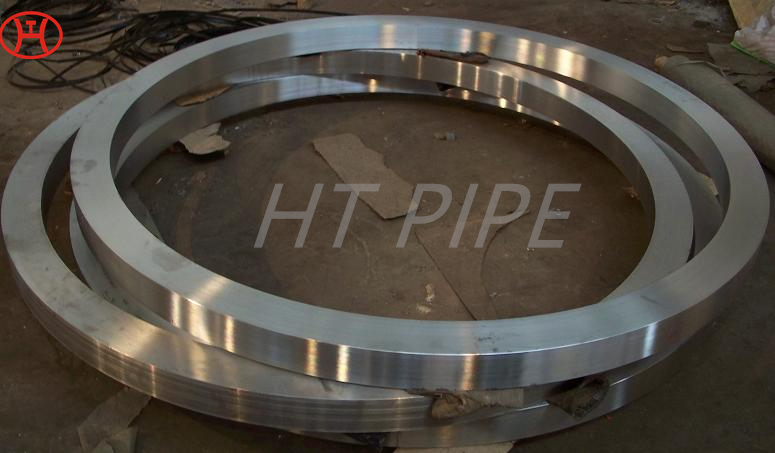
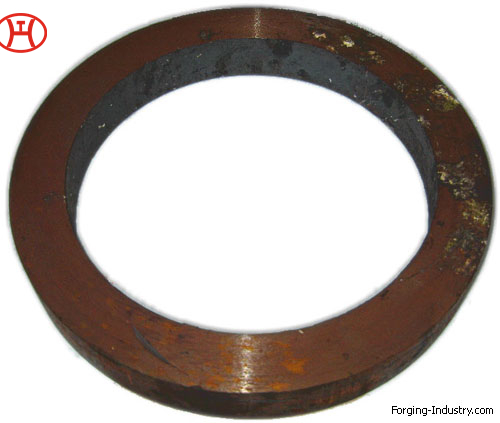
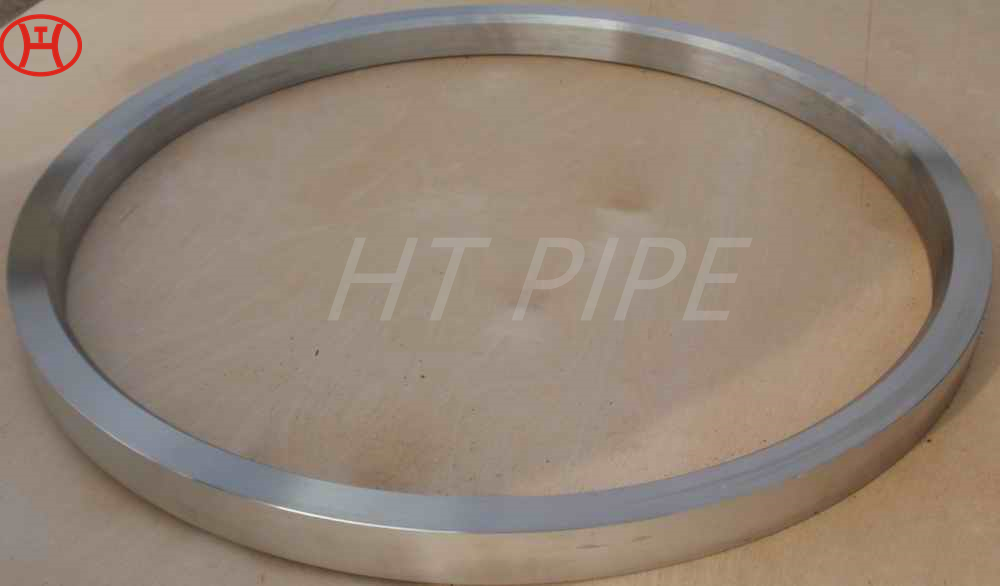
The pressure ratings of the material are designated by classes 150Lbs through 2500LBs. There are different types of the duplex f51 flanges such as the raised face, ring type joint and flat face flanges.
The different face types have their own advantages in piping applications.
The A182 F51 material has carbon, 2% manganese, phosphorus, sulfur, 1% silicon, chromium, 4.5% nickel, 2.5% molybdenum and nitrogen it.
Due to the material composition, the strength and the corrosion resistance, these flanges are used in a variety of applications.
The applications of the flanges include petroleum, petrochemical, oil and gas and other high performing piping systems.
A182 F51 Duplex stainless steel composed of 21% chromium, 2.5% molybdenum and 4.5% nickel-nitrogen alloy. It has high strength, good impact toughness and good overall and local stress corrosion resistance.
The yield strength of duplex stainless steel is twice that of austenitic stainless steel. This feature allows designers to reduce weight when designing products, making this alloy more cost-effective than 316, 317L.
This alloy is especially useful in the -50¡ãF/+600¡ãF temperature range. For applications outside this temperature range, this alloy can also be considered, but there are some restrictions, especially when used in welded structures.
Compared with austenitic stainless steel, F51 duplex stainless steel has twice the compressive strength, and compared with 316L and 317L, the designer can reduce its weight.
F51 duplex stainless steel is especially suitable for use in the temperature range of -50¡ãF/+600¡ãF, and can also be used for lower temperatures under strictly limited conditions (especially for welded structures).
Application fields of duplex stainless steel: ¡¤ Pressure vessels, high-pressure storage tanks, high-pressure pipelines, heat exchangers (chemical processing industry). ¡¤ Oil and gas pipelines, heat exchanger fittings. ¡¤ Sewage treatment system.
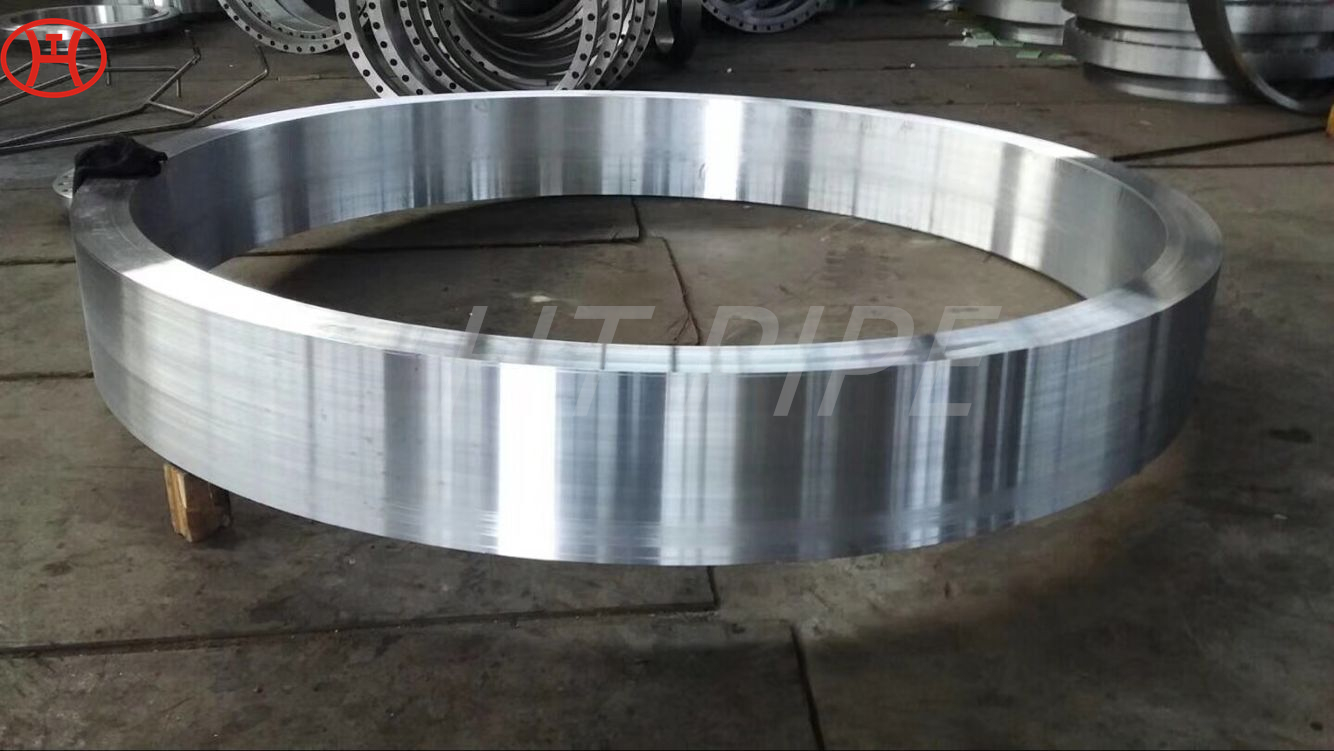
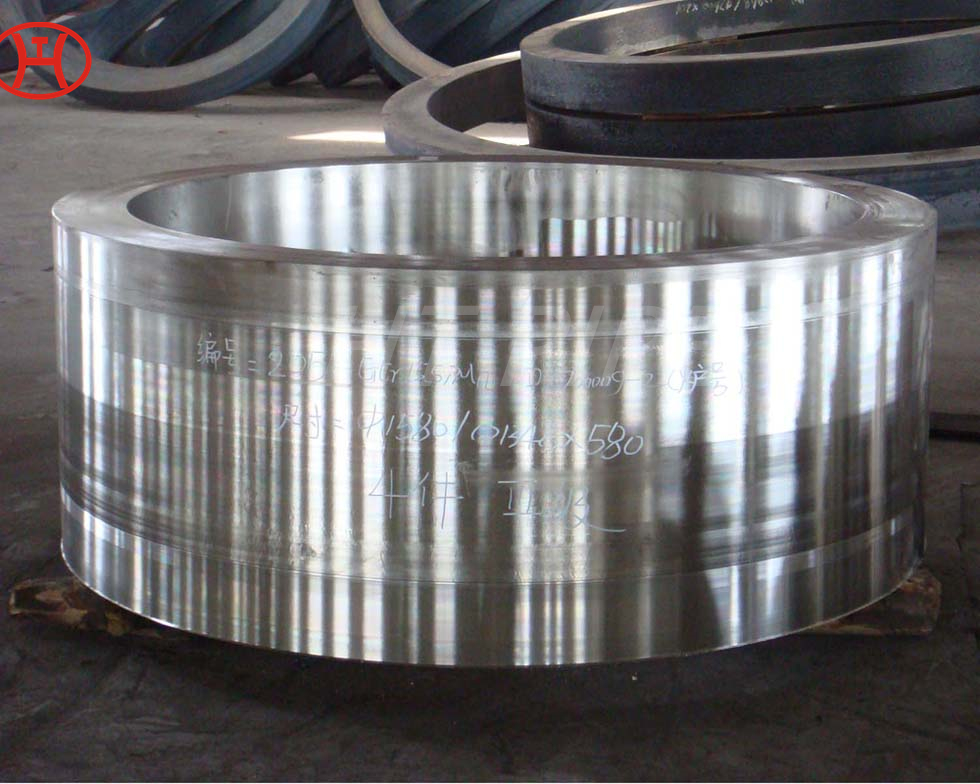
The ASTM A182 F51 flanges refer to standard or non-standard flanges manufactured in accordance with ASTM A182 Grade F51, which is designated with UNS number S31803.
Astm A182 F51 flange is made up of carbon, chromium, manganese, silicon, phosphorus, sulfur, nickel, nitrogen, molybdenum and iron.
The A182 Gr. F51 / S31803 material is a typical duplex stainless steel, which contains approximately 50% ferrite and 50% austenite.
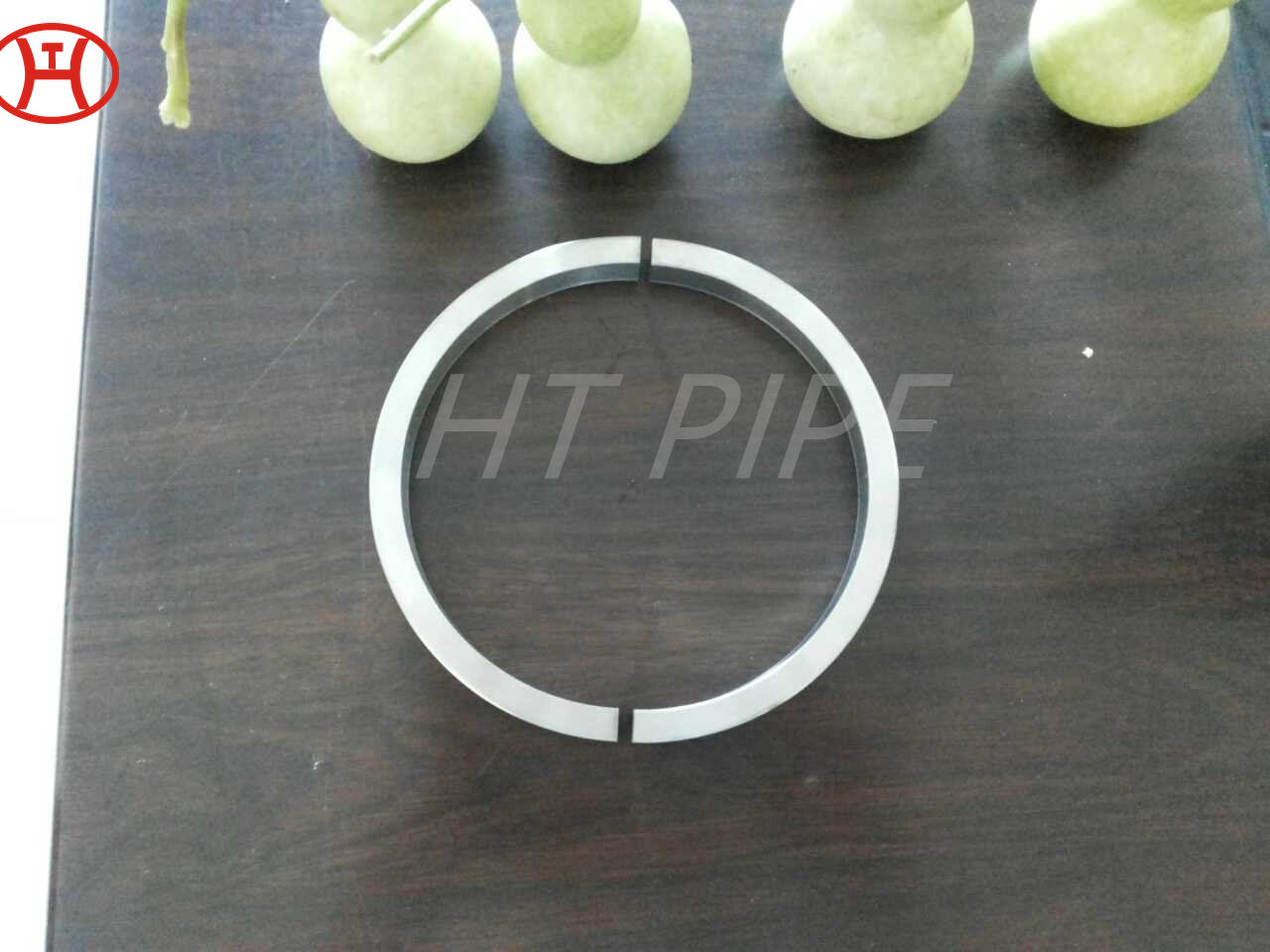
The flange a182 f53 can also differ in the face type as flat face, raised face and ring type joint flanges.
The astm a182 f53 vs f55 can come in different diameters ranging from ? inches to 48 inches with different pressure classes ranging from class 150 through class 2500.
The pressure capacities of the flanges can also be expressed in pressure numbers. The astm a182 f53 uns s32750 flange types come in pressure numbers ranging from PN6 through PN64.