
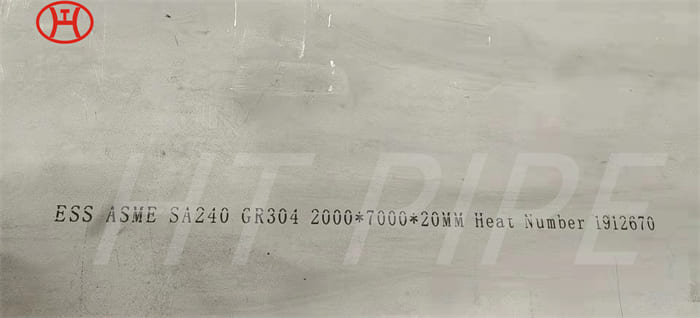
ASTM A240 TP304 Plate UNS S30400 Stainless Steel Sheet
It is common practice for 304L to be dual certified as 304 and 304L. The low carbon chemistry of 304L combined with an addition of nitrogen enables 304L to meet the mechanical properties of 304.
Stainless Steel 304 Plate, Most trusted ASTM A240 Grade 304 Plate Stockist
Stainless Steel 304 Plate also resists moderately aggressive organic acids such as acetic. The nickel present in ASTM A240 Grade 304 Plate provides resistance to moderately reducing solutions such as pure phosphoric acid, whatever the concentration, in cold solutions and up to 10% diluted hot solutions. 304 Stainless Steel Sheet and Plate is the ideal choice due to its tensile strength, high resistance to rust, and high fabrication ability. ASTM A240 Grade 304 Plate is an alloy of Iron with a minimum of 10.5% Chromium. This prevents any further corrosion of the surface. Increasing the amount of Chromium gives an increased resistance to corrosion. SS 304L Sheet also containsvarying amounts of Carbon, Silicon and Manganese. Other elements such as Nickel and Molybdenum may be added to impart other useful properties such as enhanced formability and increased corrosion resistance.
304 and 304L stainless steel plates are part of the austenitic family of stainless steel and they are one of the most versatile and widely used varieties of stainless plate. ASTM A240 304 304L Plate are a relatively low cost stainless product and used in a variety of applications. ASTM A240 304 Plates have excellent low temperature properties and respond well to hardening by cold working. The UNS S30400 Coil can also operate successfully in caustic solutions free of chlorides or Alloy 304/304L does not perform well in more highly reducing environments such as those containing chlorides and sulfuric acid. 304 and 304L stainless steel plates are part of the austenitic family of stainless steel and they are one of the most versatile and widely used varieties of stainless plate. Stainless Steel 304 1.4301 Plates are a relatively low cost stainless product and used in a variety of applications. 304 grades have excellent low temperature properties and respond well to hardening by cold working.
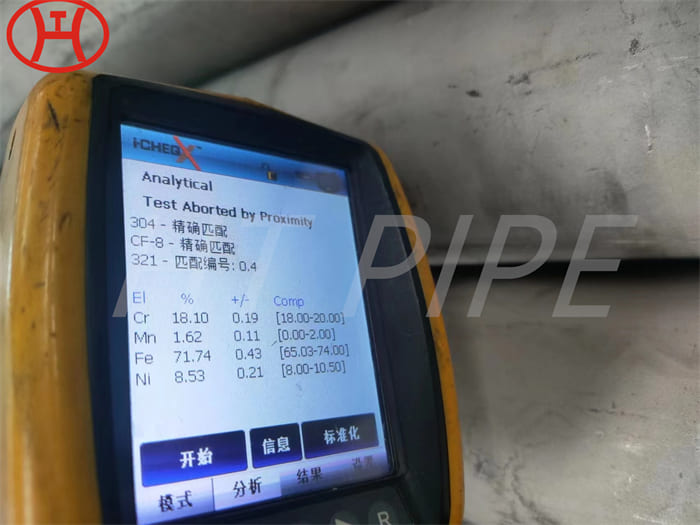
Chemical Equation of SS A240 304 Foil
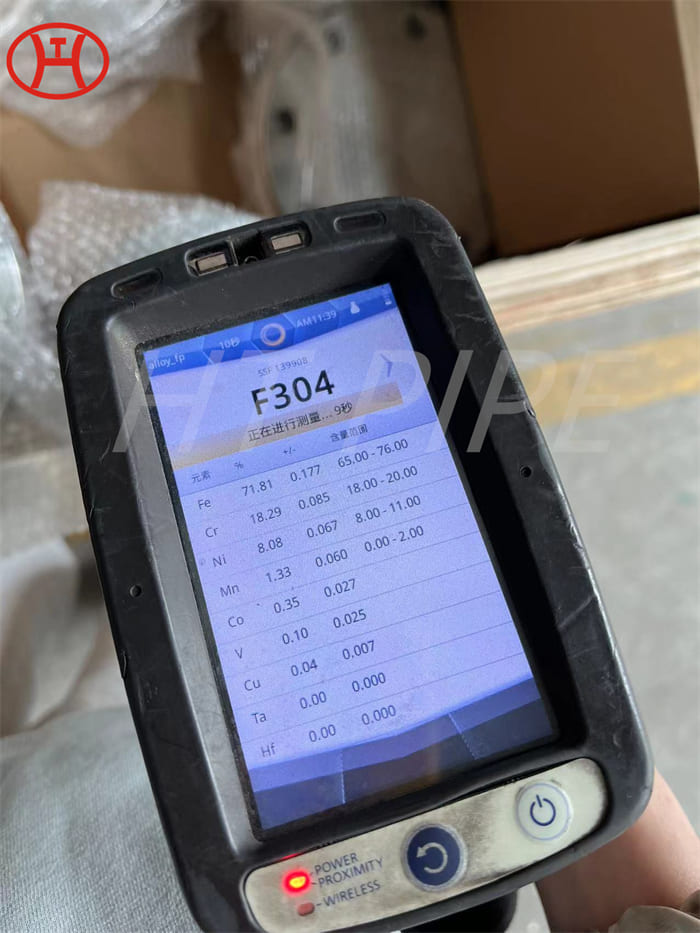
| Grade | C | Mn | Si | P | S | Cr | Mo | Ni | N | |
| 304 | min. | – | – | – | – | – | 18 | – | 8 | – |
| max. | 0.08 | 2 | 0.75 | 0.045 | 0.03 | 20 | 10.5 | 0.1 | ||
Mechanical Characteristics of UNS S30400 Sheet
| Grade | Tensile Strength (MPa) min | Yield Strength 0.2% Proof (MPa) min | Elongation (% in 50mm) min | Hardness | |
| Rockwell B (HR B) max | Brinell (HB) max | ||||
| 304 | 515 | 205 | 40 | 92 | 201 |