Alloy System
Ni-Cr-Fe + Al
Strengthening
Solid Solution
What is Inconel 601? Inconel 601 (UNS N06601) is a nickel-chromium-iron alloy with a deliberate aluminum addition (1.0–1.7%) that forms a tightly adherent Al₂O₃ + Cr₂O₃ composite oxide scale. This dual-layer protection enables outstanding resistance to high-temperature oxidation up to 1200 °C (2200 °F) long-term and 1250 °C short-term, with superior resistance to oxide spallation under thermal cycling conditions compared to Inconel 600. The 58–63% nickel matrix provides immunity to chloride stress-corrosion cracking, while the 21–25% chromium contributes to hot corrosion and carburization resistance. Inconel 601 is the benchmark material for heat-treating equipment, industrial furnace components, gas turbine combustors, and catalytic cracking units where standard stainless steels and even Inconel 600 fail by oxide spallation. HT PIPE supplies Inconel 601 in seamless pipes (ASTM B167), plates (B168), welded pipes (B775/B516), welded fittings (B366), forgings (B564), and round bars (B166) with full EN 10204 3.1 certification and high-temperature tensile testing.
Nickel (Ni) ★
58.0 – 63.0%
SCC resistance + austenite base
Chromium (Cr) ★
21.0 – 25.0%
Cr₂O₃ outer oxide layer
Aluminum (Al) ★
1.0 – 1.7%
Al₂O₃ inner oxide — anti-spall
Iron (Fe)
~7.7 – 17.4%
Balance — cost reduction
Inconel 601: The Oxidation Resistance Champion
Inconel 601 (UNS N06601) was developed by Special Metals (Inco Alloys) as an evolution of Inconel 600, with the specific addition of 1.0–1.7% aluminum to dramatically improve high-temperature oxidation resistance. While Inconel 600 relies solely on a Cr₂O₃ surface film that can spall under thermal cycling, Inconel 601 forms a dual-layer protective scale: an outer Cr₂O₃ layer for primary oxidation resistance, plus a thin, dense inner Al₂O₃ layer that adheres tightly to the substrate even through repeated heating and cooling cycles. This composite oxide architecture extends the usable temperature range from 1093 °C (Inconel 600) to 1200 °C long-term service.
The aluminum addition is the critical differentiator. Al₂O₃ has three key advantages over pure Cr₂O₃: (1) lower oxygen diffusion rate, slowing substrate oxidation; (2) superior mechanical adhesion to the nickel-base matrix with better thermal expansion matching; (3) resistance to cracking and spallation during thermal cycling. The result is a 3–5× improvement in oxidation-limited service life compared to Inconel 600 in cyclic service above 1100 °C. Inconel 601 also exhibits good carburization resistance and useful resistance to sulfur-containing atmospheres up to approximately 815 °C.
While not designed for aqueous corrosion service (its PREN of ~23 is modest with no molybdenum), Inconel 601 is the benchmark material for extreme high-temperature oxidizing environments. For applications requiring high-temperature performance plus aqueous pitting resistance, Inconel 625 is the appropriate upgrade. For lower-cost 1000 °C-class service without aluminum protection, RA330 (UNS N08330) offers 60–70% of Inconel 601’s cost with corresponding performance reduction.
Five Defining Advantages of Inconel 601
1. Outstanding High-Temp Oxidation
1200 °C long-term and 1250 °C short-term oxidation resistance — aluminum forms Al₂O₃ + Cr₂O₃ composite protective scale.
2. Superior Spallation Resistance
Under thermal cycling conditions the Al₂O₃ inner layer does not flake off — outperforms Inconel 600 in cyclic service above 1000 °C.
3. Good Carburization Resistance
High Cr + Al combination resists carbon ingress in carburizing environments up to 900–950 °C — suitable for reformer and cracking service.
4. Sulfur-Bearing Atmosphere Resistance
High Cr and Al provide useful sulfidation resistance up to ~815 °C — performs well in refinery and incineration flue gases.
5. Stable High-Temp Strength
Solid-solution strengthened with good creep-rupture strength above 500 °C — recommended for use above 500 °C where its design intent is realized.
Chemical Composition — ASTM B168 UNS N06601
The balanced Ni-Cr-Fe-Al chemistry defines Inconel 601’s position as the high-temperature oxidation specialist. Each element serves a specific high-temperature protection function:
| Element |
Min (%) |
Max (%) |
Role |
| Nickel (Ni) |
58.0 |
63.0 |
Base matrix (with cobalt). Stabilizes austenitic structure. Provides chloride SCC immunity. Resists reducing atmospheres and stress-corrosion cracking at high temperature. |
| Chromium (Cr) ★ |
21.0 |
25.0 |
Primary oxidation barrier. Forms outer Cr₂O₃ layer of the protective composite scale. Resists hot corrosion, sulfidation, and carburization. |
| Aluminum (Al) ★ |
1.0 |
1.7 |
Defining element. Forms inner Al₂O₃ layer — dense, low oxygen diffusivity, excellent adhesion. Prevents oxide spallation under thermal cycling. The differentiator vs. Inconel 600. |
| Iron (Fe) |
~7.7 |
~17.4 |
Balance element. Reduces cost vs. fully nickel-based alloys. Maintains austenitic structure and solid-solution strengthening contribution. |
| Carbon (C) |
— |
0.10 |
Controlled low. Prevents excessive carbide precipitation that could compromise ductility and weldability. Not stabilized — relies on low C content. |
| Manganese (Mn) |
— |
1.0 |
Deoxidizer during melting; improves hot workability. Residual quantity. |
| Silicon (Si) |
— |
0.5 |
Deoxidizer. Low level maintained to avoid embrittling silicide phases at high temperature. |
| Copper (Cu) |
— |
1.0 |
Residual impurity — controlled for high-temperature stability and weldability. |
| Sulfur (S) |
— |
0.015 |
Impurity — tightly controlled for hot ductility and weld soundness. |
| Phosphorus (P) |
— |
0.02 |
Impurity — controlled to prevent temper embrittlement and weld hot cracking. |
★ Starred elements define Inconel 601’s high-temperature performance — Ni, Cr, and Al are the three functional pillars
PREN (Pitting Resistance Equivalent Number): PREN = %Cr + 3.3 × %Mo = 23 + 3.3 × 0 ≈
23 (nominal). Inconel 601 contains no molybdenum, so its PREN is modest. This is intentional — Inconel 601 is
not designed for aqueous pitting resistance; its core advantage is high-temperature oxidation resistance. For chloride-bearing aqueous service requiring pitting resistance combined with high-temperature capability, upgrade to
Inconel 625 (PREN ~52) or
C-276 (PREN ~66).
Mechanical Properties — Room Temperature (Annealed)
Inconel 601 is a solid-solution strengthened alloy — it cannot be age-hardened. Properties are stable in the solution-annealed condition. The alloy retains useful mechanical strength at elevated temperature, with a recommended service range above 500 °C where its high-temperature design intent is fully realized. Cold work increases room-temperature strength but reduces ductility and is not commonly applied for high-temperature service.
| Condition |
UTS (MPa) |
YS (MPa) |
Elongation (%) |
Hardness |
| Annealed (ASTM B168) |
≥550 |
≥240 |
≥30 |
≤220 HB |
| Typical (20°C) |
~650 |
~300 |
~40 |
~180 HB |
Elastic Constants & Physical Constants (Annealed at 20°C)
| Elastic / Physical Constant |
Value |
Unit |
| Modulus of Elasticity (Tension, E) |
~207 |
GPa (30.0 × 10³ ksi) |
| Shear Modulus (G) |
~81 |
GPa |
| Poisson’s Ratio (ν) |
0.29 |
— |
Physical Properties — UNS N06601
Inconel 601’s physical properties are typical of nickel-chromium-iron alloys. The density (8.1 g/cm³) and thermal conductivity are slightly lower than 316L due to the higher nickel content. The alloy is essentially non-magnetic across all conditions, with magnetic permeability very close to unity.
| Property |
Value |
Unit |
| Density |
8.1 |
g/cm³ (0.293 lb/in³) |
| Melting Range |
1360 – 1411 |
°C (2480 – 2572 °F) |
| Thermal Conductivity (at 20°C) |
11.2 |
W/m·K |
| Specific Heat (at 20°C) |
461 |
J/kg·K |
| Electrical Resistivity (at 20°C) |
1.29 |
μΩ·m |
| Coeff. of Thermal Expansion (20°C) |
14.1 |
μm/m·°C |
| Magnetic Permeability |
1.003 |
Non-magnetic |
Heat Treatment Procedures
Inconel 601 requires solution annealing to restore full ductility after hot or cold working and to develop the optimal oxide-forming microstructure. The alloy is solid-solution strengthened — it cannot be age-hardened. Solution annealing at 1150 °C is recommended for high-temperature service to ensure uniform grain structure and full aluminum retention in solid solution:
Step 1 — Solution Anneal
1150 °C ± 10 °C + Water Quench
Hold time ~30 min per 25 mm section thickness. Water quench recommended. Dissolves carbides, homogenizes aluminum in solid solution, restores full ductility after cold work.
Step 2 — Stress Relief (optional)
Low temperature range, as required
For machined components requiring dimensional stability. Optional — applied only when justified by specific service requirements.
Step 3 — Age Hardening
Not Applicable — Solid Solution Only
Inconel 601 is solid-solution strengthened and cannot be age-hardened. Strength derives from the Ni-Cr-Fe-Al matrix and grain size control, not precipitate formation.
CRITICAL NOTES:
Welding: Use ERNiCrFe-11 or ERNiCr-3 filler metal. Limit interpass temperature to ≤150 °C and use low heat input (0.8–1.5 kJ/mm) to prevent hot cracking.
Avoid dwelling at 600–800 °C — prolonged exposure in this range can cause carbide precipitation that may reduce ductility and aqueous corrosion resistance (though high-temperature oxidation resistance is unaffected).
Post-weld solution anneal (1150 °C + WQ) recommended for severe high-temperature service welds — eliminates residual stresses and homogenizes the microstructure for optimal oxide formation.
Hot working range: 1170–1230 °C. Do not allow material to fall below 980 °C before finishing. Solution anneal after hot working to restore properties.
Corrosion Resistance — High-Temperature Oxidation Specialist
Inconel 601 was engineered specifically for extreme high-temperature oxidizing environments and remains the benchmark material for service above 1100 °C and under thermal cycling conditions. The aluminum addition (1.0–1.7%) forms a dual-layer Al₂O₃ + Cr₂O₃ protective scale that resists spallation far better than the single Cr₂O₃ layer of Inconel 600. While not designed for aqueous corrosion, the high nickel content (58–63%) provides chloride SCC immunity as a secondary benefit.
High-Temperature Oxidation ★ ★ — DEFINING STRENGTH
Inconel 601’s signature capability. The 1.0–1.7% aluminum addition forms a thin, dense Al₂O₃ inner layer beneath the outer Cr₂O₃ scale. This composite oxide structure delivers long-term oxidation resistance to 1200 °C (2200 °F) and short-term excursions to 1250 °C. In static oxidation at 1100 °C for 1000 hours, Inconel 601 loses only ~0.8 mm/yr — roughly half the metal loss of Inconel 600 and less than one-tenth of 316L (which fails catastrophically).
Oxidation Spallation Resistance ★ — UNIQUE ADVANTAGE
Under thermal cycling conditions (repeated heating/cooling through hundreds of degrees), the Al₂O₃ inner layer remains tightly adherent to the substrate — it does not crack and spall like the Cr₂O₃-only scale on Inconel 600. This is the single most important advantage of Inconel 601 vs. Inconel 600. In cyclic service at 1200 °C, Inconel 600 typically suffers 5+ mm/yr metal loss from spallation, while Inconel 601 maintains ~2.5 mm/yr — a 2× or greater life improvement that often translates to 3–5× component service life.
Carburization Resistance
Excellent resistance to carburization in carbon-rich atmospheres up to 900–950 °C. The high Cr + Al combination forms a stable oxide barrier that resists carbon ingress. Used in ethylene pyrolysis, steam reformer, and FCC catalyst support service where carburizing environments at high temperature would attack stainless steels. At 900 °C in carburizing gas, Inconel 601 achieves ~0.3 mm/yr — better than Inconel 600 and far superior to 316L (which carburizes and embrittles rapidly).
Sulfur-Bearing Atmosphere Resistance
Good resistance to sulfidation in sulfur-containing flue gases up to ~815 °C. High Cr and Al provide useful protection in refinery, incinerator, and sulfur-bearing combustion environments. Important limitation: at higher temperatures or in high-sulfur-concentration reducing atmospheres, nickel-base alloys form low-melting-point Ni-Ni₃S₂ eutectic (melting point only 645 °C), which can cause catastrophic corrosion. Limit sulfur-bearing service to oxidizing conditions and temperatures ≤815 °C. For high-sulfur service consider specialized high-chromium alloys such as RA85H.
Chloride Stress-Corrosion Cracking (SCC)
Immune to chloride SCC due to the high 58–63% nickel content — the same mechanism that protects Inconel 600 and 625. In boiling 42% MgCl₂ testing, Inconel 601 does not crack, while 316L fails rapidly. Note that Inconel 601 is not specified for chloride SCC service — if aqueous chloride pitting is the primary concern, choose Inconel 625 or C-276 for their superior pitting resistance (PREN ~52 and ~66 respectively vs. Inconel 601’s ~23).
Aqueous & Alkaline Service
Moderate resistance to aqueous corrosion — adequate for many neutral-pH and alkaline service conditions but not the alloy’s design focus. Good resistance to alkaline solutions (NaOH, KOH) due to high nickel content. Not recommended for service in hydrochloric, hydrofluoric, or oxidizing acid environments — upgrade to Ni-Cr-Mo alloys (C-276, C-2000) for severe acid service.
Corrosion Rate Comparison — Inconel 601 vs Inconel 600 vs 316L vs Inconel 625
| Environment |
Inconel 601 |
Inconel 600 |
316L |
Inconel 625 |
| Oxidation 1100 °C, 1000 hr |
0.8 (Excellent) |
1.5 (Medium) |
>10 (Failed) |
1.0 |
| Oxidation 1200 °C, cycling |
2.5 (Usable) |
5+ (Spall) |
Failed |
3.0 |
| Carburizing 900 °C |
0.3 |
0.5 |
Failed |
0.4 |
| Boiling 42% MgCl₂ (SCC) |
Immune |
Immune |
Cracks |
Immune |
| Sulfur-bearing 800 °C |
Good |
Medium |
Failed |
Good |
Green = excellent; Red = unacceptable. Oxidation values in mm/yr metal loss. Values are typical — actual performance depends on gas composition, temperature cycling profile, and contaminant species.
Grade Selection Guide — Inconel 601 Positioning
Inconel 601 occupies the position of the oxidation-resistance specialist within the high-temperature nickel alloy family. When temperatures exceed 1100 °C or thermal cycling is severe, Inconel 601 is the default specification. Choose Inconel 600 for moderate-temperature dry chlorine gas or nuclear service; choose Inconel 625 when high-temperature service requires additional aqueous pitting/acid resistance and high strength:
| Alloy |
High-Temp Oxidation |
Spallation Resist. |
Carburization |
SCC Resistance |
Relative Cost |
| 316L |
★★ |
★ |
★ |
★ |
$ |
| Inconel 600 |
★★★★★ |
★★★ |
★★★★ |
★★★★★ |
$$$ |
| Inconel 601 |
★★★★★ |
★★★★★ |
★★★★★ |
★★★★★ |
$$$ |
| Inconel 625 |
★★★★ |
★★★★ |
★★★★ |
★★★★★ |
$$$$ |
| Inconel 718 |
★★★★ |
★★★ |
★★★ |
★★★★ |
$$$$$ |
Inconel 601 Positioning: "The Oxidation Resistance Champion"
Choose Inconel 601 for extreme high-temperature oxidizing service above 1100 °C, severe thermal cycling, or carburizing environments. Choose Inconel 600 for dry chlorine gas service (~650 °C) or nuclear high-purity water applications. Choose
Inconel 625 when mid-to-high temperature service requires aqueous pitting/acid resistance plus high strength. Choose RA330 (UNS N08330) as a lower-cost 1000 °C-class alternative when aluminum-enhanced protection is not required.
Key Applications
Inconel 601 is the workhorse material for heat-treating equipment, industrial furnace components, gas turbine combustors, and petrochemical processing where service temperatures exceed 1000 °C or where thermal cycling destroys standard stainless and Inconel 600 components. Its balanced chemistry and aluminum-enhanced oxide protection make it the default specification for extreme high-temperature oxidizing service:
| Application |
Components & Conditions |
| Heat Treating Equipment ★ ★ |
Radiant tubes, muffle furnaces, baskets, fixtures, and wire belts for continuous annealing and carburizing lines. The defining application — Inconel 601 resists cyclic oxidation and carburization at 1000–1200 °C for years of service. |
| Industrial Furnace Components |
Burners, nozzles, radiant heater tubes, combustion chambers, and furnace structural parts. Withstands continuous high-temperature duty plus thermal cycling from startup/shutdown. |
| Aerospace — Gas Turbines ★ |
Combustion chamber liners, ignition systems, exhaust sections, and casings. Resists extreme temperature oxidation and thermal cycling in jet engine and industrial gas turbine service. |
| Petrochemical & Refining |
Catalytic cracking units (FCC), catalyst support grids, thermocouple protection sheaths, and reformer tube internals. Handles high temperature plus carburizing and sulfidizing atmospheres. |
| Power Generation |
Boiler superheater tubes, steam reformer tubes, and high-temperature heat exchangers in advanced power cycles. Resists steam-side and gas-side oxidation at 600–1100 °C. |
| Automotive ★ |
Turbocharger components and exhaust manifolds in high-performance and heavy-duty diesel engines. Withstands exhaust gas temperatures to 1050 °C plus thermal cycling from engine load variations. |
| Waste Incineration |
Combustion chamber components, grate bars, and superheater sections. Resists the complex oxidizing/chlorinating/sulfidizing atmospheres generated by municipal and hazardous waste combustion. |
| Nuclear |
Fuel rod cladding components and reactor internal structures requiring high-temperature oxidation resistance plus radiation stability. |
Applicable Standards & Specifications
| Standard |
Product Form / Scope |
Notes |
| ASTM B168 / ASME SB-168 |
Plate, Sheet, Strip — Ni-Cr-Fe-Al alloy |
Primary flat-product spec. Covers UNS N06601. |
| ASTM B166 / ASME SB-166 |
Rod, Bar, Wire — Ni-Cr-Fe-Al alloy |
Round bar and wire products |
| ASTM B167 / ASME SB-167 |
Seamless Pipe & Tube |
Seamless pipe primary spec |
| ASTM B366 / ASME SB-366 |
Wrought Welded Fittings |
Butt-weld and socket-weld fittings |
| ASTM B564 / ASME SB-564 |
Nickel Alloy Forgings (Flanges, Fittings) |
Pressure vessel service |
| ASTM B775 / ASME SB-775 |
Welded Pipe (large diameter) |
Welded pipe products |
| ASTM B751 / B516 |
Welded Tube |
Welded tube products |
| DIN 2.4851 / WNr 2.4851 |
NiCr23Al — European Werkstoff equivalent |
European project specification |
| AWS A5.14 |
ERNiCrFe-11 / ERNiCr-3 filler metal |
Welding consumables for Inconel 601 |
Available Product Forms from HT PIPE
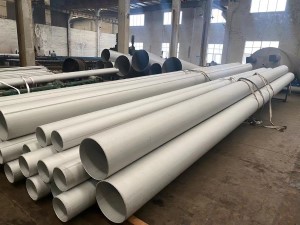
We supply Inconel 601 in solution-annealed condition (1150 °C + WQ) with EN 10204 3.1 certification on every shipment. High-temperature tensile testing (e.g., 980 °C UTS verification) is available on specification. Inconel 601 is a high-value alloy with moderate availability — contact us for current stock and project quotations.
| Product Form |
Specification & Range |
| Seamless Pipes & Tubes |
½″–12″ NB, Sch 10S–Sch 80S. ASTM B167 UNS N06601. Solution annealed + WQ. |
| Plates & Sheets |
0.5–50 mm thickness. ASTM B168 UNS N06601. Solution annealed. Custom cut-to-size available. |
| Welded Pipes & Tubes |
ASTM B775 / B516 UNS N06601. Full range of sizes. As-welded or annealed per requirement. |
| Welded Fittings |
ASTM B366 UNS N06601. Butt-weld and socket-weld. Elbows, tees, reducers, caps, stub ends. |
| Flanges |
ASTM B564 UNS N06601. 150#–1500#. Weld neck, blind, slip-on, lap joint, long weld neck, orifice. |
| Forgings |
ASTM B564 UNS N06601. Custom forged rings, discs, blocks, and special shapes. |
| Round Bars |
6–300 mm diameter. ASTM B166 UNS N06601. Hot-finished and cold-drawn. Annealed. |
| Welding Filler Metal |
ERNiCrFe-11 (AWS A5.14) dedicated filler, or ERNiCr-3 general-purpose. MIG/TIG wires and covered electrodes. |
HT PIPE Project Experience — Inconel 601
Case Study: Continuous Annealing Line Radiant Tubes — 3.5 Tons Inconel 601 Seamless Pipe
HT PIPE supplied 3.5 tons of Inconel 601 seamless pipe (ASTM B167 UNS N06601, DN80–DN150, Sch 40) to a East Asian steelmaker for a continuous annealing line (CAL) radiant-tube heating furnace. The system operates with:
Radiant tube wall temperatures of 1050–1150 °C;
Periodic startup/shutdown thermal cycling — 2 to 3 heat-up/cool-down cycles per week;
Continuous operation for 6+ years between scheduled replacements;
Material selection justification: The original Inconel 600 radiant tubes failed within 3 years due to oxide-spallation-induced wall thinning and perforation. The Cr₂O₃-only scale on Inconel 600 cracked and flaked during thermal cycling, exposing the bare substrate to accelerated oxidation. Inconel 601 was selected for its aluminum addition (1.0–1.7%) that forms an Al₂O₃ + Cr₂O₃ composite oxide scale, which remains adherent under thermal cycling and resists spallation. Projected service life improvement: 3–5× vs. Inconel 600.
Delivery: Full EN 10204 3.1 certification plus high-temperature tensile testing (980 °C UTS ≥120 MPa verified per heat). Solution-annealed at 1150 °C + WQ per Step 1 procedure with furnace chart records. Delivered in 10 weeks from order. After 6 years of continuous operation, tube-wall oxidation thinning measured only 0.3 mm — projected remaining service life exceeds 15 years.
For additional project references matching your specific high-temperature service conditions, contact our technical sales team. We can provide anonymized case studies for heat treating, petrochemical, gas turbine, and reformer applications.
Frequently Asked Questions — Inconel 601
Q1: What is the difference between Inconel 601 and Inconel 600? When should I choose 601?
Inconel 601 is the improved version of Inconel 600 with the deliberate addition of 1.0–1.7% aluminum. The aluminum forms an Al₂O₃ + Cr₂O₃ composite oxide scale that raises the long-term oxidation temperature limit from 1093 °C (Inconel 600) to 1200 °C (Inconel 601) and, critically, prevents oxide spallation under thermal cycling (Inconel 600’s Cr₂O₃-only scale flakes off during cycling). Choose Inconel 601 when: (1) service temperature exceeds 1100 °C; (2) the equipment experiences frequent heat-up/cool-down cycling; (3) longer oxidation-limited service life is required. Choose Inconel 600 when: (1) the service requires dry chlorine gas resistance at ~650 °C (Inconel 600 is superior here); (2) nuclear high-purity water applications; (3) cost sensitivity is high and temperature stays below 1000 °C. Mechanical properties are similar; Inconel 601 typically costs 10–15% more than Inconel 600.
Q2: Why does Inconel 601 resist oxide spallation better than Inconel 600?
The key is the aluminum addition (1.0–1.7%). At high temperature, aluminum preferentially oxidizes to form a thin, dense inner Al₂O₃ layer beneath the outer Cr₂O₃ scale, creating a composite oxide structure. The Al₂O₃ inner layer has three critical advantages: (1) lower oxygen diffusion rate — slows substrate oxidation; (2) superior mechanical adhesion to the nickel-base matrix with better thermal expansion matching; (3) resistance to cracking and spallation during thermal cycling. Inconel 600 relies on a Cr₂O₃-only scale, which cracks and flakes due to thermal expansion mismatch with the substrate during temperature changes — exposing fresh metal to direct oxidation and accelerating metal loss.
Q3: Can Inconel 601 be used in sulfur-containing environments?
Yes, but with important limitations. The high chromium (21–25%) and aluminum (1.0–1.7%) provide useful sulfidation resistance. In sulfur-bearing flue gases, Inconel 601 performs well up to ~800 °C, outperforming most stainless steels. However, at higher temperatures or in high-sulfur-concentration reducing atmospheres, nickel-base alloys form a low-melting-point Ni-Ni₃S₂ eutectic (melting point only 645 °C), which causes catastrophic liquid-metal embrittlement and corrosion. For high-sulfur service, consider specialized high-chromium alloys such as RA85H. For sulfur-bearing applications with Inconel 601, we recommend limiting service temperature to ≤815 °C, ensuring oxidizing (not reducing) conditions, and performing field coupon testing before final specification.
Q4: What are the welding considerations for Inconel 601?
Use ERNiCrFe-11 (dedicated) or ERNiCr-3 (general-purpose) filler metal. Key welding considerations: (1) limit interpass temperature to ≤150 °C to prevent hot cracking; (2) use low heat input (0.8–1.5 kJ/mm); (3) thoroughly clean before welding — remove all oxide scale and oil contamination; (4) perform post-weld acid pickling/passivation to restore corrosion resistance; (5) avoid prolonged dwelling in the 600–800 °C range that can cause carbide precipitation. Inconel 601 has good weldability comparable to Inconel 600. For high-temperature service welds, a post-weld solution anneal at 1150 °C is recommended to eliminate residual stresses and homogenize the microstructure for optimal oxide-scale formation.
Q5: What is the difference between Inconel 601 and RA330 / 330 alloy?
Both alloys serve high-temperature applications but at different performance levels. RA330 (UNS N08330) contains ~35% Ni + 19% Cr with no aluminum addition, and costs approximately 60–70% of Inconel 601’s price. Below 1000 °C, the two alloys perform similarly. Above 1000 °C, Inconel 601’s Al₂O₃ + Cr₂O₃ composite oxide scale becomes the decisive advantage — at 1100 °C the oxidation rate of Inconel 601 is only ~1/3 that of RA330. Choose RA330 for sub-1000 °C service in cost-sensitive applications. Choose Inconel 601 for service above 1100 °C, severe thermal cycling, or critical components requiring longer service life. RA330 has slightly better fabricability (lower nickel content); Inconel 601 has superior high-temperature strength.
Request a Quote for Inconel 601 (UNS N06601)
Seamless Pipes, Plates, Welded Pipes, Fittings, Flanges, Forgings, Round Bars — ASTM B167/B168/B775 Certified
Contact HT PIPE