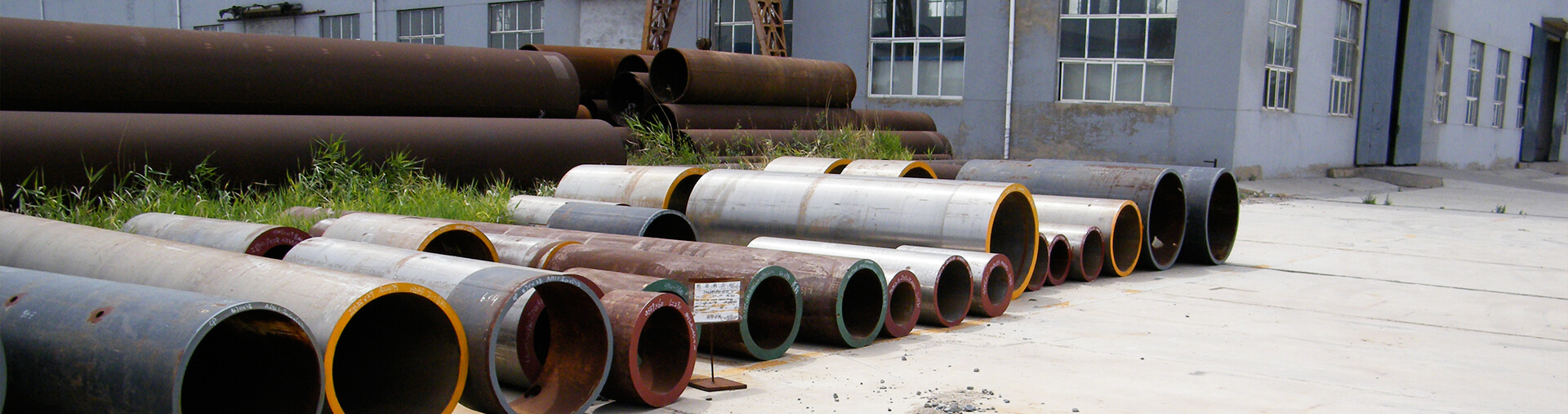
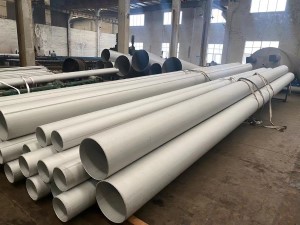
ASTM B729 / ASME SB729 is the standard specification by ASTM International covering seamless nickel alloy pipe and tube in UNS N08020 (standard Alloy 20), UNS N08026, and UNS N08024 for general corrosive service. The specification covers cold-worked and hot-finished conditions. Alloy 20 is the industry standard for mixed acid environments (simultaneous nitric acid and sulfuric acid) where standard austenitic stainless steels fail prematurely due to stress corrosion cracking or pitting. It is one of the most widely specified nickel alloys for chemical process plant construction.
Zhengzhou Huitong (HT Pipe) supplies ASTM B729 seamless pipe in all specified UNS grades with full Mill Test Certificates (MTC) per EN 10204 3.1.
1. Standard Scope & Designation
ASTM B729 covers seamless nickel alloy pipe and tube in three UNS grades. All alloys share the same iron-nickel-chromium base with molybdenum and copper additions for acid resistance. The specification applies to inch-pound and SI unit systems with tolerances per ASTM B829.
| Designation |
Issuing Body |
Common Name |
Latest Edition |
| ASTM B729 |
ASTM International |
Alloy 20 (N08020) |
B729-20 |
| ASME SB729 |
ASME (Section II Part B) |
Identical to ASTM B729 |
ASME SB729-2023 |
Scope Statement (ASTM B729-20): "This specification covers UNS N08020, UNS N08026, and UNS N08024 seamless, cold-worked or hot-finished pipe and tube intended for general corrosive service." The values given in inch-pound units or SI units are to be regarded separately as standard.
| Parameter |
Description |
Notes |
| Product Forms |
Seamless Pipe, Seamless Tube |
Cold-worked or Hot-finished |
| Density |
8.05 g/cm³ (0.291 lb/in³) |
— |
| Max Service Temperature |
~540°C (~1000°F) corrosion service |
For high-temp oxidation, use B407 Incoloy 800 |
| PREN (approx.) |
~34 |
N08020; higher for N08026 with N addition |
2. Grades Covered by ASTM B729
| Grade |
UNS No. |
Nickel Content |
Key Features |
| Grade 1 |
N08020 |
32.0–38.0% |
Standard Alloy 20; most widely specified; Cr 19-21%, Mo 2-3%, Cu 3-4% |
| Grade 2 |
N08026 |
30.0–38.0% |
Added nitrogen (0.10–0.20%); improved pitting resistance and YS |
| Grade 3 |
N08024 |
23.0–27.0% |
Lower Ni; optimized Mo/Cu for specific acid media; reduced cost |
Grade Selection: UNS N08020 (Alloy 20) is by far the most widely specified for mixed acid service. UNS N08026 is specified when enhanced pitting resistance and higher yield strength are required (nitrogen addition improves these properties). UNS N08024 has reduced nickel (23-27%) for applications where maximum cost reduction is needed without sacrificing mixed acid resistance. All three meet identical minimum tensile and yield strength requirements.
3. Chemical Composition — ASTM B729 Table 1
Values are maximum unless shown as a range. Heat and product analysis per ASTM B729-20.
| Element |
N08020 (%) |
N08026 (%) |
N08024 (%) |
Key Role |
| Carbon (C) |
0.07 max |
0.03 max |
0.03 max |
Intergranular corrosion control |
| Manganese (Mn) |
2.00 max |
2.00 max |
1.00 max |
Deoxidizer |
| Phosphorus (P) |
0.045 max |
0.030 max |
0.030 max |
Impurity |
| Sulfur (S) |
0.035 max |
0.030 max |
0.030 max |
Impurity |
| Silicon (Si) |
1.00 max |
0.50 max |
0.50 max |
Deoxidizer |
| Nickel (Ni) |
32.0–38.0 |
30.0–38.0 |
23.0–27.0 |
Austenite stabilizer; sulfuric acid resistance |
| Chromium (Cr) |
19.0–21.0 |
22.0–26.0 |
22.5–26.0 |
Oxidation and acid resistance |
| Molybdenum (Mo) |
2.0–3.0 |
2.0–4.0 |
1.0–2.0 |
Reducing acid resistance (HCl, H₂SO₄) |
| Copper (Cu) |
3.0–4.0 |
2.0–4.0 |
0.50–1.50 |
Sulfuric acid resistance (key feature) |
| Nitrogen (N) |
— |
0.10–0.20 |
— |
Pitting resistance and YS improvement |
| Iron (Fe) |
Balance |
Balance |
Balance |
Balance; reduces cost |
Note: The copper content (3-4% in N08020) is the defining feature that distinguishes Alloy 20 from standard 18Cr-8Ni austenitic stainless steels. This copper addition provides superior resistance to sulfuric acid attack, which is the primary reason Alloy 20 was developed.
4. Mechanical Property Requirements — ASTM B729 Table 2
All values are minimum requirements per ASTM B729-20. Testing per ASTM E 8. Elongation measured over 2 in. (50 mm) gauge length.
| Property |
Metric Value |
Imperial Value |
Notes |
| Tensile Strength (UTS) |
550 MPa (80 ksi) |
80 ksi (550 MPa) |
Minimum; all grades |
| Yield Strength (0.2% offset) |
240 MPa (35 ksi) |
35 ksi (240 MPa) |
Minimum; all grades |
| Elongation in 2 in. (50 mm) |
30% |
30% |
Minimum; in any direction |
| Hardness (Brinell) |
≤ 200 HB |
≤ 200 HB |
Typical for annealed condition |
Equivalent Designations for N08020: Werkstoff Nr. 2.4660 / AFNOR Z2NCUD31-20AZ / EN NiCr20CuMo. These international equivalents confirm Alloy 20's global availability and acceptance in chemical process specifications worldwide.
5. Heat Treatment Requirements
| Condition |
Temperature |
Notes |
| Solution Annealed (Standard) |
per ASTM B829 |
Restores corrosion resistance after cold work |
| Water Quench (preferred) |
Fast cool from temperature |
Prevents chromium carbide precipitation at grain boundaries |
| Preheating |
Not required |
Alloy 20 is readily weldable without preheat |
Welding Note: Alloy 20 is readily weldable using conventional GTAW (TIG), GMAW (MIG), and SMAW (stick) processes. AWS A5.14 ERNiCrMo-3 (Inconel 625) filler is recommended for the best weld metal corrosion resistance. Interpass temperature: max 150°C (300°F). Post-weld heat treatment is generally not required.
6. Testing & Inspection Requirements
| Test |
Requirement |
Reference Standard |
| Chemical Analysis |
One per lot (heat); all elements per Table 1 |
ASTM B729 Table 1 |
| Tensile Test |
One per lot; full tubular or longitudinal strip specimen |
ASTM E 8 |
| Hydrostatic Test |
Standard leak test; alternative to eddy current |
ASTM B729 |
| Eddy Current Test |
Alternative to hydrostatic; NDE for imperfections |
ASTM B729 / ASTM E 571 |
| Flattening Test |
One test per lot for pipe NPS 3 and above |
ASTM B729 |
| Bend Test |
One test per lot for pipe NPS 3 and under |
ASTM B729 |
7. Pipe Dimensions — ASTM B729 (per ASME B36.19M)
Alloy 20 pipe dimensions follow ASME B36.19M (Stainless Steel Pipe). Standard schedules: Sch 5S, 10S, 40S, 80S. Tolerances per ASTM B829.
| NPS |
OD (in) |
OD (mm) |
Sch 10S
(mm) |
Sch 40S
(mm) |
Sch 80S
(mm) |
CW Tube 0.035"
(mm) |
| 1/2 |
0.840 |
21.34 |
2.11 |
2.77 |
3.73 |
0.89 |
| 3/4 |
1.050 |
26.67 |
2.11 |
2.87 |
3.91 |
0.89 |
| 1 |
1.315 |
33.40 |
2.77 |
3.38 |
4.55 |
0.89 |
| 1-1/2 |
1.900 |
48.26 |
2.77 |
3.68 |
5.08 |
0.89 |
| 2 |
2.375 |
60.33 |
2.77 |
3.91 |
5.54 |
0.89 |
| 3 |
3.500 |
88.90 |
3.05 |
5.49 |
7.62 |
— |
| 4 |
4.500 |
114.30 |
3.05 |
6.02 |
8.56 |
— |
| 6 |
6.625 |
168.28 |
3.40 |
7.11 |
10.97 |
— |
Note: Cold-drawn tube tolerances: OD ±0.13 mm (D<15.9mm); wall ±10% average. Hot-finished pipe tolerances: OD ±0.38–0.79 mm per OD range; wall nominal ±12.5%. Dimensions per ASME B36.19M. For tube sizes (≤2 in OD), common walls: 0.035", 0.049", 0.065", 0.083".
8. Industries & Applications
| Application |
Recommended Grade |
Service Environment |
| Sulfuric Acid Plants |
N08020 |
Up to 96% H₂SO₄ at various temperatures; heat exchangers, storage |
| Mixed Acid Service (HNO₃ + H₂SO₄) |
N08020 / N08026 |
Chemical processing; pickling baths; metal finishing |
| Phosphoric Acid (Wet Process) |
N08020 |
Dihydrate/monohydrate processes; fluoride-containing media |
| Pharmaceutical / Biotech |
N08020 |
CIP/SIP systems; high-purity processes; no metal ion contamination |
| Food & Beverage Processing |
N08020 |
Sugar processing, fruit juice concentration, edible oil production |
| Seawater & Brackish Water |
N08026 (N-added) |
Desalination tube-side; seawater cooling |
9. ASTM B729 vs ASTM B423 vs ASTM B407 — Nickel Alloy Pipe Comparison
| Property |
B729 (Alloy 20 / N08020) |
B423 (Incoloy 825 / N08825) |
B407 (Incoloy 800 / N08800) |
| Nickel (Ni) |
32–38% |
38–46% |
30–35% |
| Molybdenum (Mo) |
2–4% |
2.5–4% |
None |
| Copper (Cu) |
3–4% |
1.5–3% |
0.75 max |
| Min. Tensile |
550 MPa |
517 MPa |
450 MPa |
| Primary Resistance |
Mixed acid, H₂SO₄ |
H₂SO₄, seawater |
High-temp oxidation |
| Max Temp (Creep) |
~540°C |
~540°C |
~900°C |
| PREN (approx.) |
~34 |
~30 |
~22 |
10. Related Standards
| Standard |
Scope |
Relationship to B729 |
| ASTM B829 |
General Requirements for Nickel and Nickel Alloy Pipe and Tube |
Mandatory supplementary requirements |
| ASTM B423 |
Nickel-Iron-Chromium-Molybdenum-Copper Seamless Pipe (Incoloy 825) |
Ti-stabilized; seawater vs mixed acid; similar Ni range |
| ASTM B407 |
Nickel-Iron-Chromium Seamless Pipe (Incoloy 800, 800H, 800HT) |
High-temp alternative; no Mo or Cu |
| ASTM B473 |
Welded Nickel Alloy Pipe (Alloy 20 compositions) |
Welded pipe version of B729 |
| ASME SB729 |
ASME Section II Part B — Alloy 20 pipe adoption |
ASME Code compliance; identical requirements |
| AWS A5.14 |
Nickel Filler Metal (ERNiCrMo-3) |
Matching filler for welding B729 pipe |
| ASTM B574 |
Nickel-Molybdenum-Chromium Alloy Rod and Bar |
Matching bar for fittings and flanges |
| NACE MR0175 / ISO 15156 |
Sour Service Material Requirements |
H₂S-containing oil and gas service applications |
11. How to Order — Required Information
| No. |
Item |
Requirement / Example |
| 1 |
Specification |
ASTM B729 / ASME SB729 |
| 2 |
Grade / UNS |
UNS N08020 (Alloy 20), N08026, or N08024 |
| 3 |
Manufacturing Condition |
Hot-finished or Cold-worked Annealed |
| 4 |
NPS & Schedule / Wall Thickness |
e.g., NPS 3 Sch 40S or NPS 2 × 5.49 mm WT |
| 5 |
Length |
Single Random (~6 m), Double Random (~12 m), or Cut-to-length |
| 6 |
End Preparation |
Plain End (PE), Beveled End (BE per ASME B16.25) |
| 7 |
Supplementary Tests |
Hydrostatic test, PMI, product analysis, NACE MR0175 (sour service) |
| 8 |
Certification |
EN 10204 3.1 Certified Mill Test Report (CMTR) |
12. Frequently Asked Questions
Q: Why is Alloy 20 specified instead of 316L stainless steel?
316L stainless steel fails in mixed acid environments (simultaneous nitric acid and sulfuric acid) due to stress corrosion cracking. Alloy 20 (UNS N08020) was developed specifically for this service. The key differentiator is the copper content (3-4%) which provides superior resistance to sulfuric acid — the primary acid in most chemical processing mixed acid streams. PREN of Alloy 20 (~34) is approximately 40% higher than 316L (~24), translating to significantly longer service life in aggressive media.
Q: What is the difference between Alloy 20 and Hastelloy G-30?
Both are high-performance nickel alloys for chemical processing, but in different performance tiers. Hastelloy G-30 (UNS N06030) has significantly higher chromium (28-31% vs 19-21%), molybdenum (4-6% vs 2-3%), and tungsten additions, providing superior resistance to wet-process phosphoric acid and highly concentrated acids. G-30 is specified when Alloy 20 experiences corrosion or when acid concentrations exceed Alloy 20's practical service limits. G-30 is approximately 40-60% more expensive than Alloy 20. Specify G-30 only when Alloy 20 performance has been confirmed inadequate by corrosion testing.
Q: Can ASTM B729 pipe be welded without post-weld heat treatment?
Yes. Like Incoloy 825, Alloy 20 does not require post-weld heat treatment. The niobium (columbium) addition in Alloy 20 provides stabilization against intergranular corrosion, similar to how titanium stabilizes Incoloy 825. ERNiCrMo-3 (Inconel 625) filler is recommended for maximum corrosion resistance in the weld zone. GTAW (TIG) with 100% argon shielding gas is preferred for the root pass. Interpass temperature: max 150°C (300°F).
Q: What is the PREN of Alloy 20 and why does it matter?
Alloy 20 has a PREN (Pitting Resistance Equivalent Number) of approximately 34, calculated as Cr + 3.3Mo + 16N. For comparison: 316L has PREN ~24, 904L has PREN ~34, and UNS N08367 (AL-6XN) has PREN ~45-48. PREN predicts resistance to pitting and crevice corrosion in chloride-containing environments. A higher PREN means better performance in seawater and halide-containing acids. For typical chemical processing mixed acid service (low chloride), PREN 34 is generally adequate.
Q: When should I specify UNS N08026 instead of standard N08020?
Specify UNS N08026 when the application involves seawater, brackish water, or higher chloride concentrations in the acid stream. The nitrogen addition (0.10-0.20%) increases yield strength (same minimum 240 MPa, but typically higher actual values) and improves pitting resistance. N08026 also has lower maximum carbon (0.03% vs 0.07% for N08020), which provides better resistance to sensitization in the weld heat-affected zone. For critical heat exchanger tube applications where both corrosion resistance and mechanical strength are important, N08026 is preferred.
Request a Quote — ASTM B729 Alloy 20 Seamless Pipe
Zhengzhou Huitong (HT Pipe) supplies ASTM B729 / ASME SB729 seamless pipe in UNS N08020 (Alloy 20), N08026, and N08024. Full EN 10204 3.1 CMTRs and competitive lead times for mixed acid, sulfuric acid, and chemical processing applications.