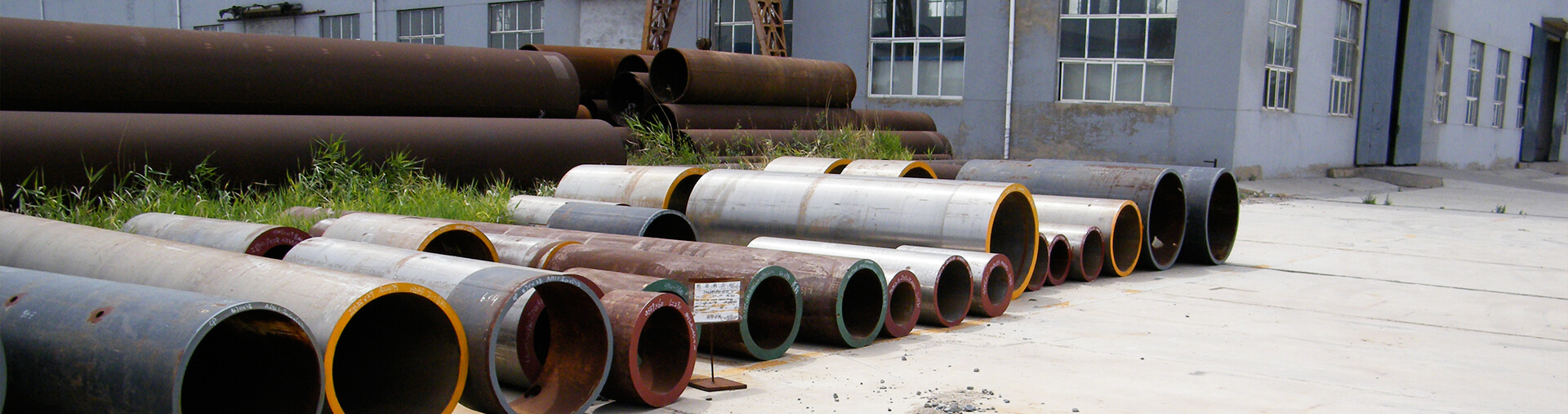
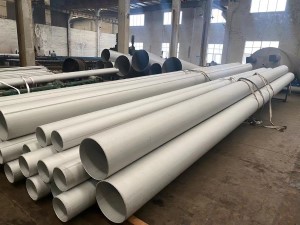
ASTM B677 covers seamless, cold-worked or hot-finished pipe and tube of UNS N08904 (904L), UNS N08925, and UNS N08926 grades intended for general corrosive service. These super austenitic stainless steels offer excellent corrosion resistance, especially in sulfuric acid and chloride-containing environments.
Quick Specifications
Grades: UNS N08904 (904L), UNS N08925, UNS N08926
Product Form: Seamless Pipe and Tube
Manufacturing: Cold-worked or hot-finished, solution-annealed
Applications: Chemical processing, oil & gas, seawater systems, pollution control
Chemical Composition (ASTM B677)
| Element |
UNS N08904 (904L) % |
UNS N08925 % |
UNS N08926 % |
| Carbon (C), max |
0.020 |
0.020 |
0.020 |
| Manganese (Mn), max |
2.00 |
2.00 |
2.00 |
| Silicon (Si), max |
0.70 |
0.70 |
0.50 |
| Phosphorus (P), max |
0.045 |
0.045 |
0.030 |
| Sulfur (S), max |
0.035 |
0.035 |
0.010 |
| Chromium (Cr) |
19.0 - 23.0 |
19.0 - 21.0 |
19.0 - 21.0 |
| Nickel (Ni) |
23.0 - 28.0 |
24.0 - 26.0 |
24.0 - 26.0 |
| Molybdenum (Mo) |
4.0 - 5.0 |
6.0 - 7.0 |
6.0 - 7.0 |
| Copper (Cu) |
1.0 - 2.0 |
0.8 - 1.5 |
0.5 - 1.5 |
| Nitrogen (N) |
0.10 max |
0.10 - 0.20 |
0.15 - 0.25 |
Mechanical Properties (Solution-Annealed Condition)
| Property |
UNS N08904 (904L) |
UNS N08925 |
UNS N08926 |
| Tensile Strength, min (MPa) |
490 |
600 |
650 |
| Yield Strength (0.2% offset), min (MPa) |
220 |
295 |
320 |
| Elongation in 2 in. (50 mm), min (%) |
35 |
35 |
35 |
| Hardness, max (HB) |
90 |
100 |
100 |
Available Products (ASTM B677)
904L (UNS N08904) Seamless Pipe
Size Range: 1/2" - 8" (OD 21.3mm - 219.1mm)
Wall Thickness: SCH 5S - SCH 160
Length: Random 5-7m or Fixed 6m
Surface: Annealed & pickled, or bright annealed
904L (UNS N08904) Seamless Tube
Size Range: 1/4" - 4" (OD 13.7mm - 114.3mm)
Wall Thickness: 0.5mm - 10mm
Heat exchanger tubes available
U-bend tubes for heat exchangers
UNS N08925 / N08926 Seamless Pipe & Tube
Similar dimensions as 904L
Higher strength and corrosion resistance
Preferred for harsh environments
Key Features of 904L (UNS N08904)
High Alloy Content: 25% Ni, 20% Cr, 4.5% Mo, 1.5% Cu
Excellent Weldability: No need for post-weld heat treatment
Superior Corrosion Resistance: Better than 316L in most media
Non-Magnetic: Even after cold working
Good Formability: Can be bent, formed, and drawn
Corrosion Resistance
ASTM B677 materials provide outstanding resistance to:
Sulfuric Acid: Excellent resistance across a wide concentration and temperature range
Phosphoric Acid: Good resistance, especially in pure phosphoric acid
Chloride Pitting & Crevice Corrosion: PREN (Pitting Resistance Equivalent) ≥ 35
Stress Corrosion Cracking (SCC): Superior resistance to chloride-induced SCC
Intergranular Corrosion: Low carbon content minimizes sensitization
Applications
Chemical Processing
Sulfuric acid production and handling
Phosphoric acid evaporators
Chemical storage tanks and piping
Heat exchangers in corrosive media
Oil and Gas
Seawater injection systems
Offshore platform piping
Sour gas service (with limitations)
Produced water handling
Pulp and Paper
Bleaching systems
Digesters and recovery boilers
Pollution Control
Flue gas desulfurization (FGD) systems
Scrubbers and chimneys
Power Generation
Condensers using seawater cooling
Auxiliary piping in coastal power plants
Manufacturing Process
Melting: AOD (Argon Oxygen Decarburization) or VOD (Vacuum Oxygen Decarburization)
Hot Extrusion or Piercing: Form mother tube
Cold Drawing: Multiple passes with intermediate annealing
Solution Annealing: 1050-1150°C, rapid water quenching
Pickling: Remove oxide scale
Non-Destructive Testing: Eddy current, ultrasonic, hydrostatic
Final Inspection: Dimensional, visual, and material test report
Heat Treatment
Solution Annealing:
Temperature: 1050-1150°C (1920-2100°F)
Cooling: Rapid water quenching (critical for corrosion resistance)
Purpose: Dissolve carbides and sigma phase, optimize corrosion resistance
Note: 904L should not be used in the as-welded condition for corrosive service without solution annealing.
Welding
ASTM B677 materials are readily weldable:
Shielded Metal Arc Welding (SMAW): Use 904L (E385-17/16) electrodes
Gas Tungsten Arc Welding (GTAW): Use 904L (ER385) filler wire
Gas Metal Arc Welding (GMAW): Use 904L (ER385) wire
Welding Note: Low carbon content eliminates the need for post-weld heat treatment in most cases. However, for optimum corrosion resistance in severe environments, solution annealing after welding is recommended.
Testing and Inspection
Chemical Analysis: Spectrometer or XRF analysis
Tensile Test: ASTM E8/E8M
Flattening Test: ASTM A999/A999M
Flange Test: For pipes
Eddy Current Test: ASTM E426 (for tubes)
Ultrasonic Test: ASTM E213
Hydrostatic Test: ASTM A999/A999M
Intergranular Corrosion Test: ASTM G28 (Practice A)
Dimension Tolerances
| Nominal Size (NPS) |
OD Tolerance (mm) |
Wall Thickness Tolerance |
Length Tolerance |
| 1/2 - 1 1/2 |
±0.8 |
+20% / -12.5% |
+20mm / -0mm |
| 2 - 6 |
±0.8 |
| 8 and larger |
±1.6 |
Comparison: 904L vs 316L vs 317L
| Property |
904L (N08904) |
317L |
316L |
| Mo Content (%) |
4.0 - 5.0 |
3.0 - 4.0 |
2.0 - 3.0 |
| PREN (Typical) |
36 |
30 |
25 |
| Cu Content (%) |
1.0 - 2.0 |
- |
- |
| Tensile Strength (MPa) |
490 min |
515 min |
485 min |
| Sulfuric Acid Resistance |
Excellent |
Good |
Fair |
Related ASTM Standards
ASTM A312 - Austenitic Stainless Steel Pipe
ASTM A269 - General Seamless and Welded Tube
ASME SB-677 - Specification for 904L Pipe and Tube
NACE MR0175/ISO 15156 - Sour Service
Frequently Asked Questions (FAQ)
Q: What is the difference between 904L and 316L stainless steel?
A: 904L has higher nickel (25% vs 10%), molybdenum (4.5% vs 2.5%), and includes copper (1.5%), providing significantly better corrosion resistance, especially in sulfuric acid and chloride environments. 904L also has higher strength.
Q: Is 904L magnetic?
A: No, 904L is non-magnetic in the annealed condition. Unlike 304 or 316, it remains non-magnetic even after cold working.
Q: Can ASTM B677 904L be used in seawater applications?
A: Yes, 904L has excellent resistance to seawater corrosion, including pitting and crevice corrosion. It's widely used in seawater cooling systems, desalination plants, and offshore platform piping.
Q: Does 904L require post-weld heat treatment?
A: Generally, no. The low carbon content of 904L minimizes sensitization. However, for optimum corrosion resistance in aggressive environments, solution annealing after welding may be beneficial.
Q: What is the maximum operating temperature for 904L?
A: 904L can be used up to 400°C (750°F) in continuous service. For intermittent service, it can withstand higher temperatures. However, prolonged exposure above 400°C may cause sigma phase precipitation, reducing corrosion resistance.
Request a Quote — ASTM B677 904L Seamless Pipe and Tube
Zhengzhou Huitong (HT Pipe) supplies ASTM B677 904L compliant materials with full EN 10204 3.1 CMTRs and competitive lead times from affiliated mills in China.