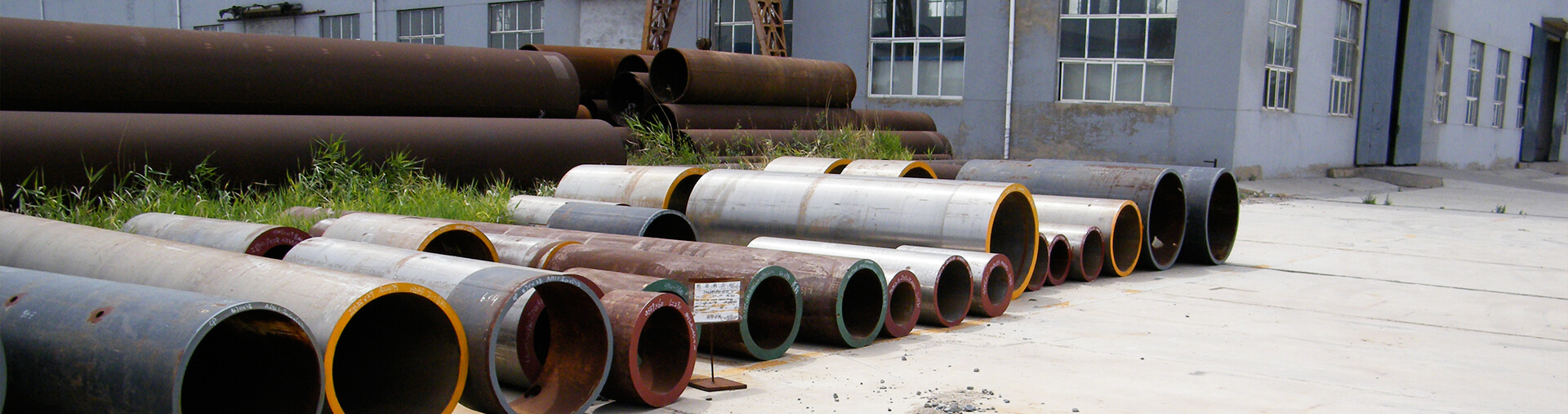
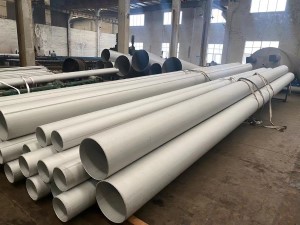
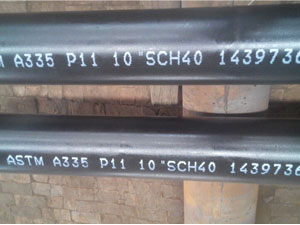
ASTM A335 (also known as ASME SA335) covers seamless ferritic alloy-steel pipe intended for high-temperature service in power generation, petrochemical, and refinery applications. These chrome-molybdenum (Cr-Mo) and chrome-molybdenum-vanadium (Cr-Mo-V) alloys provide excellent creep resistance, oxidation resistance, and thermal fatigue properties at elevated temperatures.
Zhengzhou Huitong (HT Pipe) supplies ASTM A335 / SA-335 compliant chrome-moly alloy steel pipes across all standard grades with full Mill Test Certificates (MTC) per EN 10204 3.1. Download the official standard PDF from our Download Center.
1. Standard Scope & Designation
ASTM A335 covers seamless ferritic alloy-steel pipe in multiple grades for high-temperature service:
| Grade |
Alloy Type |
Max. Service Temp. |
Heat Treatment |
| P1 |
C-Mo Steel |
455°C |
Normalized |
| P5 |
5Cr-0.5Mo |
550°C |
Normalized & tempered |
| P9 |
9Cr-1Mo |
595°C |
Normalized & tempered |
| P11 |
1.25Cr-0.5Mo |
550°C |
Normalized & tempered |
| P22 |
2.25Cr-1Mo |
595°C |
Normalized & tempered |
| P91 |
9Cr-1Mo-V |
650°C |
Normalized & tempered (1040°C + 730-800°C) |
| P92 |
9Cr-W-Mo-V |
650°C |
Normalized & tempered (1040°C + 730-800°C) |
Scope Statement (ASTM A335-18): "This specification covers nominal (average) wall seamless alloy-steel pipe intended for high-temperature service. The grades designations are P1...P2, etc., where the letter P indicates a grade suitable for low-temperature service and the number indicates the approximate alloy content."
| Designation |
Issuing Body |
Unit System |
Dimension Standard |
Latest Edition |
| ASTM A335 |
ASTM International |
Inch-Pound |
ASME B36.10M |
A335/A335M-18 |
| ASME SA-335 |
ASME (BPVC Sec. II Part A) |
Both |
ASME B36.10M |
2023 Edition |
2. Chemical Composition (ASTM A335 - Main Grades)
Values are maximum unless shown as a range. "—" = not required / not applicable. Heat analysis per ASTM A335-18.
| Grade |
C% |
Mn% |
P% |
S% |
Si% |
Cr% |
Mo% |
V% |
Nb% |
N% |
W% |
| P5 |
0.15 |
0.30-0.60 |
0.025 |
0.025 |
0.50 |
4.00-6.00 |
0.45-0.65 |
— |
— |
— |
— |
| P9 |
0.15 |
0.30-0.60 |
0.025 |
0.025 |
0.25-1.00 |
8.00-10.00 |
0.90-1.10 |
— |
— |
— |
— |
| P11 |
0.05-0.15 |
0.30-0.60 |
0.025 |
0.025 |
0.50-1.00 |
1.00-1.50 |
0.44-0.65 |
— |
— |
— |
— |
| P22 |
0.05-0.15 |
0.30-0.60 |
0.025 |
0.025 |
0.50 |
2.00-2.50 |
0.87-1.13 |
— |
— |
— |
— |
| P91 |
0.08-0.12 |
0.30-0.60 |
0.020 |
0.010 |
0.20-0.50 |
8.00-9.50 |
0.85-1.05 |
0.18-0.25 |
0.06-0.10 |
0.03-0.07 |
— |
| P92 |
0.07-0.13 |
0.30-0.60 |
0.020 |
0.010 |
0.50 |
8.50-9.50 |
0.30-0.60 |
0.15-0.25 |
0.04-0.09 |
0.03-0.07 |
1.50-2.00 |
Note: Full chemistry ranges per ASTM A335-18 Table 1. Product analysis tolerances apply. P92 also contains 0.001-0.006% B (Boron).
3. Mechanical Property Requirements (ASTM A335)
All values are minimum requirements in the normalized and tempered condition. Per ASTM A335-18.
| Grade |
Tensile Strength
min MPa (ksi) |
Yield Strength 0.2%
min MPa (ksi) |
Elong.
min % |
Hardness
max |
| P5 |
415 (60) |
205 (30) |
30 |
— |
| P9 |
415 (60) |
205 (30) |
30 |
— |
| P11 |
415 (60) |
205 (30) |
30 |
— |
| P22 |
415 (60) |
205 (30) |
30 |
— |
| P91 |
585 (85) |
415 (60) |
20 |
250 HBW |
| P92 |
620 (90) |
440 (64) |
20 |
250 HBW |
Note: P91 and P92 require microstructure verification (fully tempered martensite, no ferrite). Test requirements per ASTM A370.
4. Temperature Service Ratings
| Grade |
Chromium (%) |
Molybdenum (%) |
Max Temp (°C) |
Primary Application |
| P1 |
— |
0.44-0.65 |
455 |
Low-temp/high-pressure |
| P5 |
4.00-6.00 |
0.45-0.65 |
550 |
Refinery, petrochemical |
| P9 |
8.00-10.00 |
0.90-1.10 |
595 |
High-temp refinery |
| P11 |
1.00-1.50 |
0.44-0.65 |
550 |
Power boilers |
| P22 |
2.00-2.50 |
0.87-1.13 |
595 |
Power, petrochemical |
| P91 |
8.00-9.50 |
0.85-1.05 |
650 |
USC power boilers |
| P92 |
8.50-9.50 |
0.30-0.60 |
650 |
USC, A-USC boilers |
5. Available Products (ASTM A335)
5.1 P11 Seamless Pipe (1¼% Cr-Mo)
| Parameter |
Specification |
| Size Range |
1/2" - 48" (OD 21.3mm - 1219mm) |
| Wall Thickness |
SCH 20 - SCH XXH |
| Application |
Most common grade for power plant boilers |
| Features |
Good creep strength and weldability |
5.2 P22 Seamless Pipe (2¼% Cr-Mo)
| Parameter |
Specification |
| Size Range |
1/2" - 48" (OD 21.3mm - 1219mm) |
| Features |
Superior creep strength vs P11 |
| Application |
Used in main steam lines and headers |
5.3 P91 Seamless Pipe (9Cr-1Mo-V)
| Parameter |
Specification |
| Size Range |
1/2" - 48" (OD 21.3mm - 1219mm) |
| Tensile Strength |
min 585 MPa (ASME) |
| Features |
Excellent creep resistance up to 650°C |
| Application |
Widely used in Ultra-Supercritical (USC) plants |
5.4 P92 Seamless Pipe (9Cr-W-Mo-V)
| Parameter |
Specification |
| Features |
Higher creep strength than P91 |
| Strength |
Up to 50% stronger than P91 |
| Application |
Used in Advanced-USC (A-USC) plants |
5.5 P5 and P9 Seamless Pipe
| Parameter |
Specification |
| Features |
High chromium for oxidation resistance |
| Application |
Preferred for refinery applications |
| Features |
Good sulfur resistance |
6. Key Features
| Feature |
Description |
| High Temperature Strength |
Maintains mechanical properties at elevated temperatures |
| Creep Resistance |
Excellent long-term creep strength (critical for boiler tubes) |
| Oxidation Resistance |
Chromium content provides scale resistance |
| Thermal Fatigue Resistance |
Suitable for cyclic temperature operations |
| P91/P92 Benefits |
Higher strength allows thinner walls, reducing weight and cost |
7. Heat Treatment Requirements
| Grade |
Normalizing Temp (°C) |
Tempering Temp (°C) |
| P5 |
≥900 |
≥700 |
| P9 |
≥900 |
≥700 |
| P11 |
≥900 |
≥675 |
| P22 |
≥900 |
≥675 |
| P91 |
≥1040 |
730-800 |
| P92 |
≥1040 |
730-800 |
Important: P91 and P92 require precise heat treatment to achieve fully tempered martensite microstructure. The normalizing temperature must be ≥1040°C to dissolve alloying elements, followed by air quenching, then tempering at 730-800°C to precipitate fine V/Nb carbonitrides for creep strength.
8. Welding Guidelines
8.1 Preheat and PWHT Requirements
| Grade |
Preheat Temp (°C) |
Min. Interpass Temp (°C) |
PWHT Temp (°C) |
| P5, P9 |
150-200 |
200 |
675-750 |
| P11, P22 |
150-200 |
200 |
675-750 |
| P91 |
200-250 |
300 |
730-780 |
| P92 |
200-250 |
300 |
730-780 |
8.2 Recommended Filler Metals
| Grade |
Recommended Filler |
| P11 |
E8018-B2, ER80S-B2 |
| P22 |
E9018-B3, ER90S-B3 |
| P91 |
E9018-B9, ER90S-B9 (matching composition) |
| P92 |
Matching P92 or E9018-B9 filler |
9. Testing & Inspection Requirements
| Test |
Requirement |
Reference Standard |
| Tensile Test |
One per heat/lot |
ASTM A370 |
| Flattening Test |
Seamless pipe - one per end |
ASTM A335 |
| Hardness Test |
Brinell or Vickers |
ASTM E10 / E18 |
| Hydrostatic Test |
100% of pipes |
ASTM A335 |
| Microstructure Test |
For P91, P92 (no prior-austenite grain boundary ferrite) |
ASTM A335 |
| Impact Test |
When specified (typically for P91/P92) |
ASTM A370 |
10. P91/P92 Microstructure Requirements
For ASTM A335 P91 and P92, microstructure is critical for long-term creep strength:
| Requirement |
Specification |
| Fully Tempered Martensite |
Required microstructure |
| Prior Austenite Grain Size |
ASTM 5 or finer (no coarse grain) |
| No Ferrite or Delta Ferrite |
Not permitted |
| No Laves Phase |
Precipitation controlled |
11. Industries & Applications
| Industry |
Recommended Grades |
Typical Pipe Sizes & Schedules |
| Power Generation |
P11, P22, P91, P92 |
NPS 2 - NPS 24; Sch 40-160 |
| Refinery and Petrochemical |
P5, P9, P11, P22 |
NPS 1 - NPS 20; Sch 40-80 |
| Oil and Gas |
P11, P22 |
NPS 2 - NPS 16; Sch 40-80 |
12. Related Standards
| Standard |
Scope |
Relationship to A335 |
| ASTM A213 |
Seamless Ferritic and Austenitic Alloy-Steel Boiler Tubes |
Tube version of A335 (smaller diameters) |
| ASTM A234 |
Wrought Carbon and Alloy Steel Fittings |
Compatible fittings for A335 pipe |
| ASTM A369 |
Carbon and Alloy Steel Forged and Bored Pipe |
Forged alternative to seamless A335 |
| ASME B31.1 |
Power Piping Code |
Governs design of A335 piping in power plants |
13. Frequently Asked Questions
Q: What is the difference between ASTM A335 P11 and P22?
A: P11 has 1.25% Cr + 0.5% Mo; P22 has 2.25% Cr + 1% Mo. P22 has superior creep strength and is used for higher temperature/pressure applications. P11 is more economical for moderate conditions.
Q: Why is P91 preferred in modern power plants?
A: P91 offers ~50% higher tensile strength than P11/P22, allowing thinner walls. This reduces material costs, improves heat transfer, and enables higher operating temperatures (up to 650°C) for better plant efficiency.
Q: Can P91 be welded with P22 filler metal?
A: No. P91 must be welded with matching or over-matched filler (E9018-B9 or ER90S-B9). Using P22 filler will result in a weaker weld with inferior creep properties.
Q: What is the maximum operating temperature for P91?
A: ASTM A335 P91 is certified up to 650°C (1202°F) for creep rupture strength. However, actual design temperature depends on pressure, desired life, and code requirements (ASME B31.1, Section I).
Q: Why is PWHT critical for P91 welds?
A: Post-weld heat treatment at 730-780°C is essential to temper the hard martensite in the weld heat-affected zone (HAZ). Without proper PWHT, the HAZ will be excessively hard and susceptible to cracking.
Request a Quote — ASTM A335 Chrome Moly Alloy Steel Pipe
Zhengzhou Huitong (HT Pipe) supplies ASTM A335 / SA-335 compliant chrome-moly alloy steel pipes in all standard grades (P5, P9, P11, P22, P91, P92). Full EN 10204 3.1 CMTRs and competitive lead times from affiliated mills in China.