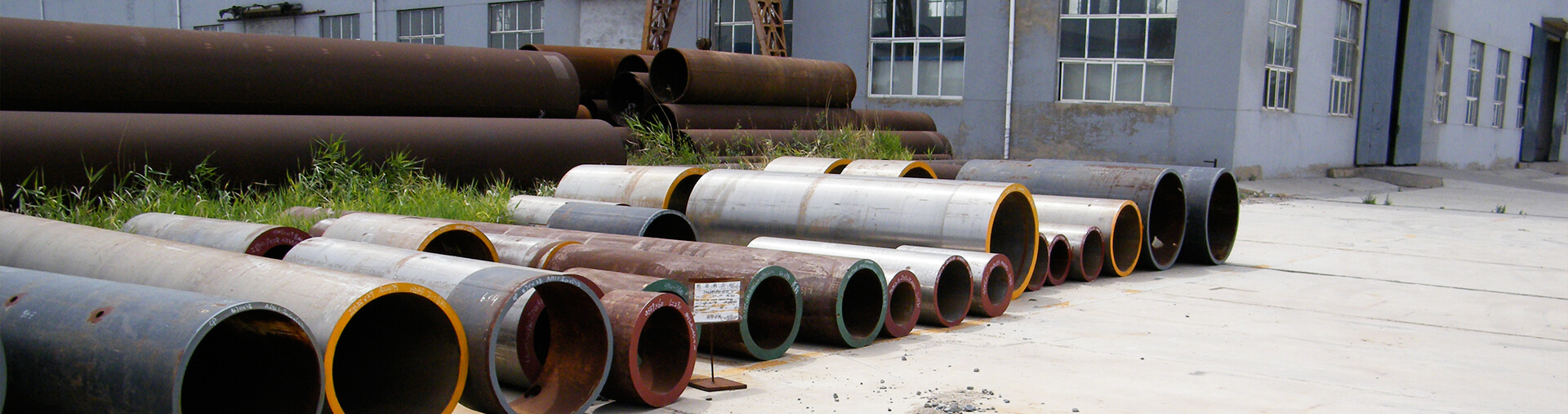
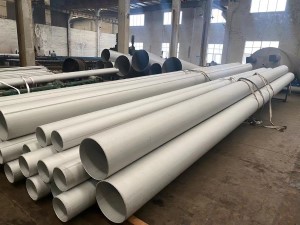
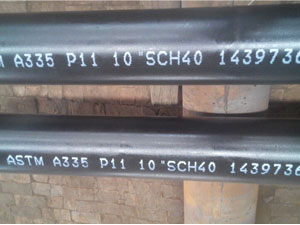
ASTM A106/A106M is the standard specification by ASTM International covering seamless carbon steel pipe for high-temperature service. The specification defines three grades — Grade A, Grade B, and Grade C — with pipe dimensions governed by ASME B36.10M. Grade B is the industry standard for refineries, boiler systems, chemical plants, and oil & gas piping. The companion specification ASME SA-106 adopts identical requirements for ASME Boiler and Pressure Vessel Code (BPVC) compliance.
Zhengzhou Huitong (HT Pipe) supplies ASTM A106 / SA-106 compliant seamless carbon steel pipe in all three grades with full Mill Test Certificates (MTC) per EN 10204 3.1.
1. Standard Scope & Designation
ASTM A106/A106M covers seamless carbon steel pipe produced in two manufacturing conditions:
| Condition |
Manufacturing Process |
NPS Applicability |
Finish |
| Hot Finished |
Rolled/pierced from billet at elevated temperature |
NPS 2 and above (mandatory) |
As-rolled, no cold work |
| Cold Drawn |
Hot finished then cold drawn to final size |
NPS 1-1/2 and under (optional) |
Heat treatment required after cold work |
Scope Statement (ASTM A106/A106M): "This specification covers seamless carbon steel pipe for high-temperature service in NPS 1/8 to NPS 48 inclusive. Pipe shall be suitable for bending, flanging, and similar forming operations, and for welding."
| Designation |
Issuing Body |
Unit System |
Dimension Standard |
Latest Edition |
| ASTM A106 |
ASTM International |
Inch-Pound |
ASME B36.10M |
A106/A106M-19a |
| ASTM A106M |
ASTM International |
SI (Metric) |
ASME B36.10M |
A106/A106M-19a |
| ASME SA-106 |
ASME (BPVC Sec. II Part A) |
Both |
ASME B36.10M |
2023 Edition |
2. Grades Covered by ASTM A106
ASTM A106 defines three carbon steel grades differentiated by carbon content and mechanical strength. Grade B accounts for the vast majority of global consumption in process and power piping.
| Grade |
UNS No. |
Strength Level |
Typical Application |
| Grade A |
K02501 |
Lower strength |
General moderate-temperature service; low-pressure utility piping |
| Grade B |
K03006 |
Moderate (most common) |
Refineries, petrochemical, power plants, oil & gas transmission, steam lines |
| Grade C |
K03501 |
Higher strength |
High-pressure service where greater mechanical properties are specified |
3. Chemical Composition (ASTM A106 Table 1)
Values are maximum unless shown as a range. Heat analysis per ASTM A106/A106M-19a.
| Element |
Grade A (%) |
Grade B (%) |
Grade C (%) |
Note |
| Carbon (C) |
0.25 max |
0.30 max |
0.35 max |
Primary strength driver |
| Manganese (Mn) |
0.27–0.93 |
0.29–1.06 |
0.29–1.06 |
May increase 0.06% per 0.01% C reduction (max 1.35%) |
| Phosphorus (P) |
0.035 max |
0.035 max |
0.035 max |
— |
| Sulfur (S) |
0.035 max |
0.035 max |
0.035 max |
— |
| Silicon (Si) |
0.10 min |
0.10 min |
0.10 min |
Minimum deoxidation requirement |
| Chromium (Cr) |
0.40 max |
0.40 max |
0.40 max |
Residual elements; combined Cr+Cu+Mo+Ni+V ≤ 1.00% |
| Copper (Cu) |
0.40 max |
0.40 max |
0.40 max |
| Molybdenum (Mo) |
0.15 max |
0.15 max |
0.15 max |
| Nickel (Ni) |
0.40 max |
0.40 max |
0.40 max |
| Vanadium (V) |
0.08 max |
0.08 max |
0.08 max |
Note: Full chemistry ranges per ASTM A106/A106M-19a Table 1. Product analysis tolerances per ASTM A530/A530M apply.
4. Mechanical Property Requirements (ASTM A106 Table 2)
All values are minimum requirements. Per ASTM A106/A106M-19a.
| Grade |
Tensile Strength
min MPa (ksi) |
Yield Strength (0.5% EUL)
min MPa (ksi) |
Elongation (min %) |
| Grade A |
330 (48) |
205 (30) |
Longitudinal: 35% full / 28% strip
Transverse: 25% full / 20% strip |
| Grade B |
415 (60) |
240 (35) |
Longitudinal: 30% full / 22% strip
Transverse: 16.5% full / 12% strip |
| Grade C |
485 (70) |
275 (40) |
Longitudinal: 30% full / 20% strip
Transverse: 16.5% full / 12% strip |
Note: Elongation is size- and wall-thickness-dependent per ASTM A106 Table X2.1. EUL = Extension Under Load method. Mechanical testing per ASTM A370.
Grade B Performance at Temperature: ASTM A106 Grade B maintains reliable mechanical behavior at elevated temperatures. Per ASME B31.3, the allowable stress for Grade B is 103 MPa (15 ksi) at ambient temperature, decreasing to approximately 86 MPa (12.5 ksi) at 400°C (750°F). Consult ASME B31.1 (Power Piping) or B31.3 (Process Piping) for full pressure-temperature design allowables.
5. Heat Treatment Requirements
| Condition |
Requirement |
Acceptable Methods |
| Hot Finished (NPS 2 and above) |
No heat treatment required as standard |
— |
| Cold Drawn / Cold Finished |
Mandatory heat treatment after cold work |
Normalized; Normalized & Tempered; Full-Annealed |
Important: Cold drawn pipe NPS 1-1/2 and under must be heat treated to relieve residual stresses and restore ductility. Normalization at approximately 870–940°C (1600–1720°F) followed by air cooling is the most common practice. Annealing (800–850°C furnace-cool) is an alternative where maximum softness is required.
6. Testing & Inspection Requirements
| Test |
Requirement |
Reference Standard |
| Chemical Analysis (Heat) |
One per heat; all elements per Table 1 |
ASTM A106 Table 1 |
| Tensile Test |
One per lot; verifies yield and tensile strength |
ASTM A370 |
| Bending Test |
Required for NPS 2 and under (verifies ductility) |
ASTM A106 |
| Flattening Test |
Required for NPS above 2 (checks soundness) |
ASTM A106 |
| Hydrostatic Test |
Each pipe, standard mill hydrostatic test |
ASTM A106 |
| Nondestructive Electric Test (NDE) |
Permitted as alternative to hydrostatic test |
ASTM E213 / E309 / E570 |
| Dimensional Inspection |
OD ±0.75% (NPS ≥ 1); wall thickness −12.5% min |
ASME B36.10M |
7. Pipe Dimensions — ASME B36.10M (Wrought Steel Pipe)
ASTM A106 pipe dimensions are per ASME B36.10M (Welded and Seamless Wrought Steel Pipe). Key wall thicknesses for common NPS sizes:
| NPS |
OD (mm) |
Sch 10
(mm) |
Sch 20
(mm) |
Sch 40 / STD
(mm) |
Sch 80 / XS
(mm) |
Sch 160
(mm) |
XXS
(mm) |
| 1/2 |
21.34 |
2.77 |
— |
2.77 |
3.73 |
4.78 |
7.47 |
| 3/4 |
26.67 |
2.87 |
— |
2.87 |
3.91 |
5.56 |
7.82 |
| 1 |
33.40 |
3.38 |
— |
3.38 |
4.55 |
6.35 |
9.09 |
| 1-1/2 |
48.26 |
3.68 |
— |
3.68 |
5.08 |
7.14 |
10.16 |
| 2 |
60.33 |
3.91 |
— |
3.91 |
5.54 |
8.74 |
11.07 |
| 3 |
88.90 |
5.49 |
— |
5.49 |
7.62 |
11.13 |
15.24 |
| 4 |
114.30 |
6.02 |
— |
6.02 |
8.56 |
13.49 |
17.12 |
| 6 |
168.28 |
7.11 |
— |
7.11 |
10.97 |
18.26 |
21.95 |
| 8 |
219.08 |
7.04 |
8.18 |
8.18 |
12.70 |
23.01 |
22.23 |
| 10 |
273.05 |
7.80 |
9.27 |
9.27 |
12.70 |
28.58 |
25.40 |
| 12 |
323.85 |
8.38 |
9.53 |
9.53 |
12.70 |
33.32 |
25.40 |
| 14 |
355.60 |
9.53 |
9.53 |
9.53 |
12.70 |
35.71 |
— |
| 16 |
406.40 |
9.53 |
9.53 |
9.53 |
12.70 |
40.49 |
— |
| 20 |
508.00 |
9.53 |
12.70 |
9.53 |
12.70 |
— |
— |
| 24 |
609.60 |
9.53 |
12.70 |
9.53 |
12.70 |
— |
— |
Note: For NPS 8 and above, Sch 40 wall = Sch STD. For NPS 10+, Sch 60 is available. Full B36.10M table covers NPS 1/8 to NPS 80. Wall thickness tolerance: −12.5% (under-tolerance per ASME B36.10M).
8. Industries & Applications
| Industry |
Recommended Grade |
Typical Pipe Sizes & Schedules |
| Petroleum Refining & Petrochemical |
Grade B |
NPS 2 – NPS 24; Sch 40–Sch 80 |
| Power Generation (Boiler / Steam) |
Grade B / Grade C |
NPS 1/2 – NPS 16; Sch 80–Sch 160 |
| Oil & Gas Transmission |
Grade B |
NPS 4 – NPS 48; Sch 20–Sch 80 |
| Chemical & Process Plants |
Grade B |
NPS 1/2 – NPS 20; Sch 40–Sch 160 |
| High-Pressure Steam Lines |
Grade B / Grade C |
NPS 1 – NPS 12; Sch 80–XXS |
| Mineral Slurry & Water Transmission |
Grade A / Grade B |
NPS 4 – NPS 48; Sch 20–Sch 40 |
9. ASTM A106 vs ASTM A53 vs API 5L — Specification Comparison
| Criteria |
ASTM A106 |
ASTM A53 |
API 5L |
| Pipe Type |
Seamless only |
Seamless + ERW (welded) |
Seamless + welded (SAWL/HFW) |
| Primary Service |
High-temperature service |
General service (moderate temp.) |
Long-distance pipeline transport |
| Grades |
Grade A, B, C |
Grade A, B (Type E & S) |
PSL1/PSL2; Gr. B, X42–X80+ |
| Max Carbon (Gr. B) |
0.30% |
0.30% |
Varies by grade (typically ≤ 0.28%) |
| Tensile Gr. B (min) |
415 MPa (60 ksi) |
415 MPa (60 ksi) |
414 MPa (60.2 ksi) |
| NDE Requirement |
Optional (or hydrostatic) |
Optional (or hydrostatic) |
Mandatory for PSL2 |
| Key Differentiator |
Best for high-temp. process piping |
Cost-effective general piping |
Long-distance oil & gas pipelines |
Key Distinction: ASTM A106 Grade B and ASTM A53 Grade B have equivalent chemical compositions and mechanical properties. The critical difference is that A106 is seamless pipe specifically qualified for high-temperature service, while A53 also includes ERW (electric-resistance-welded) pipe for general moderate-temperature applications. When operating conditions involve elevated temperatures or pressures, A106 is the preferred specification.
10. Related Standards
| Standard |
Scope |
Relationship to A106 |
| ASME B36.10M |
Welded & Seamless Wrought Steel Pipe — OD, Wall, Weight |
Mandatory dimension standard for A106 |
| ASME SA-106 |
ASME BPVC Section II Part A — Boiler Code adoption |
Identical requirements; used for code-stamped pressure systems |
| ASTM A530/A530M |
General Requirements for Carbon and Alloy Steel Pipe |
Common supplementary requirements (marking, tolerances, testing) |
| ASTM A370 |
Mechanical Testing of Steel Products |
Tensile and elongation test method required by A106 |
| ASTM A53 |
Seamless & ERW Steel Pipe — General Service |
Comparable material for moderate-temperature general service |
| ASME B31.1 |
Power Piping Code |
Governs allowable stress & design for A106 boiler/steam piping |
| ASME B31.3 |
Process Piping Code |
Governs allowable stress & design for A106 process piping |
| API 5L |
Line Pipe Specification for Pipeline Systems |
Alternative for oil & gas transmission pipelines |
11. How to Order — Required Information
| No. |
Item |
Requirement / Example |
| 1 |
Specification |
ASTM A106 / ASME SA-106 |
| 2 |
Grade |
Grade A, Grade B (most common), or Grade C |
| 3 |
Manufacturing Condition |
Hot Finished (HFS) or Cold Drawn (CDS) |
| 4 |
NPS & Schedule / Wall Thickness |
e.g., NPS 4 Sch 40 or NPS 6 ×7.11 mm WT |
| 5 |
Length |
Single Random (~5.8–6.7 m), Double Random (~10.7 m), or Cut-to-length |
| 6 |
End Preparation |
Plain End (PE), Beveled End (BE per ASME B16.25), or Threaded (T&C per ASME B1.20.1) |
| 7 |
Supplementary Tests |
Charpy impact (low-temp. service), UT, eddy current, NACE MR0175 (sour service) |
| 8 |
Certification |
EN 10204 3.1 Certified Mill Test Report (CMTR) |
| 9 |
Quantity |
Lineal meters or metric tons (MT) |
Download ASTM A106 / A106M Standard (PDF)
The official ASTM A106/A106M-19a PDF is available from our HT Pipe Download Center. The document includes full chemical composition Table 1, mechanical property requirements, elongation formula, heat treatment provisions, and testing procedures.
Go to Download Center | Request MTC / Quotation
12. Frequently Asked Questions
Q: What is ASTM A106 Grade B pipe used for?
ASTM A106 Grade B seamless carbon steel pipe is the most widely used pipe specification for high-temperature and high-pressure process piping. Primary applications include petroleum refinery process lines, boiler feed water systems, steam distribution, heat exchanger connections, chemical plant piping, and oil & gas transmission. It is qualified for service up to approximately 425–480°C (800–900°F) in carbon steel piping systems per ASME B31.1 and B31.3.
Q: What is the difference between ASTM A106 Grade B and Grade C?
Grade B (max 0.30% C) has minimum tensile of 415 MPa and yield of 240 MPa. Grade C (max 0.35% C) offers higher mechanical properties — tensile 485 MPa, yield 275 MPa — for applications requiring greater wall thickness savings or where higher-pressure ratings are needed. Grade C is less common and requires careful consideration of weldability, as the higher carbon content increases the carbon equivalent and the risk of heat-affected zone (HAZ) cracking.
Q: Can ASTM A106 be used for low-temperature service?
ASTM A106 is designated for high-temperature service. For low-temperature (cryogenic) service, ASTM A333 (seamless carbon and alloy steel pipe for low-temperature service) is more appropriate, as A333 includes impact testing requirements at sub-zero temperatures. If A106 Grade B is specified for service below −29°C (−20°F), supplementary Charpy V-notch impact testing should be required in the purchase order.
Q: Is ASTM A106 weldable?
Yes. ASTM A106 pipe is designed for welding applications. Grade A and B are considered readily weldable with standard carbon steel welding procedures. Grade C may require preheating due to its higher carbon content. Post-weld heat treatment (PWHT) requirements depend on the applicable piping code (ASME B31.1 or B31.3), pipe wall thickness, and service conditions. Filler metals conforming to AWS A5.1 (E6010, E7018) or A5.18 (ER70S-X) are commonly used.
Q: Is A106 the same as ASME SA-106?
Technically identical in chemistry and mechanical properties. ASME SA-106 is ASTM A106 adopted into ASME BPVC Section II Part A. SA-106 additionally requires Certified Material Test Reports (CMTR) with full traceability and authorized inspection for ASME Code-stamped pressure systems. Most mills supply dual-certified A106/SA-106 pipe. When purchasing for boiler, pressure vessel, or ASME code-stamped systems, specify SA-106 to ensure compliance.
Request a Quote — ASTM A106 Seamless Carbon Steel Pipe
Zhengzhou Huitong (HT Pipe) supplies ASTM A106 / SA-106 Grade A, B, and C seamless carbon steel pipe in all standard schedules. Full EN 10204 3.1 CMTRs and competitive lead times from affiliated mills.