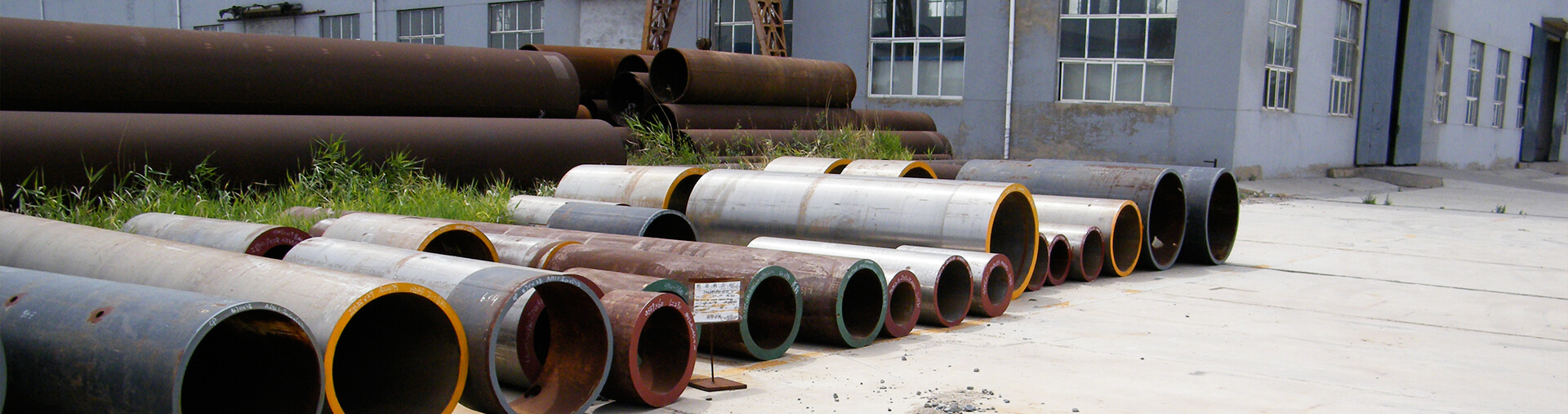
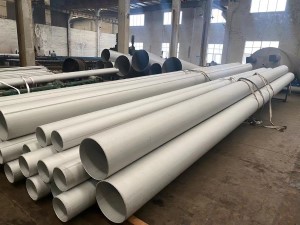
ASTM B161 (also known as ASME SB-161) is the standard specification by ASTM International covering nickel seamless pipe and tube in cold-worked condition. It covers two UNS alloys: N02200 (Nickel 200) — commercially pure nickel with 99.0% minimum nickel content, and N02201 (Nickel 201) — a low-carbon variant preferred for elevated-temperature service.
Zhengzhou Huitong (HT Pipe) supplies ASTM B161 / SB-161 compliant nickel seamless pipe and tube in both N02200 and N02201 grades with full Mill Test Certificates (MTC) per EN 10204 3.1, hydrostatic test reports, and complete traceability. Available in annealed and cold-worked conditions with custom sizes and lengths.
1. Standard Scope & Quick Specifications
ASTM B161 covers cold-worked seamless pipe and tube of nickel (N02200) and low-carbon nickel (N02201) for corrosion-resistant and general-purpose applications. These materials offer excellent resistance to alkalis and caustic media, high thermal and electrical conductivity, and good mechanical properties across a wide temperature range from cryogenic to moderate elevated temperatures.
| Attribute |
Detail |
| Materials |
UNS N02200 (Nickel 200), UNS N02201 (Nickel 201) |
| Product Forms |
Seamless Pipe, Seamless Tube |
| Manufacturing |
Cold-worked, annealed |
| ASME Code |
SB-161 (ASME Section II Part B) |
| Key Applications |
Chemical processing, food and beverage, electronics, aerospace |
2. Chemical Composition Requirements (ASTM B161)
| Element |
Nickel 200 (UNS N02200) % |
Nickel 201 (UNS N02201) % |
| Nickel (Ni), min |
99.0 |
99.0 |
| Carbon (C), max |
0.15 |
0.02 |
| Copper (Cu), max |
0.25 |
0.25 |
| Iron (Fe), max |
0.40 |
0.40 |
| Manganese (Mn), max |
0.35 |
0.35 |
| Silicon (Si), max |
0.35 |
0.35 |
| Sulfur (S), max |
0.01 |
0.01 |
3. Mechanical Properties — Annealed Condition
| Property |
Nickel 200 (UNS N02200) |
Nickel 201 (UNS N02201) |
| Tensile Strength, min (MPa) |
380 |
345 |
| Yield Strength (0.2% offset), min (MPa) |
105 |
80 |
| Elongation in 2 in. (50 mm), min (%) |
35 |
40 |
| Rockwell Hardness, max (HRB) |
80 |
75 |
4. Mechanical Properties — Cold Worked Conditions
| Condition |
Tensile Strength (MPa) |
Yield Strength (MPa) |
Elongation (%) |
| Annealed |
380–550 |
105–205 |
35–55 |
| 1/4 Hard |
450–620 |
275–450 |
15–30 |
| 1/2 Hard |
520–690 |
380–550 |
10–20 |
| 3/4 Hard |
585–760 |
450–620 |
5–10 |
| Hard |
620–830 |
520–690 |
2–5 |
5. Available Products (ASTM B161)
Nickel 200 (UNS N02200) Seamless Pipe
| Parameter |
Specification |
| Size Range |
1/2" – 8" (OD 21.3 mm – 219.1 mm) |
| Wall Thickness |
SCH 5S – SCH 160 |
| Length |
Random or Fixed lengths |
| Surface |
Annealed & pickled, or bright annealed |
Nickel 201 (UNS N02201) Seamless Pipe
| Parameter |
Specification |
| Dimensions |
Similar dimensions as Nickel 200 |
| Key Feature |
Lower carbon for high-temperature service (>315°C / 600°F) |
| Preferred Use |
Electronic applications and high-temperature chemical processing |
Nickel Seamless Tube
| Parameter |
Specification |
| Size Range |
1/4" – 4" (OD 13.7 mm – 114.3 mm) |
| Wall Thickness |
0.5 mm – 10 mm |
| Special Forms |
Heat exchanger tubes; U-bend tubes for specialized applications |
6. Key Features & Corrosion Resistance
| Feature |
Details |
| High Purity |
99%+ nickel content — highest commercially available nickel grade |
| Corrosion Resistance |
Excellent resistance to alkalis (NaOH, KOH), organic chemicals, and neutral salts |
| Thermal Conductivity |
Nearly twice that of austenitic stainless steel — ideal for heat exchangers |
| Electrical Properties |
Low electrical resistivity — excellent electrical conductivity |
| Magnetic |
Ferromagnetic at room temperature; becomes non-magnetic at elevated temperatures |
| Temperature Range |
N02200: down to -195°C; N02201: down to -270°C (cryogenic service) |
| Media / Environment |
Resistance |
Notes |
| Sodium Hydroxide (Caustic Soda) |
Excellent |
Primary application — chlor-alkali and caustic soda production |
| Potassium Hydroxide (KOH) |
Excellent |
Wide concentration and temperature range |
| Chlorides (neutral) |
Good |
Neutral chloride solutions; avoids stress corrosion cracking |
| Organic Chemicals |
Good |
Fatty acids, esters, food-grade organic media |
| Food Products |
Excellent |
FDA compliant for food contact; dairy and beverage systems |
| Nitric Acid |
Not Recommended |
Strongly oxidizing — avoid |
| Sulfuric Acid |
Limited |
Only ambient temperature, low concentrations |
| Hydrochloric Acid |
Not Recommended |
Except very dilute, cold conditions |
7. Temperature Service Range
Note: Nickel 201 (N02201) is preferred for high-temperature applications exceeding 315°C (600°F) to prevent graphitization caused by carbon precipitation at grain boundaries.
| Grade |
Low Temp Limit |
High Temp Limit |
Notes |
| Nickel 200 (N02200) |
-195°C (cryogenic) |
315°C (600°F) |
Carbon may precipitate above 600°F — limit high-temp use |
| Nickel 201 (N02201) |
-270°C (cryogenic) |
665°C (1230°F) |
Low carbon prevents graphitization — preferred for elevated temps |
8. Applications
| Industry |
Typical Applications |
| Chemical Processing |
Caustic soda (NaOH) production and handling; chlor-alkali cells and piping; synthetic fatty acids; pharmaceutical intermediates |
| Food & Beverage |
Food processing equipment; dairy piping systems; brewery and distillery equipment; salt handling systems |
| Electronics |
Computer components; electronic tubes; lead frames (N02201 preferred for low magnetic permeability) |
| Aerospace |
Aircraft hydraulic lines; heat exchangers; cryogenic systems |
| Plastics & Polymers |
Polymer processing equipment; monomer transfer lines; fluoropolymer manufacturing |
9. Manufacturing Process & Heat Treatment
| Step |
Process |
Description |
| 1 |
Melting |
Electric arc furnace or vacuum induction melting to achieve 99%+ Ni purity |
| 2 |
Hot Extrusion / Piercing |
Form mother tube from billet via hot working |
| 3 |
Cold Drawing |
Multiple cold-drawing passes with intermediate annealing to achieve final dimensions and properties |
| 4 |
Final Annealing |
N02200: 700–900°C (1290–1650°F); N02201: 700–870°C (1290–1600°F); rapid cooling |
| 5 |
Pickling |
Remove oxide scale; bright annealed option available |
| 6 |
Testing & Inspection |
Hydrostatic test, eddy current (tubes), dimensional inspection, mechanical testing |
10. Welding
ASTM B161 Nickel 200 and Nickel 201 are readily weldable by all common fusion and resistance welding processes. Cleanliness is critical — remove all oils, grease, sulfur-containing compounds, and paint prior to welding.
| Welding Process |
Filler Metal / Notes |
| GTAW (TIG) |
ERNi-1 (Nickel 61) filler wire; high-purity argon shielding gas |
| GMAW (MIG) |
ERNi-1 or equivalent; argon or argon/helium shielding |
| SMAW (Stick) |
ENi-1 electrodes; low heat input recommended |
| Resistance Welding |
Spot, seam, and projection welding all applicable |
| Pre-heat |
Not required (unlike carbon steel) |
| Post-Weld Heat Treatment |
Not required for standard corrosion service |
11. Testing Requirements
| Test |
Requirement |
| Chemical Analysis |
Heat analysis — all elements per specification limits |
| Tensile Test |
One per lot — tensile strength, yield strength, elongation |
| Flattening Test |
Seamless pipe — one per end |
| Flange Test |
For pipe (as applicable) |
| Hardness Test |
Rockwell or Brinell — per lot |
| Hydrostatic Test |
100% of pipes and tubes |
| Eddy Current Test |
For tubes when specified by purchaser |
12. Dimension Tolerances
| Parameter |
Seamless Pipe |
Seamless Tube |
| Outside Diameter |
±0.5% (min ±0.05 mm) |
±0.5% (min ±0.05 mm) |
| Wall Thickness |
+20% / -0% |
+22% / -0% |
| Length |
+5 mm / -0 mm |
+3 mm / -0 mm |
13. Comparison: Nickel 200 vs Nickel 201
| Property |
Nickel 200 (N02200) |
Nickel 201 (N02201) |
| Carbon Content |
0.15% max |
0.02% max |
| High-Temp Limit |
315°C (600°F) |
665°C (1230°F) |
| Tensile Strength, min |
380 MPa |
345 MPa |
| Yield Strength, min |
105 MPa |
80 MPa |
| Elongation, min |
35% |
40% |
| Primary Use |
Caustic, food, ambient temperature |
High-temp, electronic applications |
14. Related ASTM Standards
| Standard |
Scope |
Relation to B161 |
| ASTM B160 |
Nickel Rod and Bar — N02200, N02201 |
Same alloys, rod/bar form |
| ASTM B162 |
Nickel Plate, Sheet, and Strip — N02200, N02201 |
Same alloys, flat product form |
| ASTM B163 |
Nickel Alloy Tubes for Condensers and Heat Exchangers |
Related nickel/nickel-alloy tube spec |
| ASTM B164 |
Nickel-Copper Alloy Rod and Bar (Monel 400) |
Related nickel alloy bar form |
| ASME SB-161 |
ASME Boiler & Pressure Vessel Code adoption |
Identical technical requirements to B161 |
15. How to Order
| No. |
Item |
Requirement |
| 1 |
Specification |
ASTM B161 or ASME SB-161 |
| 2 |
UNS Designation |
N02200 (Nickel 200) or N02201 (Nickel 201) |
| 3 |
Product Form |
Seamless Pipe or Seamless Tube |
| 4 |
Condition |
Annealed, 1/4 Hard, 1/2 Hard, 3/4 Hard, or Hard |
| 5 |
Dimensions |
OD × Wall Thickness × Length (or schedule for pipe) |
| 6 |
Quantity |
Weight (kg) or piece count with exact length |
| 7 |
Certification |
EN 10204 3.1 MTC (or 3.2 with third-party inspection) |
| 8 |
Optional Testing |
Eddy current test, PMI, special end finish, or surface treatment |
Download ASTM B161 Standard (PDF)
The official ASTM B161 PDF is available from our HT Pipe Download Center. The document includes chemical composition requirements for UNS N02200 and N02201, mechanical property requirements for all temper conditions, dimension and tolerance tables, and testing procedures for hydrostatic and eddy current inspection.
Go to Download Center | Request MTC / Quotation
16. Frequently Asked Questions
Q: What is the difference between ASTM B161 and ASME SB-161?
ASTM B161 and ASME SB-161 are essentially the same specification. ASME adopts many ASTM standards under the SB designation for use in the ASME Boiler and Pressure Vessel Code. The technical requirements — chemical composition, mechanical properties, testing, and tolerances — are identical in both documents.
Q: Can Nickel 200 (N02200) be used in food processing?
Yes. Nickel 200 is FDA-compliant for food contact applications and is widely used in dairy, brewing, and food processing equipment. Its exceptional resistance to caustic soda and organic acids, combined with its ease of cleaning, make it a preferred material for hygienic process piping and food handling systems. It does not impart taste or odor to food products.
Q: When should I use Nickel 201 (N02201) instead of Nickel 200 (N02200)?
Use Nickel 201 when: (1) service temperature exceeds 315°C (600°F) — the low carbon content (0.02% max) prevents graphitization, which can embrittle Nickel 200 at elevated temperatures; (2) electronic applications where lower magnetic permeability is required; or (3) applications involving prolonged exposure to moderate temperatures where carbon precipitation at grain boundaries is a concern. For ambient or cryogenic-only service, Nickel 200 is equally suitable at lower cost.
Q: Is post-weld heat treatment required for ASTM B161 welds?
No, post-weld heat treatment (PWHT) is not required for ASTM B161 nickel pipe and tube welds in standard corrosion service. Unlike carbon steel, nickel alloys do not require PWHT to achieve acceptable toughness or microstructure. However, the weld area must be free from contamination — oils, sulfur compounds, and low-melting-point metals can cause severe weld cracking. Optimal welding parameters should be maintained to minimize heat input and preserve the HAZ properties.
Q: What are the magnetic properties of Nickel 200 and Nickel 201?
Nickel 200 (N02200) is ferromagnetic at room temperature, with its highest magnetic permeability in the fully annealed condition. It becomes paramagnetic (essentially non-magnetic) above its Curie temperature of approximately 358°C (676°F). Nickel 201 (N02201) has slightly lower magnetic permeability due to its lower carbon content. Both grades become more strongly magnetic at cryogenic temperatures. For applications requiring minimum magnetic permeability at room temperature, Nickel 201 or alternative non-ferromagnetic alloys should be considered.
Request a Quote — ASTM B161 Nickel Seamless Pipe & Tube
Zhengzhou Huitong (HT Pipe) supplies ASTM B161 / SB-161 compliant Nickel 200 (N02200) and Nickel 201 (N02201) seamless pipe and tube with full EN 10204 3.1 Mill Test Certificates and 100% hydrostatic testing. Custom sizes, annealed and cold-worked conditions, fast delivery from stock.