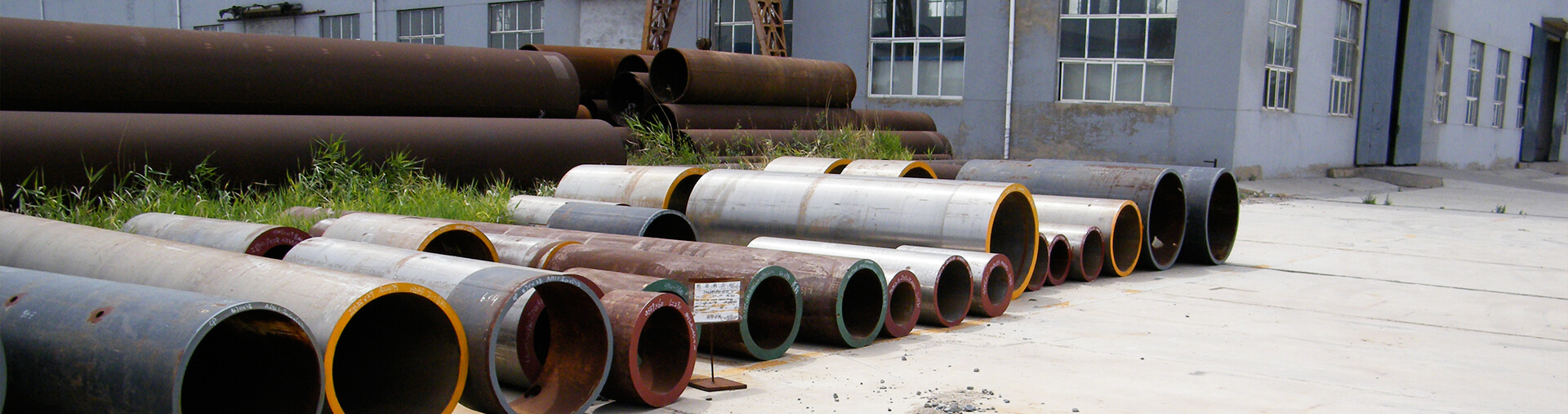
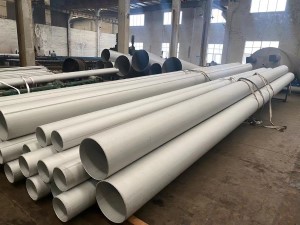
ASTM B337/B337M is the standard specification by ASTM International covering seamless and welded titanium and titanium alloy pipe for corrosive service. The specification defines multiple grades of commercially pure (CP) titanium and titanium alloys — including Grade 1, Grade 2, Grade 3, Grade 4, Grade 7, Grade 9, and Grade 12 — with pipe dimensions governed by ASME B36.19M. Grade 2 is the industry standard for chemical processing, seawater, and desalination applications. The companion specification ASME SB337 adopts identical requirements for ASME Boiler and Pressure Vessel Code compliance.
Zhengzhou Huitong (HT Pipe) supplies ASTM B337 / SB337 compliant seamless and welded titanium pipe in all standard grades with full Mill Test Certificates (MTC) per EN 10204 3.1.
1. Standard Scope & Designation
ASTM B337/B337M covers two manufacturing forms for titanium and titanium alloy pipe:
| Form |
Manufacturing Process |
Size Range (OD) |
Weld Test |
| Seamless (S) |
Hot pilgered or rotary pierced from ingot/billet |
1/2" – 24" (12.7–610 mm) |
Not applicable |
| Welded (W) |
Rolled strip/plate formed, longitudinal weld seam |
1/2" – 24" (12.7–610 mm) |
Weld expansion or hydrostatic required |
Scope Statement (ASTM B337/B337M): "This specification covers seamless and welded titanium and titanium alloy pipe in the sizes and schedules included in ASME B36.19M. Pipe shall be suitable for corrosive service and for bending, flanging, and similar forming operations."
| Designation |
Issuing Body |
Unit System |
Dimension Standard |
Latest Edition |
| ASTM B337 |
ASTM International |
Inch-Pound |
ASME B36.19M |
B337/B337M-10 (Reapproved) |
| ASTM B337M |
ASTM International |
SI (Metric) |
ASME B36.19M |
B337/B337M-10 (Reapproved) |
| ASME SB337 |
ASME (BPVC Sec. II Part B) |
Both |
ASME B36.19M |
2023 Edition |
2. Grades Covered by ASTM B337
ASTM B337 covers both commercially pure (CP) titanium grades and titanium alloy grades. Grade 2 is the most widely used for general corrosion-resistant service; Grade 7 adds palladium for enhanced crevice corrosion resistance.
| Grade |
UNS No. |
Type |
Key Features |
| Grade 1 |
R50250 |
CP Titanium |
Highest ductility (40% El), softest; excellent formability for complex shapes |
| Grade 2 |
R50400 |
CP Titanium |
Most common; best balance of strength, ductility, and corrosion resistance |
| Grade 3 |
R50550 |
CP Titanium |
Higher strength than Grade 2; used where greater mechanical properties needed |
| Grade 4 |
R50700 |
CP Titanium |
Highest CP strength; good ductility; aerospace and cryogenic applications |
| Grade 5 |
R56400 |
Ti-6Al-4V (α-β alloy) |
Highest strength; minimum TS 895 MPa; aerospace and high-stress corrosive service |
| Grade 7 |
R52400 |
CP Ti + Pd (0.12–0.25%) |
Grade 2 equivalent + Pd; superior crevice corrosion resistance in chlorides |
| Grade 9 |
R56320 |
Ti-3Al-2.5V (α alloy) |
Higher strength than CP grades; good formability; hydraulic and aerospace tubing |
| Grade 12 |
R53400 |
Ti-0.3Mo-0.8Ni |
Enhanced high-temp strength; good creep resistance; excellent in reducing acids |
3. Chemical Composition (ASTM B337 Table 1)
Values are maximum unless shown as a range. Heat analysis. Ti = balance. Per ASTM B337/B337M-10.
| Element |
Grade 1 (%) |
Grade 2 (%) |
Grade 3 (%) |
Grade 4 (%) |
Grade 7 (%) |
Notes |
| Carbon (C) |
0.10 max |
0.10 max |
0.10 max |
0.10 max |
0.10 max |
All grades |
| Iron (Fe) |
0.20 max |
0.30 max |
0.30 max |
0.50 max |
0.30 max |
Strength driver in CP grades |
| Oxygen (O) |
0.18 max |
0.25 max |
0.35 max |
0.40 max |
0.25 max |
Interstitial strengthener |
| Nitrogen (N) |
0.03 max |
0.03 max |
0.05 max |
0.05 max |
0.03 max |
— |
| Hydrogen (H) |
0.015 max |
0.015 max |
0.015 max |
0.015 max |
0.015 max |
Critical for embrittlement |
| Palladium (Pd) |
— |
— |
— |
— |
0.12–0.25 |
Grade 7 only; crevice corrosion resistance |
| Aluminum (Al) |
— |
— |
— |
— |
— |
See alloy composition tables for Gr.5, 9, 12 |
| Vanadium (V) |
— |
— |
— |
— |
— |
| Molybdenum (Mo) |
— |
— |
— |
— |
— |
| Nickel (Ni) |
— |
— |
— |
— |
— |
Grade 12: 0.3Mo-0.8Ni |
Note: Full chemistry per ASTM B337/B337M-10 Table 1. Product analysis tolerances per ASTM B348 apply. Grade 5: Al 5.5–6.75%, V 3.5–4.5%; Grade 9: Al 2.5–3.5%, V 2.0–3.0%; Grade 12: Mo 0.2–0.4%, Ni 0.6–0.9%.
4. Mechanical Property Requirements (ASTM B337 Table 2)
All values are minimum requirements. Per ASTM B337/B337M-10. All grades supplied in annealed condition.
| Grade |
Tensile Strength
min MPa (ksi) |
Yield Strength (0.2% EUL)
min MPa (ksi) |
Elongation (min %) |
| Grade 1 |
240 (35) |
170 (25) |
24 (2" GL); 30 (4D) |
| Grade 2 |
344 (50) |
275 (40) |
20 (2" GL); 25 (4D) |
| Grade 3 |
450 (65) |
380 (55) |
18 (2" GL); 22 (4D) |
| Grade 4 |
550 (80) |
480 (70) |
15 (2" GL); 20 (4D) |
| Grade 5 |
895 (130) |
828 (120) |
10 (2" GL); — |
| Grade 7 |
344 (50) |
275 (40) |
20 (2" GL); 25 (4D) |
| Grade 9 |
620 (90) |
515 (75) |
15 (2" GL); — |
| Grade 12 |
483 (70) |
345 (50) |
18 (2" GL); 22 (4D) |
Note: Elongation test specimen: 2" gauge length (GL) per ASTM B338 strip specimen, or 4D (4× diameter) for round specimens. EUL = Extension Under Load method. Testing per ASTM E8/E8M.
CP Titanium Strength-Formability Trade-off: As oxygen content increases from Grade 1 (0.18% max O) to Grade 4 (0.40% max O), tensile strength increases from 240 MPa to 550 MPa, but ductility decreases from 24% to 15% elongation. Grade 2 (0.25% max O) offers the optimal balance for most piping applications, and is by far the most widely specified CP titanium grade.
5. Heat Treatment Requirements
| Grade Type |
Required Condition |
Heat Treatment |
| CP Grades (1, 2, 3, 4) |
Annealed |
Full anneal at 600–700°C (1110–1290°F), air cool or water quench |
| Grade 7 (Ti-Pd) |
Annealed |
Same as CP grades; Pd does not affect HT requirement |
| Grade 5 (Ti-6Al-4V) |
Annealed or Solution Treated + Aged |
Solution treat at 935–955°C; age at 540–605°C for maximum strength |
| Grade 9 (Ti-3Al-2.5V) |
Annealed (per ASTM B337) |
650–760°C (1200–1400°F), air cool; may be used in cold-drawn condition |
| Grade 12 (Ti-0.3Mo-0.8Ni) |
Annealed |
590–675°C (1100–1250°F), air cool or water quench |
Critical Note on Hydrogen: Hydrogen content in titanium must be controlled to ≤ 0.015% maximum. Hydrogen pickup during heat treatment (especially in air furnaces) or pickling must be avoided — hydrogen embrittlement degrades ductility and fracture toughness. Use vacuum furnaces or controlled-atmosphere heat treatment for best results.
6. Testing & Inspection Requirements
| Test |
Requirement |
Reference Standard |
| Chemical Analysis (Heat) |
One per heat; all elements per Table 1 |
ASTM B337 Table 1 |
| Tensile Test |
One per lot (per heat/lot combination); verifies TS, YS, Elongation |
ASTM E8 / E8M |
| Flattening Test |
Welded pipe: one per lot — bend 90° around a mandrel |
ASTM B337 |
| Weld Expansion Test |
Welded pipe: one per lot — weld expanded 50% of original OD |
ASTM B337 |
| Hydrostatic Test |
Each pipe; test pressure per agreed specification or calculated from design stress |
ASTM B337 |
| Nondestructive Test (NDE) |
Eddy current, ultrasonic, or hydrostatic as substitute per agreement |
ASTM E215 / E213 |
| Visual & Dimensional Inspection |
OD tolerance ±0.75% (min ±0.25 mm); WT −0 / +15%; straightness 1.5 mm/1000 mm |
ASTM B337 |
7. Pipe Dimensions — ASME B36.19M (Stainless Steel & Titanium Pipe)
ASTM B337 pipe dimensions follow ASME B36.19M (Stainless Steel and Titanium Pipe). Key wall thicknesses for common NPS sizes:
| NPS |
OD (mm) |
Sch 5S
(mm) |
Sch 10S
(mm) |
Sch 20S
(mm) |
Sch 40S
(mm) |
Sch 80S
(mm) |
Sch 160S
(mm) |
| 1/2 |
21.34 |
1.65 |
2.11 |
— |
2.77 |
3.73 |
4.78 |
| 3/4 |
26.67 |
1.65 |
2.11 |
— |
2.87 |
3.91 |
5.56 |
| 1 |
33.40 |
1.65 |
2.77 |
— |
3.38 |
4.55 |
6.35 |
| 1-1/2 |
48.26 |
1.65 |
2.77 |
— |
3.68 |
5.08 |
7.14 |
| 2 |
60.33 |
1.65 |
2.77 |
— |
3.91 |
5.54 |
8.74 |
| 3 |
88.90 |
2.11 |
3.05 |
— |
5.49 |
7.62 |
11.13 |
| 4 |
114.30 |
2.11 |
3.05 |
— |
6.02 |
8.56 |
13.49 |
| 6 |
168.28 |
2.11 |
3.40 |
— |
7.11 |
10.97 |
18.26 |
| 8 |
219.08 |
2.11 |
3.76 |
6.35 |
8.18 |
12.70 |
18.26 |
| 10 |
273.05 |
2.11 |
3.96 |
7.80 |
9.27 |
12.70 |
15.09 |
| 12 |
323.85 |
2.77 |
4.57 |
8.38 |
9.53 |
12.70 |
17.48 |
Note: ASME B36.19M covers titanium pipe in Schedules 5S, 10S, 20S, 40S, 80S, 120S, and 160S. Unlike B36.10M, the S-suffix schedules have thinner walls for corrosive service (no pressure design in corrosive medium). Wall thickness tolerance: OD ±0.75% (min ±0.25 mm); WT −0 / +15%.
8. Industries & Applications
| Industry |
Recommended Grade |
Typical Service Media |
| Desalination Plants |
Grade 2 / Grade 7 |
Brine, seawater, evaporator condensate |
| Chemical Processing |
Grade 2 / Grade 7 |
HCl, H₂SO₄, HNO₃, organic acids, chlorides |
| Offshore & Marine |
Grade 2 / Grade 7 |
Seawater cooling lines, topside piping, risers |
| Power Plant Condensate |
Grade 2 |
Condensate piping, feedwater heaters, steam surface condensers |
| Pulp & Paper |
Grade 2 / Grade 12 |
Bleach plant chloride solutions, sodium hypochlorite |
| Aerospace & Defense |
Grade 5 / Grade 9 |
Hydraulic lines, fuel systems, airframe structural piping |
9. ASTM B337 vs ASTM B861 vs ASTM B338 — Titanium Pipe & Tube Comparison
| Criteria |
ASTM B337 (Pipe) |
ASTM B861 (Seamless Pipe) |
ASTM B338 (Tube) |
| Product Form |
Seamless + Welded Pipe |
Seamless Pipe only |
Seamless + Welded Tube |
| Min OD (NPS) |
1/2" |
NPS 3/8 |
OD to 2" (tube) |
| Max OD |
24" |
Per agreement |
5" OD (tube) |
| Wall Thickness |
B36.19M Sched 5S–160S |
B36.19M Sched 5S–160S |
BWG or decimal inches |
| Dimension Standard |
ASME B36.19M |
ASME B36.19M |
ASTM B338 (OD/WT) |
| Hydrostatic Test |
Mandatory (each pipe) |
Mandatory (each pipe) |
Mandatory or NDE per agreement |
| Typical Application |
Chemical piping, offshore flowlines |
High-pressure chemical, aerospace |
Heat exchangers, condensers, hydraulic |
Key Distinction: ASTM B337 and B861 are pipe specifications governed by ASME B36.19M with pressure-rated wall schedules. ASTM B338 covers tube (smaller OD, thinner walls) typically used for heat exchangers, condensers, and instrumentation where thermal performance or flow dynamics drive the size selection rather than pressure rating alone.
10. Related Standards
| Standard |
Scope |
Relationship to B337 |
| ASME B36.19M |
Stainless Steel & Titanium Pipe — OD, Wall, Weight |
Mandatory dimension standard for B337 pipe |
| ASME SB337 |
ASME BPVC Section II Part B — Boiler Code adoption |
Identical requirements; used for code-stamped pressure systems |
| ASTM B348 |
Titanium and Titanium Alloy Billets & Bars |
Source material specification for pipe extrusion/billing |
| ASTM B338 |
Seamless & Welded Titanium Tubes for Heat Exchangers |
Complementary tube spec; B337 is pipe (pressure-rated) |
| ASTM B861 |
Seamless Titanium Pipe (larger sizes, same grades) |
Seamless-only pipe equivalent of B337 |
| ASTM E8/E8M |
Tensile Testing of Metallic Materials |
Governs tensile, yield, elongation test procedures |
| AWS A5.16 / ERTi |
Titanium and Titanium Alloy Welding Consumables |
ERTi-1, ERTi-2, ERTi-7 filler wires for GTAW/GMAW welding |
| ASME B31.3 |
Process Piping Code |
Governs allowable stress & design for B337 titanium process piping |
11. How to Order — Required Information
| No. |
Item |
Requirement / Example |
| 1 |
Specification |
ASTM B337 / ASME SB337 |
| 2 |
Grade |
Grade 2 (most common), Grade 7, Grade 1, Grade 3, Grade 4, Grade 5, Grade 9, Grade 12 |
| 3 |
Manufacturing Form |
Seamless (S) or Welded (W) |
| 4 |
NPS & Schedule |
e.g., NPS 4 Schedule 10S or NPS 6 Schedule 40S per ASME B36.19M |
| 5 |
Length |
Single Random (~6 m), Double Random (~11.5 m), or Cut-to-length |
| 6 |
End Preparation |
Plain End (PE), Beveled End (BE per ASME B16.25), or Mechanical Joint |
| 7 |
Service Conditions |
Temperature range, corrosive media (HCl, H₂SO₄, seawater, etc.) |
| 8 |
Certification |
EN 10204 3.1 or 3.2 Certified Mill Test Report (CMTR) |
| 9 |
Quantity |
Lineal meters or metric tons (MT) |
Download ASTM B337 / B337M Standard (PDF)
The official ASTM B337/B337M PDF is available from our HT Pipe Download Center. The document covers seamless and welded titanium pipe in all grades, including full chemical composition tables, mechanical property requirements, dimensional tolerances, and testing provisions.
Go to Download Center | Request MTC / Quotation
12. Frequently Asked Questions
Q: What is ASTM B337 Grade 2 titanium pipe used for?
ASTM B337 Grade 2 (UNS R50400) is the most widely specified titanium pipe for corrosive service. Key applications include seawater desalination plant piping (evaporators, brine heaters, condensate lines), offshore platform seawater cooling systems, chemical processing plant piping for hydrochloric acid, sulfuric acid, nitric acid, and organic acids, and power plant condensate and feedwater systems. Its minimum tensile strength of 344 MPa, yield of 275 MPa, and 20% elongation provide excellent structural integrity while maintaining titanium's superior corrosion resistance in oxidizing and chloride-bearing environments.
Q: What is the difference between ASTM B337 Grade 2 and Grade 7?
Grade 7 (UNS R52400) has identical mechanical properties to Grade 2 — same TS ≥ 344 MPa, YS ≥ 275 MPa, Elongation ≥ 20% — but adds 0.12–0.25% palladium. This palladium addition dramatically improves crevice corrosion resistance in chloride-bearing acids (hydrochloric acid, sulfuric acid, phosphoric acid) and seawater service where crevices are unavoidable. The rule of thumb: specify Grade 7 wherever crevice corrosion is a concern; use Grade 2 for general corrosive service where cost is a factor.
Q: What are the temperature limits for ASTM B337 titanium pipe?
CP titanium grades (Grade 1–4) are limited to approximately 315–400°C (600–750°F) for continuous service. Below 315°C, CP titanium maintains excellent corrosion resistance in most environments. At elevated temperatures above 350°C, CP titanium may experience surface oxidation and gradual strength loss. Grade 5 (Ti-6Al-4V) is limited to approximately 430°C (800°F) due to its alpha-beta microstructure. For cryogenic service, CP titanium grades maintain excellent toughness and ductility down to liquid nitrogen temperature (−196°C) and below, making them suitable for LNG applications.
Q: Can ASTM B337 welded titanium pipe withstand seawater service?
Yes. ASTM B337 Grade 2 and Grade 7 welded titanium pipe are the preferred materials for seawater service. Titanium forms a stable, passive TiO₂ film that provides outstanding corrosion resistance in seawater at temperatures up to approximately 120°C (250°F) with zero pitting, no crevice corrosion (Grade 7), and negligible corrosion rates compared to stainless steels or nickel alloys. Welded titanium pipe for seawater must use ERTi-2 filler wire for Grade 2 base metal, and both the OD and ID weld zone must be purged with argon shielding during and after welding to prevent oxidation embrittlement.
Q: Is ASME SB337 the same as ASTM B337?
Technically identical in chemical, mechanical, dimensional, and testing requirements. ASME SB337 is ASTM B337 adopted into ASME BPVC Section II Part B. The key difference is regulatory context: SB337 is used for ASME Code-stamped pressure vessels and piping where authorized inspector (AI) oversight, Certified Material Test Reports (CMTR), and material traceability are mandatory. For non-code chemical processing or offshore piping, ASTM B337 is sufficient. Most titanium pipe mills supply dual-certified B337/SB337 material.
Request a Quote — ASTM B337 Seamless & Welded Titanium Pipe
Zhengzhou Huitong (HT Pipe) supplies ASTM B337 / SB337 Grade 1, 2, 3, 4, 7, 9, and 12 seamless and welded titanium pipe in all standard schedules. Full EN 10204 3.1 CMTRs and competitive lead times from affiliated titanium mills.