Quick Answer — Which Material Standard Should You Reference?
ASTM (American Society for Testing and Materials) standards are the default for projects in North America, the Middle East, and international EPC contracts. JIS (Japanese Industrial Standards) is dominant in Japan, Korea, and select Southeast Asian infrastructure projects. GB/T (China's Guobiao standards) powers the world's largest pipe manufacturing base — roughly 60% of global seamless steel pipe production is governed by GB/T standards. At HT PIPE, we work across all three daily. Our factory's material traceability system handles A106 Gr.B (ASTM), STPT410 (JIS G3456), and 20# (GB/T 8163) interchangeably because the chemistry and mechanical properties are near-identical. The standard you choose affects your certification package, not necessarily your pipe quality — but get the paperwork wrong, and a container of perfectly good pipe can be rejected at port.
Three Standards Systems at a Glance
| Aspect |
ASTM (USA) |
JIS (Japan) |
GB/T (China) |
| Issuing Body |
ASTM International, West Conshohocken, PA, USA |
Japanese Industrial Standards Committee (JISC), Tokyo |
Standardization Administration of China (SAC), Beijing |
| Primary Usage Region |
North America, Middle East, South America, most EPC projects globally |
Japan, South Korea, Taiwan, Southeast Asian JICA-funded projects |
China domestic, Belt & Road Initiative projects, African infrastructure (Chinese-financed) |
| Pipe Standard — Carbon Steel |
ASTM A106 (seamless), A53 (welded & seamless), API 5L (line pipe) |
JIS G3454 (pressure service CS), JIS G3456 (high-temp CS), JIS G3452 (general CS) |
GB/T 8163 (seamless for fluid service), GB/T 5310 (high-pressure boiler tube), GB/T 9711 (line pipe) |
| Stainless Steel Pipe |
ASTM A312 (seamless & welded austenitic SS), A358 (EFW large diameter) |
JIS G3459 (stainless steel pipes), JIS G3463 (boiler & heat exchanger SS tubes) |
GB/T 14976 (seamless SS for fluid transport), GB/T 12771 (welded SS pipe) |
| Flange Standard |
ASME B16.5, ASME B16.47 |
JIS B2220 (5K, 10K, 16K, 20K, 30K, 40K, 63K) |
GB/T 9119 (slip-on), GB/T 9115 (welding neck), also HG/T 20592 (chemical industry) |
| Pressure Rating System |
Class (150#, 300#, 600#, etc.) |
K rating (5K, 10K, 16K, 20K, 30K, 40K, 63K) — where K ≈ kg/cm² |
PN (0.25, 0.6, 1.0, 1.6, 2.5, 4.0, 6.3, 10.0, 16.0 MPa) |
| Dimension System |
NPS (inches) — Schedule wall thickness |
A and B system (mm OD) — Schedule (Sch) wall thickness |
DN (mm) with series I (international/ISO) and series II (older Chinese industrial) |
| Certification Document |
MTR per EN 10204 3.1 or 3.2 |
Mill Sheet (MIS — Mill Inspection Sheet) per JIS G0303 |
质量证明书 (Quality Certificate) per GB/T 2102, traceable to heat number |
| Typical Price Index (CS Seamless Pipe) |
100 (baseline) |
85-95 |
70-80 |
Side-by-Side Material Cross-Referencing
1. Carbon Steel Pipe — The Global Workhorse
Carbon steel pipe is where the standards overlap most closely. The chemical composition and mechanical properties are so similar across A106 Gr.B, JIS G3456 STPT410, and GB/T 8163 20# that we regularly pour the same heat of steel and issue certificates to all three standards simultaneously. Here's the comparison:
| Property |
ASTM A106 Gr.B |
JIS G3456 STPT410 |
GB/T 8163 20# |
| Carbon (C) max |
0.30% (max) |
0.32% (max) |
0.17-0.23% (20# is tighter) |
| Manganese (Mn) |
0.29-1.06% |
0.30-0.80% |
0.35-0.65% |
| Tensile Strength (MPa) |
≥ 415 (60 ksi) |
≥ 410 |
410-550 |
| Yield Strength (MPa) |
≥ 240 (35 ksi) |
≥ 245 |
≥ 245 |
| Elongation (%) |
30% longitudinal, 16.5% transverse |
≥ 23% (No. 11 specimen), ≥ 25% (No. 5) |
≥ 20% longitudinal |
| Hydrostatic Test Required |
Yes — per A530 supplement |
Yes — per JIS G3456 |
Yes — per GB/T 8163 |
| NDE Required |
Supplement S1 (eddy current) or S2 (ultrasonic) — optional |
Ultrasonic or Eddy Current by agreement |
Eddy current or ultrasonic per GB/T 5777 |
The real-world crossover: In our factory, we regularly produce a single heat of carbon steel and issue triple certificates — ASTM A106 Gr.B, JIS G3456 STPT410, and GB/T 8163 20# — all from the same melt. The chemistry window that satisfies all three simultaneously is: C 0.17-0.23%, Mn 0.35-0.65%, Si 0.17-0.37%, P ≤ 0.030%, S ≤ 0.030%. This is our standard carbon steel composition regardless of which standard the customer nominally orders. The only time we deviate is when API 5L PSL2 requirements force tighter sulfur control or when the customer explicitly requests A106 Gr.C (higher tensile strength, but less ductility).
2. Stainless Steel Pipe — ASTM A312 vs JIS G3459 vs GB/T 14976
For stainless steel, the standards are remarkably aligned — the 304 and 316 grades are globally harmonized, which makes our export process straightforward:
| Common Grade |
ASTM A312 |
JIS G3459 |
GB/T 14976 |
Dual-Certified? |
| 304 / UNS S30400 |
TP304 |
SUS304TP |
06Cr19Ni10 (0Cr18Ni9 legacy) |
Yes — our standard dual-cert package. Chemistry fully harmonized. |
| 304L / UNS S30403 |
TP304L |
SUS304LTP |
022Cr19Ni10 |
Yes — C ≤ 0.030% across all three standards. |
| 316 / UNS S31600 |
TP316 |
SUS316TP |
06Cr17Ni12Mo2 |
Yes — Mo 2.0-3.0% across all three. Dual and triple certs standard. |
| 316L / UNS S31603 |
TP316L |
SUS316LTP |
022Cr17Ni12Mo2 |
Yes |
| 321 / UNS S32100 |
TP321 |
SUS321TP |
06Cr18Ni11Ti |
Partial — GB requires Ti ≥ 5×(C+N), ASTM requires Ti ≥ 5×C. GB is slightly stricter. We cert to the tighter GB chemistry and it meets all three. |
| 347 / UNS S34700 |
TP347 |
SUS347TP |
06Cr18Ni11Nb |
Yes — Nb chemistry nearly identical. Triple certs standard. |
3. Flange Standards — ASME B16.5 vs JIS B2220 vs GB/T 9119
The flange standards are where real dimensional differences emerge. Unlike pipe, where OD is largely harmonized through ISO 4200, flange dimensions for the three systems are fundamentally different:
| Comparison Point |
ASME B16.5 |
JIS B2220 |
GB/T 9119 / HG/T 20592 |
| Pressure Rating |
Class 150, 300, 400, 600, 900, 1500, 2500 |
5K, 10K, 16K, 20K, 30K, 40K, 63K (K ≈ 0.1 MPa) |
PN 0.6, 1.0, 1.6, 2.5, 4.0, 6.3, 10.0, 16.0 MPa |
| Dimension Basis |
Inches (mm in brackets) |
Millimeters |
Millimeters (Series I = ISO; Series II = legacy) |
| Bolt Circle Compatibility |
Inch-based drillings |
mm-based, closer to EN than ASME |
Series I: mostly ISO/EN compatible. Series II: legacy Chinese drilling — incompatible with both ASME and EN. |
| Bolt Hole Count Trend |
4 bolts for NPS 1/2"-3", 8 for 3.5"-8", etc. |
Similar count pattern but different PCD |
Similar to EN — Series I bolts match EN 1092-1 in many sizes |
GB/T flange warning from our shop: China has been transitioning from the older GB/T 9119-2010 standard (which had many Series II dimensions that were unique to China) to newer revisions aligned with ISO/EN. However, there are still millions of legacy Chinese flanges in service with Series II dimensions. If you're spec'ing flanges for a Chinese-built plant or connecting to existing Chinese equipment, you must verify whether the existing flanges are Series I (international) or Series II (legacy Chinese). We stock both — but Series II is increasingly rare for new export projects.
4. Alloy and High-Temperature Steels — The Cr-Mo Cross-Reference
For alloy steels used in high-temperature service, the standards have near-perfect alignment because the chromium and molybdenum content defines the grade:
| Alloy Type |
ASTM A335 |
JIS G3458 |
GB/T 5310 |
Common Service |
| 0.5Cr-0.5Mo |
P2 (A335 Grade P2) |
STPA22 |
12CrMoG |
Low-temp boiler tubes, up to ~480°C |
| 1Cr-0.5Mo |
P12 |
STPA23 |
15CrMoG |
Refinery heater tubes, steam up to 550°C |
| 1.25Cr-0.5Mo |
P11 |
STPA24 |
15Cr1MoG |
Superheated steam, refinery furnace tubes |
| 2.25Cr-1Mo |
P22 |
STPA25 |
12Cr2MoG |
Hydrocracking units, high-temp H₂ service up to 600°C |
| 5Cr-0.5Mo |
P5/P5b |
STPA26 |
1Cr5MoG |
Refinery sour service (H₂S), furnace tubes |
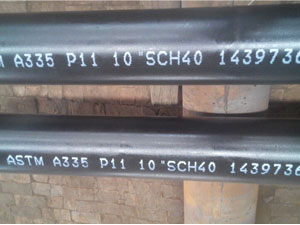
| 9Cr-1Mo (T91/P91) |
P91 (A335/A213) |
STPA28 |
10Cr9Mo1VNb (P91) |
Ultra-supercritical boilers, steam up to 620°C |
5. Certification & Acceptance — Where the Standards Diverge in Practice
The technical differences between the material standards are small — as the cross-reference tables above show, chemistry and mechanical properties are largely harmonized across ASTM, JIS, and GB. The real differences emerge in the certification process and what each inspection authority considers acceptable evidence of compliance:
- ASTM projects: Require EN 10204 3.1 Material Test Reports (MTRs) signed by a manufacturer's authorized inspector. Many projects escalate to 3.2 certificates, where a third-party inspector (TPI) — typically SGS, Bureau Veritas, or Lloyd's — witnesses the testing and co-signs the MTR. North American end users often accept A106 and A312 MTRs with minimal additional review.
- JIS projects: Require Mill Inspection Sheets per JIS G0303 format. Japanese and Korean end users are extremely detail-oriented about format compliance — the layout of the inspection sheet matters almost as much as the numbers on it. We've had shipments held up in Yokohama because the JIS certificate used an ASTM template format. The data was correct; the presentation was wrong. We now use a dedicated JIS template for all Japanese-bound shipments.
- GB/T projects: Require 质量证明书 (Quality Certificates) per GB/T 2102 with heat number traceability. Chinese domestic projects and Chinese-financed overseas projects (Belt & Road) accept GB/T certs without question. For international projects that reference GB standards but are overseen by Western EPCs (e.g., Worley, Technip), we typically issue dual ASTM+GB certificates from the same material lot to satisfy both the GB requirement and the EPC's ASTM-based quality system.
6. The Chinese Supply Chain Advantage — Why GB Standards Lower Your Cost
There's an economic reality behind these standards that we live every day in our factory. China produces roughly 60% of the world's seamless steel pipe by tonnage. The entire domestic supply chain — steel mills, forging shops, heat treatment facilities, testing labs — is organized around GB/T standards. When a Chinese mill produces pipe to ASTM A106, they're essentially producing GB/T 8163 material with tighter documentation controls. The pipe itself is physically the same.
This means:
- Cost advantage: GB/T-spec material is typically 15-20% cheaper than the ASTM-equivalent purely because the mill can sell into the massive domestic market without the overhead of ASTM documentation. If your project's quality plan allows GB/T standards (as many African, Southeast Asian, and Middle Eastern projects now do), you can capture this cost benefit directly.
- Availability advantage: GB/T sizes and grades are continuously available from multiple Chinese mills in large quantities. ASTM-spec material from Chinese mills sometimes requires a minimum mill order quantity (MOQ) of 10-20 metric tons for non-standard sizes. If you need 2 pieces of NPS 20" A106 Gr.B, you may be waiting weeks for a mill run. If you can accept GB/T 8163 20# in the same size, we likely have it in stock.
- The dual-certification sweet spot: For about 80% of our export orders, we dual-certify — ASTM certificate for EPC documentation requirements, GB/T certificate for purchaser qualification. The material is identical; the paperwork reflects both worlds. This costs roughly 3-5% more than a single-standard order but satisfies every stakeholder in the chain.
HT PIPE's Multi-Standard Reality — What Happens on Our Factory Floor
We run a single production line that outputs pipe and fittings to ASTM, JIS, GB/T, EN, and API standards — sometimes all five in the same week. The key to making this work isn't different production processes; it's a document control system that maps every heat number to every applicable standard simultaneously.
Three real examples from our certification files:
- 2024, Thailand: A Japanese EPC (JGC) building a petrochemical plant for a Thai owner, funded by Japanese JICA financing. The spec required JIS G3456 STPT410 pipe, JIS B2220 10K flanges, and 100% Japanese-format Mill Inspection Sheets. We produced the pipe using our standard carbon steel composition (which meets ASTM A106, JIS G3456, and GB/T 8163 simultaneously), cut the flanges to JIS B2220 10K dimensions (which are different from both ASME and EN — we had to use dedicated JIS forging dies), and issued JIS-format documentation in both English and Japanese. The EPC's Japanese welding inspector spent 3 days in our factory and signed off with zero non-conformances. This order — approximately 180 metric tons — taught us that the format of the paperwork is as critical as the quality of the steel.
- 2025, Kenya: A Chinese contractor (CGCOC) building a water pipeline with Chinese EXIM Bank financing. The spec called for GB/T 8163 20# seamless pipe and GB/T 9119 PN16 flanges. Because this was a Chinese-financed African project, GB/T standards were fully accepted by both the contractor and the Kenyan regulatory authority. We shipped the entire order — about 340 metric tons — using domestic GB/T certified material from Chinese mills, which cost approximately 18% less than the ASTM equivalent. The project was completed on budget, and the cost savings from accepting GB standards (rather than demanding ASTM or EN) funded an additional 12 km of pipeline.
- 2025, Saudi Arabia: A Saudi Aramco-approved project requiring full ASTM compliance — A106 Gr.B pipe, A105 flanges, A234 WPB fittings — with 3.2 (TPI-witnessed) certification from SGS. The material was produced using our standard dual-cert chemistry (ASTM + GB), but the documentation was exclusively ASTM format per the project's quality plan. SGS witnessed the mechanical testing, chemical analysis, and hydrostatic testing, then co-signed every MTR. The extra certification cost was approximately $4,200 for the TPI inspection across a $180,000 order — about 2.3%. For Aramco specs, this is unavoidable and factored into our pricing from the outset.
Our standard advice to international buyers: If your project's technical specification allows alternative standards (most modern specs include a "or equivalent" clause), ask us for a dual-certification or standards comparison package. We can typically demonstrate equivalence between ASTM, JIS, and GB/T for carbon and stainless steel materials within 24 hours, supported by actual heat chemistry data from our production records. This can save 10-20% on material costs without any compromise in quality. If the spec is locked to ASTM-only with no alternatives, we'll produce to ASTM — but the pipe coming out of our mill is the same pipe either way.
Frequently Asked Questions — Material Standards
Q1: Is A106 Gr.B the same as GB/T 8163 20#?
Not identical, but close enough that single-heat dual-certification is standard practice. A106 Gr.B allows carbon up to 0.30% and manganese up to 1.06%; GB/T 8163 20# tightens carbon to 0.17-0.23% and manganese to 0.35-0.65%. If you produce steel within GB/T 8163 20# chemistry, it automatically meets A106 Gr.B chemistry as well (since the GB range is narrower). Tensile strength and yield are nearly identical. In our factory, we produce to the GB/T chemistry and issue both certificates — the pipe physically meets both standards. The only functional difference is that A106 Gr.B allows higher carbon content (and potentially slightly higher strength with lower ductility), but in practice, mills target the tighter chemistry for better weldability anyway.
Q2: Can I use GB/T pipe on a project specified for ASTM A106?
This depends on the project's quality plan and the EPC's material approval process. Technically, GB/T 8163 20# is equivalent to A106 Gr.B in most respects. Practically, if your project's approved vendor list (AVL) requires ASTM certification, you need ASTM paperwork — even if the pipe is physically identical. We handle this through dual certification: the pipe is produced to chemistry that meets both standards, tested to both standards' mechanical requirements, and documented with both ASTM and GB/T certificates. This satisfies both the technical specification (pipe quality) and the commercial requirement (ASTM certification). If the project's approved standards list specifically includes GB/T as an alternative, you can use GB/T certs directly and save the dual-cert cost. We see this increasingly on Chinese-financed overseas projects.
Q3: What's the difference between JIS G3454 and JIS G3456?
JIS G3454 (STPG series) covers carbon steel pipes for pressure service at moderate temperatures — typically up to 350°C. JIS G3456 (STPT series) covers carbon steel pipes for high-temperature service. The key difference: JIS G3456 pipes have controlled silicon content (Si ≥ 0.10%) for improved high-temperature strength and graphitization resistance. STPT410 (JIS G3456) is the equivalent of A106 Gr.B for high-temperature applications, while STPG410 (JIS G3454) fills a similar role to A53 Gr.B for lower-temperature pressure service. When you see "STPT" on a Japanese spec, assume high-temperature service; "STPG" is standard pressure service. For our export orders, STPT410 is more common because most international piping codes referencing JIS standards involve process piping or boiler applications where elevated temperature is a consideration.
Q4: Are JIS flanges compatible with ASME or EN flanges?
No — JIS B2220 flanges use a different dimension system entirely. The bolt circle diameters, bolt counts, and flange OD for JIS 10K (roughly equivalent to Class 150 in pressure rating) do not match either ASME B16.5 Class 150 or EN 1092-1 PN16. For example, a JIS 10K DN 100 flange has a bolt circle diameter of 162mm with 8 bolts of M16; ASME B16.5 Class 150 NPS 4" has a bolt circle of 190.5mm with 8 bolts of 5/8" (M16). The mismatch isn't even close. JIS flanges must be connected only to other JIS flanges. We keep separate JIS-compatible flange inventory for Japanese and Korean projects — it does not mix with our ASME or EN stock.
Q5: Why are GB/T standard materials cheaper than ASTM equivalents?
Economy of scale — China's domestic market consumes more GB/T pipe than the entire rest of the world consumes ASTM pipe combined. Every Chinese steel mill operates its production planning around GB/T specifications. The incremental cost of producing to ASTM is primarily documentation: additional testing requirements, English-language MTRs (rather than Chinese 质量证明书), possibly tighter NDE requirements if the ASTM purchase order invokes optional supplements. The base material cost is nearly identical. For a typical 100-ton carbon steel pipe order, specifying ASTM over GB/T adds approximately 10-20% to the price — not because the pipe is better, but because the mill must segregate the ASTM-certified heat, run additional tests, and prepare specialty documentation. If your project can accept GB/T standards, you capture this difference as pure cost savings.
Related Comparisons & Resources