ASTM A234 / A234M — Wrought Carbon and Alloy Steel Butt-Welding Pipe Fittings
ASTM A234/A234M (latest edition: A234M-22) is the benchmark specification for wrought seamless and welded butt-welding pipe fittings manufactured from carbon and alloy steel for moderate- and high-temperature pressure piping service. The ASME counterpart SA-234 is adopted in ASME BPVC Section II Part A for Code-stamped pressure equipment. Products covered include elbows (LR / SR), equal and reducing tees, concentric and eccentric reducers, caps, and crosses conforming to ASME B16.9 (NPS ½–72) and ASME B16.28 (short-radius elbows).
1. Scope and Applicable Standards
ASTM A234 applies to butt-welding fittings in nominal pipe sizes NPS ½ through NPS 72 made from seamless or welded tubular products, forgings, bars, plates, or sheet. The standard does not cover socket-weld or threaded fittings (governed by ASME B16.11) nor flanges (governed by ASME B16.5 / B16.47).
| Related Standard |
Scope |
| ASTM A234 / ASME SA-234 |
Carbon and alloy steel butt-welding fittings, moderate and high temperature |
| ASME B16.9 |
Factory-made wrought butt-welding fittings, NPS ½–72 |
| ASME B16.28 |
Short-radius (SR) elbows and returns, NPS ½–24 |
| MSS SP-75 |
High-test wrought butt-welding fittings (WPHY grades for line pipe) |
| ASTM A403 / ASME SA-403 |
Wrought stainless steel butt-welding fittings (companion stainless standard) |
| ASTM A815 / ASME SA-815 |
Wrought duplex and ferritic stainless butt-welding fittings |
2. Grade Designations
A234 grades are designated by a "WP" prefix (Wrought Pipe) followed by either a number indicating alloy content or a letter suffix (B, C) for carbon steel. Grades are grouped into two families:
| Grade |
Common Name |
Alloy System |
Max Service Temp. |
Typical Application |
| WPB |
Carbon Steel B |
C-Mn |
425 °C (800 °F) |
General moderate-temperature process piping |
| WPC |
Carbon Steel C |
C-Mn (higher C) |
425 °C (800 °F) |
Higher-strength requirements vs WPB |
| WP5 |
5 Cr – ½ Mo |
Cr-Mo |
650 °C (1200 °F) |
Refinery high-temperature service, corrosive gas |
| WP9 |
9 Cr – 1 Mo |
Cr-Mo |
650 °C (1200 °F) |
Refinery, high-temperature oxidizing atmospheres |
| WP11 Cl.1 / Cl.3 |
1¼ Cr – ½ Mo |
Cr-Mo |
580 °C (1075 °F) |
Boiler headers, steam lines, H₂ service |
| WP12 Cl.1 / Cl.2 |
1 Cr – ½ Mo |
Cr-Mo |
580 °C (1075 °F) |
Power boiler, steam piping |
| WP22 Cl.1 / Cl.3 |
2¼ Cr – 1 Mo |
Cr-Mo |
620 °C (1150 °F) |
Power generation, heavy-wall headers, H₂ high-pressure |
| WP91 |
9 Cr – 1 Mo – V |
Cr-Mo-V-Nb-N |
650 °C (1200 °F) |
Ultra-supercritical (USC) power plants, HRSG headers |
| WP911 |
9 Cr – 1 Mo – W – V |
Cr-Mo-W-V-B |
650 °C (1200 °F) |
Advanced USC power plants, higher creep than WP91 |
3. Chemical Composition Requirements
All composition values are weight percent (wt %). "–" denotes no requirement. The WP91 and WP911 grades include additional micro-alloying elements (V, Nb, N, W, B) to enhance elevated-temperature creep strength.
| Grade |
C max |
Mn |
P max |
S max |
Si |
Cr |
Mo |
Others |
| WPB |
0.30 |
0.29–1.06 |
0.050 |
0.058 |
≥0.10 |
— |
— |
— |
| WPC |
0.35 |
0.29–1.06 |
0.050 |
0.058 |
≥0.10 |
— |
— |
— |
| WP5 |
0.15 |
0.30–0.60 |
0.030 |
0.030 |
0.50 max |
4.00–6.00 |
0.45–0.65 |
— |
| WP9 |
0.15 |
0.30–0.60 |
0.030 |
0.030 |
0.25–1.00 |
8.00–10.00 |
0.90–1.10 |
— |
| WP11 Cl.1 |
0.05–0.15 |
0.30–0.60 |
0.030 |
0.030 |
0.50–1.00 |
1.00–1.50 |
0.44–0.65 |
— |
| WP12 Cl.1 |
0.05–0.15 |
0.30–0.61 |
0.045 |
0.045 |
≤0.50 |
0.80–1.25 |
0.44–0.65 |
— |
| WP22 Cl.1 |
0.05–0.15 |
0.30–0.60 |
0.030 |
0.030 |
≤0.50 |
1.90–2.60 |
0.87–1.13 |
— |
| WP91 |
0.08–0.12 |
0.30–0.60 |
0.020 |
0.010 |
0.20–0.50 |
8.00–9.50 |
0.85–1.05 |
V 0.18–0.25, Nb 0.06–0.10, N 0.03–0.07, Ni ≤0.40, Al ≤0.02 |
| WP911 |
0.09–0.13 |
0.30–0.60 |
0.020 |
0.010 |
0.10–0.50 |
8.50–9.50 |
0.90–1.10 |
V 0.18–0.25, W 0.90–1.10, B 0.0003–0.005, Co ≤1.00, Ni ≤0.40 |
4. Mechanical Properties at Room Temperature
The following requirements apply at room temperature (21 °C). For Cl.1 grades the wall thickness is unrestricted; Cl.3 grades (WP11 Cl.3, WP22 Cl.3) require slightly higher minimum strength than Cl.1.
| Grade |
UTS min (MPa) |
0.2% YS min (MPa) |
Elongation min (%) |
Hardness max (HBW) |
| WPB |
415 |
240 |
22 |
197 |
| WPC |
485 |
275 |
22 |
197 |
| WP5 |
415 |
205 |
20 |
207 |
| WP9 |
415 |
205 |
20 |
241 |
| WP11 Cl.1 |
415 |
205 |
20 |
207 |
| WP12 Cl.1 |
415 |
220 |
20 |
207 |
| WP22 Cl.1 |
415 |
205 |
20 |
207 |
| WP91 |
585 |
415 |
20 |
248 |
| WP911 |
620 |
440 |
20 |
248 |
5. Heat Treatment Requirements
Heat treatment requirements vary by grade and are critical for achieving the correct microstructure in alloy steel grades. WPB and WPC may be supplied in the as-forged, normalized, or normalized-and-tempered condition with no mandatory heat treatment. All Cr-Mo grades require specific thermal cycles:
| Grade |
Required Condition |
Normalize Temp (°C) |
Temper Temp (°C) |
Note |
| WPB / WPC |
As-forged / N or N+T |
— |
— |
No mandatory HT; N+T recommended for toughness |
| WP5 / WP9 |
Full anneal or N+T |
900–980 |
650–780 |
Temper min 1 h/25 mm thickness |
| WP11 / WP12 / WP22 |
Full anneal or N+T |
900–960 |
650–780 |
Subcritical anneal (isothermal): 790–845 °C allowed |
| WP91 |
Normalize + Temper (mandatory) |
1040–1080 |
730–800 |
Temper min 1 h; hardness 196–248 HBW mandatory |
| WP911 |
Normalize + Temper (mandatory) |
1040–1080 |
730–800 |
Same cycle as WP91; W addition increases creep resistance |
Post-Weld Heat Treatment (PWHT): All alloy steel grades (WP5, WP9, WP11, WP12, WP22, WP91, WP911) require PWHT when incorporated in welded assemblies per ASME B31.1 / B31.3. PWHT for WP91 must be performed at 730–800 °C; improper PWHT is the most common cause of in-service WP91 failures (Type IV cracking).
6. Inspection and Testing Requirements
| Test |
Requirement |
Applicable Grade |
| Tensile Test |
One test per heat or heat-treatment lot; full-section or machined specimens |
All grades |
| Hardness Test |
100% inspection for WP91 and WP911; spot check for other alloy grades |
All grades (100% for WP91/WP911) |
| Hydrostatic Test |
Per ASME B16.9 / B16.28; each fitting individually or mill hydrostatic test on parent pipe |
All grades |
| Chemical Analysis |
One analysis per heat (ladle analysis); product analysis on request |
All grades |
| Visual & Dimensional |
100% visual; dimensions per ASME B16.9 or B16.28 Table of tolerances |
All grades |
| NDE (UT / RT / MT / PT) |
Supplementary; specified in purchase order (ASME Supplementary Requirements S1–S9) |
As specified |
7. Dimensional Standards and Wall Thickness
ASTM A234 fittings are manufactured to the following dimensional standards. Wall thickness is designated by Schedule Number (Sch) or weight class, and must not be less than the nominal pipe wall thickness after forming:
| Fitting Type |
Dimensional Standard |
NPS Range |
Common Schedules |
| LR Elbow (1.5D), Equal Tee, Reducer, Cap |
ASME B16.9 |
½ – 72 |
Sch 20 / STD / 40 / 60 / XS / 80 / 100 / 120 / 140 / 160 / XXS |
| SR Elbow (1.0D), SR Return |
ASME B16.28 |
½ – 24 |
Sch STD / XS / XXS |
| Reducing Tee, Lateral |
ASME B16.9 |
½ – 72 |
Same as B16.9 elbows |
| High-test fittings (WPHY grades) |
MSS SP-75 |
2 – 60 |
Sch STD / 40 / XS / 60 / 80 |
8. Typical Applications by Grade
| Industry |
Grade(s) |
Service Conditions |
| Process Industry (general) |
WPB, WPC |
Steam, water, oil, gas at moderate temperature and pressure |
| Petroleum Refinery |
WP5, WP9, WP11, WP22 |
Hydrotreating, catalytic reforming, crude distillation (H₂ + H₂S at high temp) |
| Fossil-fuel Power Generation |
WP11, WP22, WP91 |
Superheated steam headers, main steam and hot reheat piping |
| Ultra-supercritical (USC) Power |
WP91, WP911 |
Steam >600 °C, >25 MPa; HRSG and turbine bypass systems |
| Hydrogen Service (high-pressure) |
WP11, WP22 |
Hydrogen-induced cracking (HIC) resistance, Nelson curve compliance |
| Cryogenic / Low-temperature |
Not recommended |
Use ASTM A420 WPL6 for service below –29 °C |
9. ASTM A234 vs. ASTM A403 vs. ASTM A420
Selecting the correct fitting specification depends on the process fluid, operating temperature, and material system. The three main butt-welding fitting standards complement each other:
| Parameter |
ASTM A234 |
ASTM A403 |
ASTM A420 |
| Material |
Carbon & alloy steel |
Austenitic / duplex SS |
Carbon steel (low-temp) |
| Key Grades |
WPB, WP11, WP22, WP91 |
WP304, WP316, WP321, WP347 |
WPL6, WPL3, WPL8, WPL9 |
| Service Temperature |
–29 °C to +650 °C |
–200 °C to +815 °C |
–101 °C to +340 °C |
| ASME Equivalent |
SA-234 |
SA-403 |
SA-420 |
| Corrosion Resistance |
Low to moderate |
Excellent (pitting, crevice) |
Low (carbon steel) |
| Dimensional Standard |
ASME B16.9 / B16.28 |
ASME B16.9 / B16.28 |
ASME B16.9 |
| Typical Use |
Refinery, power plant steam |
Chemical, pharma, cryogenic |
LNG, offshore, arctic pipelines |
10. Related Standards and Cross-References
| Standard |
Type |
Description |
| ASME SA-234 |
ASME equivalent |
Identical requirements + ASME BPVC supplementary requirements |
| ASTM A106 Gr.B |
Pipe material |
Seamless carbon steel pipe for high-temperature service (parent material for WPB fittings) |
| ASTM A335 P11/P22/P91 |
Pipe material |
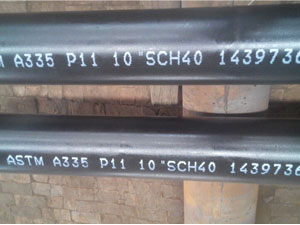
Alloy steel seamless pipe; same alloy system as WP11/WP22/WP91 fittings |
| ASTM A182 F11/F22/F91 |
Forged flanges |
Forged alloy steel flanges and fittings for same alloy systems |
| ASTM A403 / SA-403 |
SS fittings |
Wrought austenitic stainless steel butt-welding fittings |
| ASTM A420 / SA-420 |
Low-temp fittings |
Carbon steel fittings for low-temperature service (–29 °C to –101 °C) |
| ASME B31.1 / B31.3 |
Piping code |
Power piping / Process piping code referencing A234 for fitting selection |
11. How to Order ASTM A234 Fittings
A complete purchase order for ASTM A234 fittings should specify the following information to avoid ambiguity and ensure correct material traceability:
| # |
Item |
Example |
| 1 |
Standard and year |
ASTM A234M-22 (or ASME SA-234 for BPVC) |
| 2 |
Grade |
WPB / WP11 Cl.1 / WP91 |
| 3 |
Fitting type |
90° LR Elbow / Equal Tee / Concentric Reducer |
| 4 |
Nominal pipe size (NPS) |
NPS 6 × 4 (reducing) or NPS 8 (equal) |
| 5 |
Schedule / Wall thickness |
Sch 40 / Sch XS / Sch 160 |
| 6 |
Dimensional standard |
ASME B16.9 or ASME B16.28 (for SR) |
| 7 |
Quantity |
50 pcs |
| 8 |
End connection |
BW (butt-weld) ends; bevel per ASME B16.25 |
| 9 |
Heat treatment |
Normalized + Tempered (for WP91 — mandatory) |
| 10 |
Supplementary requirements |
S2 (Product Analysis), S5 (UT), S6 (Charpy), S8 (Hardness) |
| 11 |
Certificates |
EN 10204 3.1 MTR (Mill Test Report) with full chemical and mechanical data |
For quotation requests, contact HT PIPE with the above specifications. We supply ASTM A234 WPB through WP91 fittings in NPS ½ to NPS 48 with full EN 10204 3.1 material traceability and NACE MR0175/ISO 15156 compliance for sour-service applications.
12. Frequently Asked Questions
Q1: Can ASTM A234 WPB fittings be used at cryogenic temperatures?
No. WPB (and WPC) are carbon steel grades with a minimum service temperature of –29 °C per ASME B31.3. For lower temperatures (down to –101 °C), use ASTM A420 WPL6 (impact-tested carbon steel) or, for cryogenic service, ASTM A403 stainless steel fittings.
Q2: What is the difference between WP11 Class 1 and Class 3?
WP11 Class 1 has a minimum tensile strength of 415 MPa and yield of 205 MPa; Class 3 has higher minimums (520 MPa UTS / 310 MPa YS). Class 3 is produced from seamless or welded pipe with specific cold-drawing or heat-treatment operations. Class 1 is more common for standard high-temperature steam service; Class 3 is specified when higher strength is required.
Q3: Why is WP91 heat treatment so critical?
WP91 (9Cr-1Mo-V modified) achieves its high creep strength through a tempered martensite microstructure. Improper normalization temperature, tempering temperature, or PWHT temperature can result in a mixed martensite/ferrite microstructure (Type IV cracking zone) or partial re-austenitization of the HAZ, causing premature creep failure. ASTM A234 requires a hardness window of 196–248 HBW as a proxy for correct heat treatment.
Q4: What markings are required on ASTM A234 fittings?
Per ASME B16.9 and A234, each fitting must be marked with: manufacturer's name or trademark, material grade (e.g., WPB, WP91), NPS, schedule / wall thickness (for elbows and caps), and heat number for full material traceability. Electrochemical etching or low-stress stamping is acceptable; deep stamping on thin-wall fittings is prohibited.
Q5: How to verify ASTM A234 WP91 fittings on receipt?
Incoming inspection for WP91 should include: (1) verify EN 10204 3.1 MTR with heat number traceable to fitting marking; (2) check chemical composition against A234 Table 1 limits — particularly V (0.18–0.25%), Nb (0.06–0.10%), and N (0.03–0.07%); (3) verify hardness is within 196–248 HBW by portable Leeb or UCI hardness tester; (4) confirm normalized and tempered condition is stated in MTR. PMI (positive material identification) by XRF can verify Cr and Mo content but cannot distinguish WP91 from P92 without V/Nb measurement.