Quick Answer — B31.1 or B31.3: The One-Paragraph Decision Rule
ASME B31.1 (Power Piping) covers piping in electric power generating stations, industrial and institutional boiler plants, district heating systems, and central heating plants — essentially anywhere steam is generated to drive a turbine or heat a building. ASME B31.3 (Process Piping) covers piping in petroleum refineries, chemical plants, pharmaceutical facilities, semiconductor manufacturing, food processing, and essentially every industrial facility that is not a power plant. The critical differences: B31.1 is more conservative — lower allowable stress values, more stringent NDE requirements, and higher hydrotest pressures because power plant failures carry higher consequences (personnel safety, grid stability). B31.3 allows more engineering flexibility and covers a wider range of materials and fluids. At HT PIPE, roughly 70% of our piping orders are to B31.3 (oil & gas, chemical, general industry), about 25% to B31.1 (power plants and boiler piping), and the remaining 5% to B31.4/B31.8 (pipeline codes) and other standards. If you're designing piping for a refinery or chemical plant: B31.3. If you're designing piping for a power plant boiler feedwater line or main steam line: B31.1. Getting this wrong leads to rejected material, failed inspections, and in the worst case — code violations that the jurisdictional authority will not grandfather.
B31.1 vs B31.3 at a Glance
| Aspect |
ASME B31.1 — Power Piping |
ASME B31.3 — Process Piping |
| Full Title |
ASME B31.1 — Power Piping |
ASME B31.3 — Process Piping |
| Scope |
Electric power generating stations, industrial/institutional boiler plants, district heating, central heating — all steam and water piping within the plant boundary, including boiler external piping. |
Petroleum refineries, chemical plants, pharmaceutical plants, textile, paper, semiconductor, food processing, cryogenic facilities — essentially all industrial process piping outside the power generation sector. |
| Design Philosophy |
Conservative — lower allowable stresses, higher safety factors. Designed for long-term operation (30+ years) at high temperatures and pressures with minimal in-service inspection. |
Flexible — higher allowable stresses, broader material options. Designed for defined service life with planned inspection and maintenance programs. More engineering judgment permitted. |
| Allowable Stress Basis |
More conservative — typically the lower of: 1/3.5 × tensile strength OR 2/3 × yield strength at temperature. Adds margin for creep at high temperature. |
Less conservative — typically the lower of: 1/3 × tensile strength OR 2/3 × yield strength at temperature. Higher allowable stress values for most materials at most temperatures. |
| Hydrotest Pressure |
1.5 × design pressure × (stress at test temp / stress at design temp). The stress ratio adjustment typically pushes the test pressure higher than a straight 1.5× multiplier. |
1.5 × design pressure × (stress at test temp / stress at design temp). Same formula, but higher allowable stresses → higher design pressure → possibly different test result. |
| NDE — Radiography (RT) Requirement |
Higher RT percentages — typically 5% random RT for normal fluid service, 100% for severe cyclic conditions and certain boiler external piping per ASME Section I requirements. |
Lower RT percentages — Normal Fluid Service: 5% random RT. Category D (non-hazardous utility): no RT required. Category M (lethal/toxic): 100% RT. More flexible on NDE degree depending on fluid service category. |
| Fluid Service Categories |
Boiler External Piping (BEP — follow ASME Section I rules), Non-Boiler External Piping (follow B31.1 rules). Less granular classification system. |
Category D (non-hazardous utility — air, water, steam <150 psi / 366°F), Category M (lethal/toxic fluids), Normal Fluid Service (everything not D or M), High-Pressure (Chapter IX), High-Purity, Cryogenic. Much more nuanced fluid service classification. |
| Typical Materials |
Predominantly carbon steel (A106 Gr.B/C, A53), Cr-Mo alloys for high temp (P11, P22, P91), limited stainless use in boiler feedwater and condensate systems. |
Carbon steel, stainless (304/304L, 316/316L), duplex (2205, 2507), nickel alloys (Inconel 625, Hastelloy C276), titanium, lined pipe, non-metallic — widest material range of any B31 code. |
| Temperature Range |
Typically 100°F to 1,200°F+ (superheated steam, boiler components). Cryogenic not typically covered — B31.3 would govern for LNG, LOX, etc. |
Full range — cryogenic (LNG at -260°F / -162°C) to high temperature (reactor circuits at 1,200°F / 649°C). Includes dedicated rules for cryogenic and Category M services. |
| Weld Joint Quality Factor (Ej) |
Table 102.4.7 — Ej = 1.0 for seamless and full-RT welded pipe; Ej = 0.85 for random-RT; Ej = 0.60 for no RT. Enforces NDE on seam-welded pipe used at elevated stress. |
Table 302.3.4 — Same Ej values. However, B31.3 allows the designer to specify the required Ej based on fluid service and inspection level, providing more engineering discretion. |
| Support & Flexibility |
Chapter II, Part 5. More conservative support spacing. Thermal expansion must be analyzed with formal flexibility calculations for all systems above 250°F. |
Chapter II, Part 5. Similar rules but allows simplified flexibility analysis for uniform-size systems with no more than two anchor points if the empirical formula in 319.4.1 is satisfied. More room for engineering judgment. |
How B31.1 and B31.3 Differ Where It Counts
1. Why B31.1 Uses Lower Allowable Stress — The Power Plant Safety Premium
The fundamental design philosophy difference between B31.1 and B31.3 comes down to this: B31.1 assumes the piping will run for decades with minimal shutdown inspection, while B31.3 assumes the plant will have periodic turnarounds where the piping can be inspected and maintained. A power plant boiler operates continuously — often 8,000+ hours per year, year after year — and an unplanned shutdown due to a piping failure costs not just the repair, but the lost power revenue ($500,000-2,000,000 per day for a typical 500MW unit). So B31.1 builds in more margin at the design stage.
| Material & Temperature |
B31.1 Allowable Stress (ksi) |
B31.3 Allowable Stress (ksi) |
Impact on Wall Thickness |
| A106 Gr.B @ 400°F |
15.0 |
18.9 |
B31.1 requires ~26% thicker wall or one schedule heavier |
| A106 Gr.B @ 700°F |
11.0 |
14.3 |
B31.1 requires ~30% thicker wall. Gap widens at high temp. |
| A335 P22 (2.25Cr-1Mo) @ 1,000°F |
4.0 |
5.9 |
B31.1 requires ~48% thicker wall — nearly twice the wall, and at high-temperature Cr-Mo, the difference in pipe cost and weight is dramatic. |
This is why you can't simply take a B31.3 pipe specification and use it on a B31.1 power plant — the walls will be too thin, and the jurisdictional inspector (typically the state boiler inspector) will reject the material at the gate. We stock separate B31.1-weight and B31.3-weight pipe for our most common sizes and grades. The B31.1 stock is physically heavier — same OD, thicker wall, heavier to handle — and costs 15-30% more per meter. For a power plant customer, this extra material cost is factored into the project budget from day one. For a refinery customer, specifying B31.1 when B31.3 will do is over-engineering and wasted capital.
2. NDE Requirements — Where B31.1 Demands More Inspection
Non-Destructive Examination is where B31.1's conservative philosophy shows most clearly. The radiography requirements for B31.1 are generally higher and less flexible than B31.3:
| NDE Aspect |
B31.1 Requirement |
B31.3 Requirement (Normal Fluid Service) |
| Random RT for Butt Welds |
5% of welds minimum, selected by the inspector (not the contractor), covering each welder's work. |
5% of welds minimum for Normal Fluid Service. For Category D, RT may be waived entirely by the designer. For Category M, 100% RT. |
| RT for Boiler External Piping (BEP) |
100% RT for all butt welds in boiler external piping per ASME Section I rules. Non-negotiable. |
N/A — B31.3 does not cover boiler piping. |
| Visual Inspection (VT) |
100% visual of all welds required. Inspector must be qualified per B31.1 Chapter VI. |
100% visual of all welds required. Inspector qualification per B31.3 342.1. |
| Surface MT/PT |
Required for all socket welds and branch connections ≥ NPS 2". 100% MT or PT for welds in P-No. 3, 4, 5A/B/C (Cr-Mo) materials. |
Required for socket welds and branch connections in Normal Fluid Service above specified sizes. MT/PT for welds per engineering specification — more flexible than B31.1. |
| Preheat & PWHT Mandate |
Strict preheat and PWHT requirements per Tables 131.3.2, 132.1.1 — dictated by P-Number and thickness, limited room for engineering judgment. |
Preheat and PWHT per Tables 330.1.1, 331.1.1. Slightly lower minimum thickness thresholds for mandatory PWHT. More flexibility in alternative PWHT procedures. |
What this means on the fabrication floor: We use different welding procedure specifications (WPS) for B31.1 vs B31.3 orders even when the base materials and welding consumables are identical. The B31.1 WPS specifies tighter interpass temperature control, more aggressive PWHT hold times, and the radiography acceptance criteria are per B31.1 Table 136.4.2 (which may differ from B31.3 Table 341.3.2 at the margins). Our welders know a B31.1 job by the extra paperwork in the weld traveler — more RT, more surface NDE, more inspector hold points. The hourly welding labor rate is 15-20% higher for B31.1 work purely because of the additional inspection overhead and rework risk.
3. Hydrostatic Test Pressure — Why the Same Formula Can Give Different Results
Both B31.1 and B31.3 use the formula: Test Pressure = 1.5 × Design Pressure × (Stress Ratio), where the stress ratio = allowable stress at test temperature / allowable stress at design temperature. It appears identical — but because the allowable stress values differ between the two codes, the actual test pressure for the same nominal pipe schedule can differ:
Example — NPS 6" Sch 40 A106 Gr.B, Design Temp = 650°F, Design Pressure = 600 psi:
- B31.1 hydrotest pressure: 1.5 × 600 × (15.0 / 12.8) = 1,054 psi. The stress ratio factor (15.0/12.8 = 1.17) pushes the test pressure well above the straight 1.5× (which would be 900 psi).
- B31.3 hydrotest pressure: 1.5 × 600 × (18.9 / 14.3) = 1,189 psi — higher than B31.1 because B31.3's higher allowable stress at the design temperature creates a larger stress ratio. On paper, B31.3 tests at higher pressure for this example.
But here's the real-world twist: Because B31.1 uses lower allowable stress, the designer may have already specified a thicker wall pipe (Sch 80 instead of Sch 40, or Sch 160 instead of Sch 80) to meet the lower stress limit. If the wall is thicker, the design pressure may increase, changing the test pressure calculation entirely. The net effect: B31.1 systems with the same design pressure tend to have thicker walls BECAUSE of the lower allowable stress, and the hydrotest pressure on those thicker-wall pipes may actually be lower in psi than the B31.3 equivalent. The safety margin is in the thicker wall, not the higher test pressure. Our pressure test foreman keeps separate calculation sheets for B31.1 and B31.3 hydrotests — they're not interchangeable even for identical pipe sizes.
4. Fluid Service Classification — B31.3's Granular Approach vs B31.1's Binary System
B31.3 introduced fluid service categories to allow proportional NDE, material, and fabrication requirements. This is one of the code's strengths — you don't over-engineer utility water piping to the same standard as a hydrogen sulfide-bearing process line:
| B31.3 Fluid Service |
Characteristics |
NDE / QA Requirements |
| Category D (Utility) |
Non-flammable, non-toxic, design pressure ≤ 150 psi at ≤ 366°F. Water, compressed air, nitrogen, low-pressure steam. |
Minimal NDE — 100% visual, RT optional. Lowest fabrication cost. ~35% of our B31.3 orders fall here. |
| Normal Fluid Service |
Everything not Category D, M, or High-Pressure. Most hydrocarbon services, chemicals, steam above 150 psi. |
Standard NDE — 5% random RT, 100% VT, surface MT/PT per code. ~55% of our B31.3 orders. |
| Category M (Lethal/Toxic) |
Fluids where a single exposure to a very small quantity can cause serious irreversible harm — H₂S >1,000 ppm, chlorine gas, phosgene, HF acid. |
Maximum NDE — 100% RT, 100% VT, 100% MT/PT, fully traceable materials, hydrotest witnessed by inspector. ~5% of our B31.3 orders. |
| High-Pressure (Chapter IX) |
Pressures exceeding ASME B16.5 Class 2500 limits (~6,170 psi for CS). LDPE reactor piping, subsea wellhead flowlines. |
Special NDE — Chapter IX governs with its own examination rules. 100% RT typically required. ~2% of our B31.3 orders. |
B31.1 has a simpler classification: Boiler External Piping (BEP) follows ASME Section I rules (which are rigorous), and all other piping follows B31.1 rules (which are still conservative compared to B31.3 Normal Fluid Service). There's no "Category D" concept in B31.1 — even a cooling water line in a power plant gets the full B31.1 treatment. This is both a blessing (no mistakes about under-classifying piping) and a cost burden (you're paying for 5% RT on a cooling water line that under B31.3 would need only visual inspection).
5. Material Coverage — B31.3's Broader Menu
B31.3 covers a wider range of materials because process plants handle corrosive chemicals that power plants don't encounter. This is a practical consideration when ordering material:
- Carbon steel: Both codes cover A106 Gr.B/C, A53, API 5L. B31.1 adds specific restrictions on A53 for certain boiler applications (only Type E Grade B or Type S Grade B are permitted for BEP; Type F (furnace butt-welded) is prohibited above NPS 4"). B31.3 is less restrictive on A53 grades.
- Low-temp carbon steel (A333 Gr.6): Covered by B31.3 for cryogenic and cold services. B31.1 has limited coverage — low-temperature service is uncommon in power plants except for LNG fuel gas supply, which typically references B31.3 anyway.
- Stainless steel: Both codes cover 304/304L and 316/316L, but B31.3 adds explicit coverage for duplex (S31803/S32205), super duplex (S32750), and nickel alloys (N06625/Inconel 625, N10276/Hastelloy C276). If you're ordering stainless pipe for a sulfuric acid plant, you're working under B31.3. If you're ordering stainless for a B31.1 power plant, it's almost certainly for the boiler feedwater or condensate system, and only 304/316 grades are relevant.
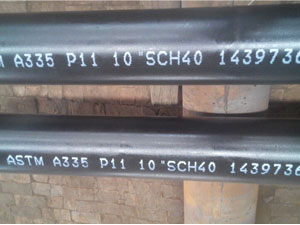
- Cr-Mo alloys: Both codes cover P11, P22, P91 extensively. This is the biggest overlap — power plants and refineries both use Cr-Mo at high temperatures. However, B31.1's post-weld heat treatment requirements for P91 are stricter (longer hold times, tighter temperature control) because P91 is widely used in ultra-supercritical boilers where creep life is the limiting design factor.
HT PIPE's Experience Serving Both Power Plants and Process Plants
We maintain parallel inventory tracks for B31.1 and B31.3 material because the wall thickness requirements diverge enough that we can't safely substitute one for the other. Our warehouse is organized with color-coded storage racks: blue labels for B31.1 stock (thicker walls, higher material cert documentation), green labels for B31.3 stock (standard walls, standard documentation).
Three real cases from serving both code worlds:
- 2024, Indonesia (Java): A 2×660MW coal-fired power plant — full B31.1 scope. Main steam piping at 2,550 psi / 1,005°F required A335 P91 alloy pipe (9Cr-1Mo-V) with B31.1-witnessed NDE. We supplied approximately 280 metric tons of P91 pipe in sizes NPS 4" through 24". The B31.1 NDE package was intensive: 100% RT on all field butt welds, 100% MT on socket welds, VT on every joint, and a full PMI (Positive Material Identification) verification of every heat number to ensure no carbon steel had accidentally been mixed into the P91 supply. The customer's third-party inspector (SGS) spent 2 weeks in our factory and signed off 870 individual MTRs. P91 under B31.1 is unforgiving — we required our mill to provide special chemistry with controlled nitrogen (0.03-0.07%) and niobium (0.06-0.10%) for optimal creep strength, and the B31.1 allowable stress at 1,005°F is so low (about 4.5 ksi) that the wall thickness drove Sch 160 and XXS selections across the entire size range. The finished pipe was heavy — a single 12-meter length of NPS 16" Sch 160 P91 weighed 1,680 kg.
- 2025, Saudi Arabia (Yanbu): A refinery expansion project — split scope: the atmospheric distillation unit under B31.3 (Normal Fluid Service), but the plant's on-site power generation boiler under B31.1. We supplied pipe and fittings for both from the same factory, but tracked them in separate B31.1 and B31.3 documentation streams. The project had 47 piping line classes — 41 to B31.3, 6 to B31.1. The most common error we caught during document review: the EPC's piping material specification inadvertently referenced B31.1 allowable stress values for several B31.3 lines (likely copy-pasted from a power plant spec they'd used on a previous job). This would have resulted in over-specified, unnecessarily thick pipe on about 12 line classes. We flagged it and the EPC corrected their line class spec before fabrication started. The cost avoidance was approximately $85,000 — the difference between A106 Gr.B Sch 80 (B31.1 spec) and Sch 40 (B31.3-correct) for those 12 line classes.
- 2025, Vietnam: A fertilizer plant (urea/ammonia) — the synthesis loop operated at 3,200 psi with B31.3 Chapter IX (High-Pressure Fluid Service), while the plant utilities (cooling water, instrument air, condensate return) were Category D under B31.3, and the auxiliary boiler piping was B31.1. We had three different specification packages running in parallel on the same order: B31.3 Chapter IX pipe (heavy-wall A106 Gr.C, 100% RT, fracture toughness testing), B31.3 Category D pipe (standard carbon steel, VT only), and B31.1 boiler feedwater pipe (A106 Gr.B with 5% RT and B31.1 hydrotest). Our production manager color-coded the fabrication shop with red tags (Chapter IX — no mistakes allowed), yellow tags (B31.1), and green tags (Category D) — the physical pipe was segregated by color-coded storage racks. The Chapter IX pipe was the most expensive per meter by a factor of about 3.5× due to the heavy wall, full NDE, and Chapter IX-specific fracture toughness requirements. The B31.1 pipe was about 1.3× the cost of the Category D pipe, driven by the additional RT and hydrotest requirements.
Our standard advice to EPCs and engineering firms: Before placing a bulk pipe order, do a line-class audit — check every piping line class specification against the governing code's allowable stress tables to ensure you're not inadvertently over-specifying or under-specifying wall thickness. The difference between B31.1 and B31.3 allowable stress for A106 Gr.B at 400°F is 15.0 ksi vs 18.9 ksi — a 26% gap that can mean Sch 40 vs Sch 80, or Sch 80 vs Sch 160. On a 100-ton carbon steel pipe order at $1,200/ton, that misclassification costs $31,200 in unnecessary material. We've caught this on roughly 15-20% of the multi-code projects we quote. Send us your piping line class specs and we'll cross-check the governing code vs the specified wall thickness — it's a free service we provide because the engineering firm saves money and we earn the material order.
Frequently Asked Questions — B31.1 vs B31.3
Q1: Can I use B31.3 pipe on a B31.1 power plant project?
Generally no — not without engineering justification accepted by the jurisdictional authority. The lower allowable stress values in B31.1 mean that B31.3-designed pipe may have insufficient wall thickness for B31.1 service. The pipe must be re-evaluated against B31.1 allowable stresses, and if the wall thickness is adequate (which it may be for incidental services like cooling water), the material certificates must still reference the applicable material specification. However, the jurisdictional inspector typically requires the governing code to be designated before procurement — substituting B31.3 pipe into a B31.1 system after the fact is a major compliance headache. If you know you're building to B31.1, order B31.1-spec material from the outset. The cost difference (15-30% more for the thicker wall) is insignificant compared to the cost of non-compliance or rework.
Q2: Which code applies to a combined-cycle power plant — B31.1 or B31.3?
Both — and this is common. The Heat Recovery Steam Generator (HRSG) and steam piping (boiler external piping, main steam, hot reheat, cold reheat) are B31.1. The gas turbine fuel gas supply piping and lube oil piping are typically B31.3 (because they're process-type services, not power boiler piping). The condensate and feedwater piping upstream of the boiler stop valves is B31.1. The natural gas supply to the plant fence is ASME B31.8 (Gas Transmission Pipeline). Combined-cycle plants are multi-code by nature — the procurement specification must clearly designate which piping system follows which code. We see this frequently in Middle Eastern IPP projects where the EPC specification package includes pipe requirements under B31.1 (HRSG and steam cycle), B31.3 (fuel gas and auxiliary systems), and B31.8 (gas supply).
Q3: What are the main differences in allowable stress between B31.1 and B31.3?
B31.1 is consistently more conservative — for carbon steel (A106 Gr.B), the B31.1 allowable stress is roughly 20-30% lower than B31.3 across the temperature range from ambient to 700°F. For Cr-Mo steels (P22, P91), the gap can be even wider at high temperatures (40-50% difference above 1,000°F) because B31.1 incorporates additional margin for creep rupture life. The fundamental safety factors are different: B31.1 uses 1/3.5 of tensile strength vs B31.3's 1/3. B31.1 also limits the yield-based criterion to 2/3 of yield for austenitic stainless steels specifically. This translates directly to wall thickness — a NPS 8" pipe designed to 600 psi at 700°F will be Sch 80 under B31.1 but possibly Sch 40 or Sch 60 under B31.3, depending on the corrosion allowance and mill tolerance. The thicker B31.1 pipe weighs more, costs more, and may require larger diameter flanges and heavier supports.
Q4: Is hydrotest pressure higher in B31.1 or B31.3?
Neither is inherently higher — the formula is the same (1.5 × P × stress ratio), but the inputs differ. If the pipe is the same schedule under both codes, B31.3 may produce a higher test pressure because the B31.3 allowable stress at the design temperature is higher, creating a larger stress ratio in the test pressure formula. However, in practice, B31.1 pipe typically has thicker walls because of the lower allowable stress, so the design pressure for a given pipe schedule may actually be LOWER under B31.1 — and therefore the hydrotest pressure may be lower even though the code itself is more conservative. The practical takeaway: don't guess at the hydrotest pressure based on the code name. Run the calculation. Different codes, same pipe = different test pressures. We prepare separate hydrotest calculation sheets for every B31.1 and B31.3 order — the test pressure is a calculated value, not a code-specified constant.
Q5: Does B31.3 cover high-pressure piping up to 20,000 psi?
B31.3 Chapter IX (High-Pressure Piping) has no upper pressure limit — it governs piping where the design pressure exceeds the ASME B16.5 Class 2500 flange rating limits. In practice, Chapter IX covers systems up to approximately 10,000-15,000 psi in LDPE (low-density polyethylene) plants, where ethylene gas is compressed and polymerized at extreme pressure. Above 15,000 psi, specialized pressure vessel and piping codes (often company-specific standards from DuPont, ExxonMobil, or licensors like LyondellBasell) take over. Chapter IX imposes additional requirements beyond B31.3 base code: fatigue analysis (required, not optional), fracture toughness testing of materials, 100% volumetric NDE, full penetration welds only (no socket welds absolutely), and more restrictive design margins. If you're quoting high-pressure pipe for B31.3 Chapter IX service, the documentation requirements are closer to a pressure vessel than standard process piping — expect full MTR traceability, Charpy impact test reports, and PMI verification as a minimum.
Related Comparisons & Resources