Quick answer for engineers and procurement teams: Use ASTM A312 for process piping systems & corrosive service pipelines. Use ASTM A213 for boiler, superheater and heat exchanger tubes at elevated temperatures. Use ASTM A269 for general-service, instrumentation, food-grade or pharmaceutical tubing with tight dimensional requirements.
When purchasing stainless steel pipes and tubes, ASTM A312, ASTM A213 and ASTM A269 are among the most commonly specified standards. Although these three designations are often mentioned together — and sometimes confused — they are designed for fundamentally different products and service conditions. Choosing the wrong specification can lead to compliance failures, rework costs or field performance issues.
At HT PIPE, we work with engineers, contractors and procurement teams across oil & gas, chemical processing, power generation and pharmaceutical industries. The question "which stainless steel pipe standard should I choose?" comes up in nearly every project discussion. This guide lays out the differences clearly so you can make the right call before issuing a purchase order.
HT PIPE supply note: Based on our order history, A312 is most requested for process piping, A213 dominates heat exchanger projects, and A269 is the standard of choice for instrumentation and sanitary tubing. We confirm the final specification with customers based on operating temperature, pressure, medium and dimensional requirements before quotation.
What Is ASTM A312?
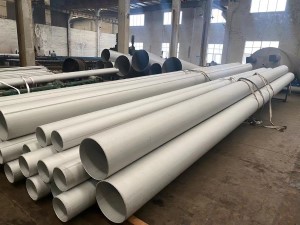
ASTM A312 covers seamless, welded and heavily cold-worked austenitic stainless steel pipes intended for high-temperature and corrosive service. It is the most widely used stainless steel pipe specification for pressure piping systems in industrial plants.
Typical grades under ASTM A312
- TP304 / TP304L
- TP316 / TP316L
- TP321 / TP321H
- TP347H
- TP310S
- 904L
- 254SMO
Common applications
- Process piping in chemical plants and petrochemical facilities
- Oil and gas transmission and gathering lines
- Power plant steam and cooling pipelines
- Water treatment systems
- Offshore platform piping
A312 pipe is manufactured with pipe-schedule wall thicknesses (SCH 10S, 40S, 80S, etc.) and sold in NPS sizes, which is why it does not overlap with the tubing specifications below despite sharing common grade designations.
→ Full ASTM A312 Specification Details
What Is ASTM A213?
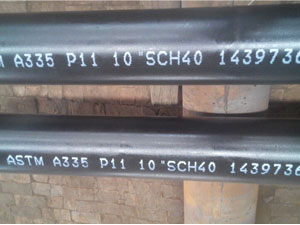
ASTM A213 covers seamless ferritic and austenitic alloy steel tubes specifically designed for use in boilers, superheaters and heat exchangers. A common question we hear is: Is ASTM A213 suitable for heat exchangers? — and the short answer is yes, it is the primary specification written for exactly that purpose.
Compared with ASTM A312, A213 places much greater emphasis on elevated-temperature performance and heat-transfer equipment applications. Wall thickness under A213 is specified in Birmingham Wire Gauge (BWG) or actual inches/millimetres, not NPS pipe schedules, reflecting its tubing-product nature.
Stainless steel grades under ASTM A213
- TP304 / TP304H
- TP316 / TP316H
- TP321H
- TP347H
The "H" suffix grades — 304H, 316H, 321H, 347H — are specifically required for high-temperature applications above 538 °C (1000 °F), where creep resistance and grain-size control become critical. This is a key differentiator from A312, which does carry H grades but is not the first-choice specification for long-term elevated-temperature tube service.
Typical industries served by A213 tubes
- Thermal power plants (boiler and superheater tubing)
- Refineries (heat recovery trains, crude preheat exchangers)
- Petrochemical plants (reactor feed heaters, process heat exchangers)
- Industrial heat exchangers across all sectors
→ Full ASTM A213 Specification Details
What Is ASTM A269?
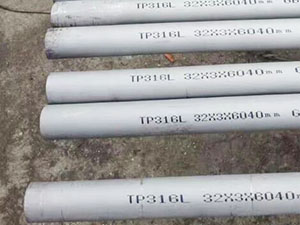
ASTM A269 covers seamless and welded austenitic stainless steel tubing intended for general corrosion-resisting and low- or high-temperature service. The standard focuses on general service rather than pressure piping or heat-transfer equipment, which is why it is commonly specified for instrumentation, hydraulic, food-grade and pharmaceutical tubing.
A269 generally involves smaller outside diameters — commonly from ¼ inch to 3 inches OD — with tighter dimensional tolerances and, in many applications, more demanding surface finish requirements than either A312 or A213.
Common grades under ASTM A269
- TP304 / TP304L
- TP316 / TP316L
- TP321
Typical applications
- Instrumentation tubing and impulse lines
- Hydraulic systems and fluid power circuits
- Food processing and beverage industry tubing
- Pharmaceutical and biotech process tubing
- Semiconductor fabrication facilities
- Cryogenic service lines (low-temperature variant)
→ Full ASTM A269 Specification Details
ASTM A312 vs ASTM A213 vs ASTM A269 — Side-by-Side Comparison
The table below addresses the core question engineers ask before issuing a specification: What is the difference between ASTM A312 and ASTM A269, and where does A213 fit in between?
| Item |
ASTM A312 |
ASTM A213 |
ASTM A269 |
| Product type |
Pipe |
Tube |
Tube |
| Manufacturing |
Seamless / Welded / CW |
Seamless only |
Seamless / Welded |
| Primary application |
Process piping |
Boilers & heat exchangers |
General-service tubing |
| Dimensional standard |
NPS / Pipe schedule |
OD × BWG or actual WT |
OD × actual WT |
| Pressure service |
Excellent |
Excellent |
Moderate |
| Heat transfer equipment |
Limited |
Excellent |
Good |
| Small-diameter applications |
Moderate |
Good |
Excellent |
| Surface finish requirements |
Standard |
Standard |
Higher (smoother ID/OD) |
| H-grade availability |
Yes (some) |
Yes (primary focus) |
No |
| Typical industries |
Oil & gas, chemical |
Power generation, refining |
Instrumentation, food, pharma |
HT PIPE observation: When customers send us a specification sheet that lists A312 for a heat exchanger shell-side or tube-side application, we routinely flag that A213 may be the correct standard. The reverse is also common — A213 referenced for a process piping run where A312 is appropriate. Getting this right before production saves time and avoids non-conformance reports at inspection.
A312 vs A213 vs A269 for Chemical Processing
Chemical processing facilities are one of the most demanding environments for stainless steel pipe and tube selection. The question "A312 vs A213 vs A269 for chemical processing" comes up frequently because the same plant can require all three specifications in different service loops.
Here is how each standard typically fits into a chemical or petrochemical plant:
- ASTM A312 — the backbone of the facility's process piping network. Every pipeline carrying acids, caustics, solvents, hydrocarbons or process gases is almost certainly spec'd to A312 TP316L or TP321.
- ASTM A213 — used exclusively in heat transfer equipment within the plant: feed preheaters, product coolers, reboilers, overhead condensers and waste-heat recovery units. The high-temperature H grades (321H, 347H) appear in cracking furnace sections and reformer preheaters.
- ASTM A269 — appears in instrumentation loops, sample conditioning systems and any tubing that runs to analysers, pressure transmitters and flow meters. TP316L under A269 is standard for corrosive instrument tubing.
At HT PIPE, we frequently supply all three specifications within a single project package for EPC contractors working on chemical complex projects. Having the dimensional data, heat-treatment records and mill test reports organised by specification simplifies the traceability requirements these projects demand.
What Is the Best ASTM Standard for Stainless Steel Tubing?
The question "best ASTM standard for stainless steel tubing" does not have a single answer — it depends entirely on the service. However, a practical framework helps narrow it down quickly:
- If the tube will carry heat-transfer fluid and operate inside a heat exchanger or boiler, ASTM A213 is the correct starting point.
- If the tube will carry instrumentation signals, hydraulic fluid, process samples, or food/pharma products, ASTM A269 is the standard of choice.
- If the requirement is technically a pipe (NPS diameter, pipe-schedule wall) that happens to be stainless steel, ASTM A312 applies — not a tubing standard.
One common mistake HT PIPE's technical team encounters is projects where A269 tubing has been specified for a pressurised service application that genuinely requires A312 pipe. While both products may appear similar in a catalogue, A269 tubing is not a substitute for A312 pressure pipe in code-governed piping systems such as ASME B31.3 Process Piping.
Which Standard Should You Choose? A Practical Selection Guide
Based on HT PIPE's supply experience across hundreds of projects, here is a decision framework to answer "which stainless steel pipe standard should I choose?":
Choose ASTM A312 if…
You need pipe for:
- Process piping systems
- Pressure piping under ASME B31.3 / B31.1
- Corrosion-resistant pipelines
- Large-diameter stainless steel pipe runs
Example projects: refinery piping, chemical processing headers, offshore platform flowlines.
Choose ASTM A213 if…
You need tube for:
- Boiler tubes or superheater tubes
- Shell-and-tube heat exchanger bundles
- High-temperature service (>538 °C)
- Elevated-temperature creep resistance
Example projects: steam boilers, power station heat exchangers, refinery process heaters.
Choose ASTM A269 if…
You need tube for:
- Instrument tubing and impulse lines
- Precision or small-diameter tubing
- Food-grade or pharmaceutical tubing
- Hydraulic or fluid-power circuits
Example projects: DCS instrumentation loops, sanitary processing lines, semiconductor facility tubing.
HT PIPE tip: If a project specification calls for stainless steel tube without specifying the ASTM standard, always ask whether the service is heat-transfer equipment (→ A213), instrumentation / general service (→ A269) or pressure piping (→ A312). This single question eliminates most specification ambiguity at the procurement stage.
Common Grade Equivalents Across A312, A213 and A269
The following grade equivalents apply across all three standards where the grades overlap:
| ASTM grade |
UNS number |
EN equivalent |
Available in A312 |
Available in A213 |
Available in A269 |
| TP304 |
S30400 |
1.4301 |
Yes |
Yes |
Yes |
| TP304L |
S30403 |
1.4307 |
Yes |
— |
Yes |
| TP304H |
S30409 |
1.4948 |
Yes |
Yes |
— |
| TP316 |
S31600 |
1.4401 |
Yes |
Yes |
Yes |
| TP316L |
S31603 |
1.4404 |
Yes |
— |
Yes |
| TP316H |
S31609 |
1.4436 |
Yes |
Yes |
— |
| TP321 |
S32100 |
1.4541 |
Yes |
— |
Yes |
| TP321H |
S32109 |
1.4541 |
Yes |
Yes |
— |
| TP347H |
S34709 |
1.4550 |
Yes |
Yes |
— |
| TP310S |
S31008 |
1.4845 |
Yes |
— |
— |
Note that the "L" grades (304L, 316L) are available under A312 and A269 but not A213, because low-carbon variants are not typically required for the high-temperature boiler/superheater service that A213 covers. The "H" grades are primarily an A213 focus.
Frequently Asked Questions
Q What is the difference between ASTM A312 and ASTM A269?
The fundamental difference is product type and application. ASTM A312 is a pipe specification — it covers seamless, welded and heavily cold-worked austenitic stainless steel pipes manufactured to NPS dimensions and pipe schedules, intended for high-temperature and corrosive process piping service. ASTM A269 is a tubing specification — it covers seamless and welded austenitic stainless steel tubing manufactured to outside diameter and wall thickness dimensions, intended for general corrosion-resisting service, commonly instrumentation, food-grade and pharmaceutical applications.
Key practical differences: A312 pipe uses NPS sizing and pipe-schedule wall thicknesses; A269 tube uses OD × wall-thickness sizing. A269 typically has tighter dimensional tolerances and often higher surface-finish requirements. A312 pipe is used in code-governed pressure piping systems (ASME B31.3); A269 tubing is not a substitute for pressure pipe.
At HT PIPE, we supply both from the same stainless steel grades — but the mill test reports, dimensional checks and applicable code references are completely different.
Q Is ASTM A213 suitable for heat exchangers?
Yes — ASTM A213 is the standard specifically written for heat exchanger tubing. The standard title itself includes "Boiler, Superheater and Heat-Exchanger Tubes," which makes it the natural first choice for any heat transfer application. It is suitable for shell-and-tube heat exchangers, reboilers, condensers, feed preheaters and waste-heat recovery units.
The reason A213 is preferred over A312 for heat exchangers is its dimensional system (OD-based tubing fits standard tube sheets and baffles), its emphasis on elevated-temperature properties and the availability of H-grade materials (304H, 316H, 321H, 347H) designed for long-term high-temperature service.
HT PIPE regularly supplies TP304H, TP316H and TP321H tubes to ASTM A213 for heat exchanger projects in refining and power generation. Dimensional inspection, hydrostatic testing and elevated-temperature mechanical property certificates are standard deliverables for these orders.
Q Which stainless steel pipe standard should I choose?
The selection depends on three factors: product type (pipe or tube), service condition (pressure piping, heat transfer or general service) and dimensional system (NPS/schedule or OD/wall thickness).
- If it's a pipe in a pressurised piping system → ASTM A312
- If it's a tube in a boiler, superheater or heat exchanger → ASTM A213
- If it's a tube for instrumentation, hydraulics, food or pharma → ASTM A269
When project specifications are ambiguous, HT PIPE's technical team can review the design conditions — operating temperature, pressure, medium and required dimensions — and recommend the appropriate standard before order placement.
Q Can ASTM A269 replace ASTM A312?
In most cases, no. ASTM A269 is a tubing specification while ASTM A312 is a pipe specification. The dimensional requirements and intended applications are fundamentally different. A312 pipe is designed for pressure piping systems covered by ASME B31.3, B31.1 and equivalent codes. A269 tubing is not listed as an acceptable material in most pressure piping codes for the same service conditions. Using A269 tubing in a code-governed pressure piping application without specific engineering review would typically be a non-conformance.
Q What is the best ASTM standard for stainless steel tubing?
Between the two ASTM tubing standards covered here, ASTM A213 is the best choice for high-temperature heat-transfer service (boilers, superheaters, heat exchangers), and ASTM A269 is the best choice for general-service, instrumentation, sanitary and precision tubing applications. Neither is universally "better" — they serve different markets. For pressure piping (which requires pipe rather than tube), ASTM A312 is the appropriate specification.
If you are comparing quotes from different suppliers using different standards for what appears to be the same product, HT PIPE recommends requesting full mill test report details to confirm the specification, grade, heat treatment and dimensional compliance before making a purchasing decision.
Q Is ASTM A312 better than ASTM A213?
Neither standard is inherently "better" — they are designed for different products and applications. ASTM A312 is the correct specification for process piping systems; ASTM A213 is the correct specification for boiler and heat exchanger tubing. Comparing them directly is like asking whether a wrench is better than a screwdriver — the right answer depends entirely on the task.
Not sure which standard applies to your project?
HT PIPE's technical team reviews specification requirements and recommends the correct ASTM standard based on your operating conditions, dimensions and industry code requirements — before you place an order.
Request a Quote or Specification Review →
Related Standards
Related Materials
Related Products
Related Comparison Guides